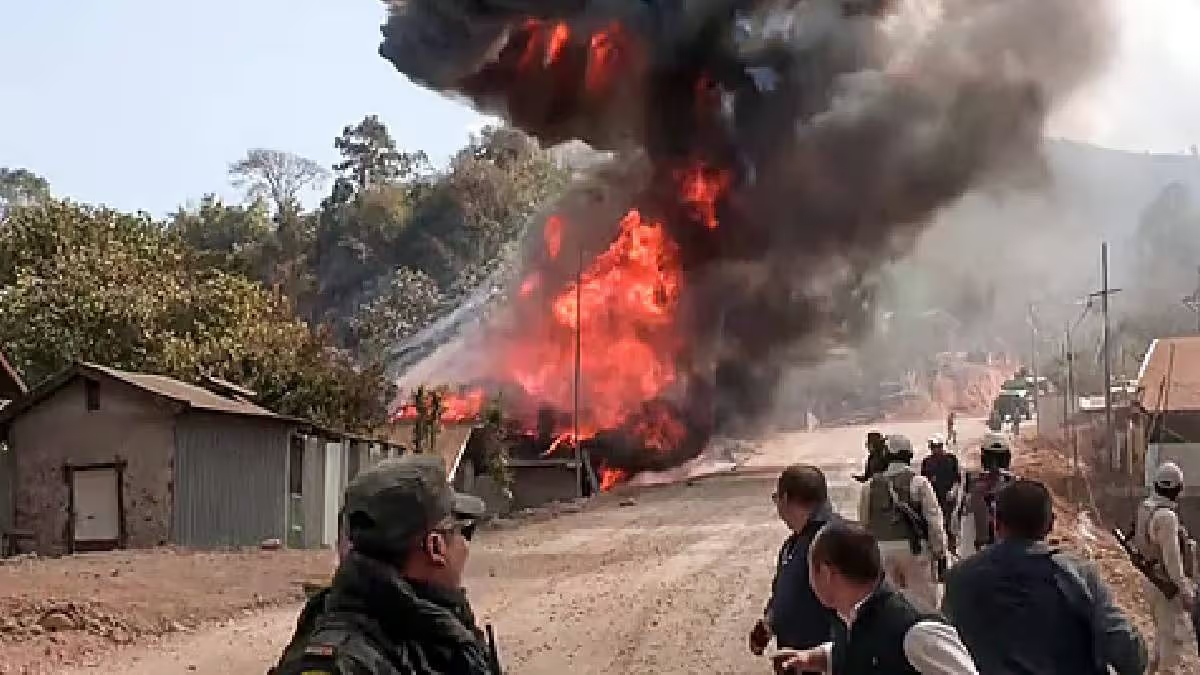

The United Arab Emirates’ surprising exit from OPEC is shaking up global energy markets and revealing cracks within the influential oil cartel. This decision follows a series of missile and drone attacks from Iran, another OPEC member, exacerbating tensions in a region crucial for oil exports. The UAE’s withdrawal raises questions about the stability of OPEC, particularly as production quotas may push other countries to consider similar moves.
“The UAE’s exit marks another chapter in the evolving dynamics of the group,” said Andy Lipow, president of Lipow Oil Associates. “If compliant countries grow frustrated with those that violate quotas, we could see further exits, potentially rendering OPEC ineffective as a cartel,” he added in an email to CNBC. Historically, nations like Qatar, Ecuador, and Angola have left OPEC, citing disagreements over quotas or shifting national interests.
The UAE’s departure reflects a broader issue: countries that have significantly invested in expanding production capacity are increasingly unwilling to adhere to quotas intended to stabilize oil prices. With the UAE currently producing around 2.37 million barrels per day but capable of nearly 4.3 million, it finds itself constrained by limits that do not align with its production goals.
Analysts have identified several other “flight risk” countries that might follow suit due to frustrations with OPEC+. Kazakhstan, for instance, has been persistently exceeding its production limits, indicating a potential inclination to exit as well, according to Matt Smith, lead oil analyst at Kpler. Nigeria, Africa’s largest crude oil producer, is another candidate for departure. As it ramps up domestic refining through the Dangote refinery, Nigeria is increasingly focused on self-sufficiency and may see reduced incentive to stick with OPEC-led quotas.
Venezuela also stands at a crossroads. With oil output increasing unexpectedly and a shift towards a more U.S.-friendly political environment, it might seek greater operational flexibility. “Venezuela could soon follow suit, especially in light of a leadership transition that favors stronger relations with the U.S.,” noted Saul Kavonic, an energy analyst at MST Marquee.
OPEC+ currently enforces core production quotas that have cut output by roughly 2 million barrels per day until the end of 2026. Recently, key producers such as Saudi Arabia and Russia agreed to modestly ease cuts to gradually reinstate some flow to the market, counteracting the initial 1.65 million bpd reductions implemented in 2023.
The UAE’s withdrawal comes at a time when OPEC is already dealing with fragmentation, as countries like Iran, Libya, and Venezuela remain exempt from quotas due to sanctions or internal conflicts. This uneven compliance could further frustrate members and lead to additional exits. Bob McNally, president of Rapidan Energy Group, warns that any erosion of OPEC+ discipline is likely to result in heightened volatility in oil prices, complicating market stability.
Yet, some experts argue that OPEC’s core mission of stabilizing global oil markets remains intact, citing its effectiveness during crises such as the COVID-19 pandemic. Claudio Galimberti, senior vice president at Rystad Energy, emphasized that OPEC’s historical ability to balance the market has prevented significant volatility when faced with crises.
As the global energy landscape continues to shift, the implications of the UAE’s exit from OPEC could be profound, prompting reevaluation among member countries and a potential redefinition of the cartel’s role in the future.
Choose CNBC as your preferred source on Google and stay updated with the most trusted name in business news.
Original Source: https://www.cnbc.com/2026/04/29/uae-opec-exit-oil-iran-war.html
Category :
Tags:
Publish Date: 2026-04-29 09:45:00