
We obsess over features, frameworks and roadmaps – but too often neglect the mundane tools that keep systems running. The same is true whether you’re changing engine oil in a workshop or maintaining a distributed production platform: small, well-thought-out tools remove friction, reduce risk and scale competence.
Context
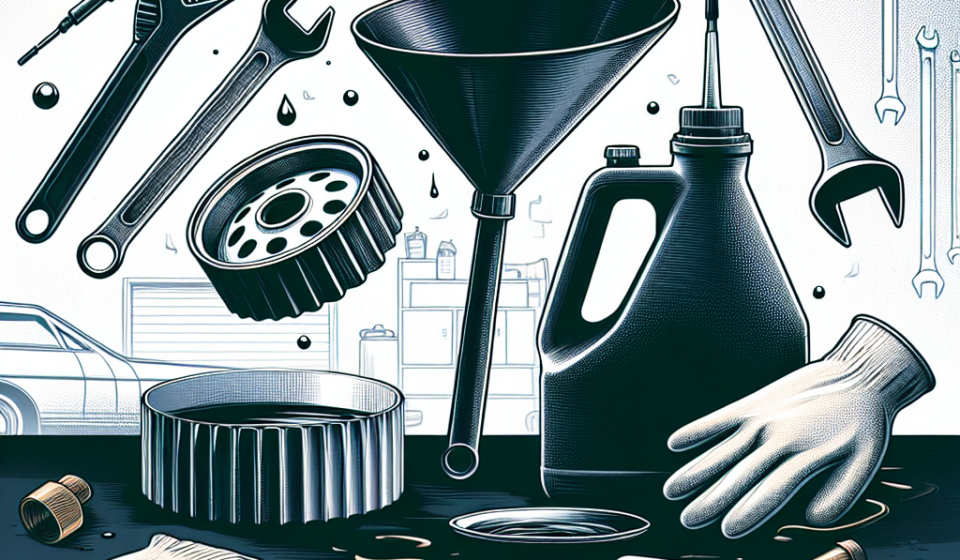
I recently came across a practical product roundup on tools that make DIY oil changes cleaner and safer – from flexible funnels and filter wrenches to spill mats, drain pans and vacuum extractors. The roundup wasn’t just about gadgets; it surfaced a pattern: modest investments in ergonomics and containment materially reduce error, downtime and environmental harm.
Analysis – what this means for technology leaders
The analogies between vehicle maintenance and software/operational maintenance are instructive.
– Tooling reduces cognitive load. A funnel that fits, a reusable spill mat, or a solid filter wrench transfers effort from human recall and improvisation to predictable mechanical behavior. In software terms, robust CI/CD pipelines, observability and platform tooling free engineers from repetitive, error-prone rituals so they can focus on higher-order work. The trade-off is obvious: invest in a handful of reliable tools up front to avoid costly exceptions later.
– Small ergonomics choices compound into lower operational risk. The product notes about materials (nitrile rubber funnels, slip-resistant mats, HDPE drain pans) point to a larger truth: durability and containment are risk mitigants. For enterprise systems, that maps to designing for failure containment – circuit breakers, rate limiting, transactional boundaries – not just performance benchmarks.
– Metrics and candid reviews matter when you buy. The roundup filtered products by user ratings, return rates and common failure modes (melting in heat, rusting, leaking). When deciding between build vs buy for platform components, ask the same questions: how many installations, what are the common failure patterns, how quickly does the vendor respond, and what is the lifecycle cost?
– Environmental and compliance dimensions are non-negotiable. Preventing oil stains and spills is both pragmatic and regulatory. For software organisations, think data governance, retention policies and secure deletion as the “spill containment” measures that reduce legal, reputational and operational costs.
– Democratization through affordable tools enables resilience at the edge. A vacuum oil extractor avoids the need for a service bay; similarly, lightweight, portable developer tooling and offline-capable services empower teams in constrained environments. This lowers the need for centralized specialist intervention and increases mean-time-to-repair resilience.
Localization – why this matters for India (and Northeast India)
In geographies with sparse service networks – including many parts of Northeast India – the ability to perform safe, repeatable maintenance locally is essential. Affordable, durable tools enable last-mile resilience: vehicles stay operational longer, small garages can provide safer services, and communities can form tool libraries or cooperative workshops. The same principle applies digitally: build-for-fragility (offline-first, lightweight observability) and equip local teams with frictionless tooling.
Actionable takeaways for CTOs and founders
– Invest in a small, curated set of platform tools that reduce human error – choose durability over novelty.
– Evaluate vendors by real failure modes and user telemetry, not marketing copy. Demand post-sales support and spares.
– Treat ergonomics and containment as first-class non-functional requirements: they reduce incident count and mean-time-to-repair.
– Design for the edge: lightweight, portable tooling and clear runbooks enable teams operating with limited connectivity or specialized skills.
– Consider community-level solutions (shared tool pools, training programs) to scale capability cost-effectively in low-resource regions.
Closing thought
Whether it’s an oil funnel or a monitoring dashboard, the best investments are the ones that quietly prevent mistakes – and let your people apply judgment where it truly matters.
About the Author
Sanjeev Sarma is the Founder Director of Webx Technologies Private Limited, a leading Technology Consulting firm with over two decades of experience. A seasoned technology strategist and Chief Software Architect, he specializes in Enterprise Software Architecture, Cloud-Native Applications, AI-Driven Platforms, and Mobile-First Solutions. Recognized as a “Technology Hero” by Microsoft for his pioneering work in e-Governance, Sanjeev actively advises state and central technology committees, including the Advisory Board for Software Technology Parks of India (STPI) across multiple Northeast Indian states. He is also the Managing Editor for Mahabahu.com, an international journal. Passionate about fostering innovation, he actively mentors aspiring entrepreneurs and leads transformative digital solutions for enterprises and government sectors from his base in Northeast India.