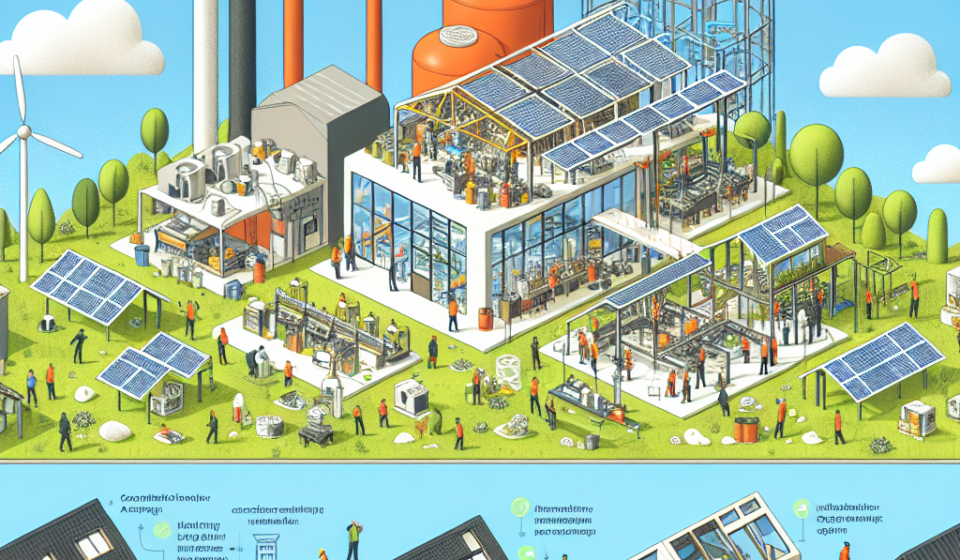

We fetishize scale as a single, centralized answer to big problems. But the housing crisis – and the climate imperative baked into every new build – is teaching us a different lesson: in many cases, distributed, software-driven manufacturing at the edge can unlock faster, cheaper, and lower-carbon outcomes than traditional, centralized approaches.
Context (the signal)
I recently came across a case study about Reframe Systems, a startup using microfactories, robotics, and software to prefab homes closer to where they’re needed. Their approach combines modular panels, automated framing, and configurable digital design to meet local codes and aesthetics while aiming to reduce waste and embodied emissions.
Analysis – what this means for architects, CTOs and founders
This is less about robots and more about systems thinking. The real innovation lies at the intersection of product architecture, digital workflows, and governance – not merely in a faster nail gun. From an enterprise-architecture perspective, a few themes stand out:
– System boundaries and stakeholder alignment matter more than incremental efficiency. Housing touches municipal permitting, utilities, lenders, trades, and residents. Success requires roadmaps that balance regulatory fit, manufacturability, and end-user expectations – the exact disciplines of system engineering and stakeholder optimization.
– “Build vs. buy” is now multi-layered. Founders must decide whether to develop end-to-end factory control systems, buy modular robotics and integrate them, or partner with OEMs. The right choice depends on repeatability: if you’re building thousands of near-identical units, invest in custom automation; if you need high-variety, prefer modular platforms and software composability.
– Digital twins and a single source of truth are table stakes. A design-to-factory digital thread (BIM → CAM → MES → site-installation workflows) shrinks lead time and reduces defects. That thread must span versioning, local-code variants, supply availability and as-built telemetry for warranty and decarbonization reporting.
– Operational technology (OT) and data trust require attention from day one. Microfactories introduce networked machinery, firmware, supplier APIs and cloud services. Treat them with the same zero-trust mindset you apply to enterprise IT: segmentation, secure firmware lifecycle, signed software updates, and provenance for material batches.
– Decarbonization must be measured across the lifecycle. Lower site disruption and less waste are meaningful, but embodied carbon in materials and the energy source for factories matter more. Use common metrics and provide transparent LCA data to buyers and regulators.
Actionable guidance for leaders
– Map the full stakeholder system before choosing equipment. Spend your earliest cycles on permitting, financing partners and logistics – automation only pays off if the ecosystem accepts the product.
– Invest in the digital thread first. A robust design-to-manufacturing pipeline reduces rework more than marginal hardware improvements.
– Modularize product families. Standard interfaces between panels, services, and finishes let you scale product variants without rebuilding factory tooling.
– Harden OT and data flows with zero-trust principles and supplier attestations.
– Treat workforce strategy as part of product design: automation should elevate, not replace, local skilled work through reskilling programs.
A note for India – and Northeast practitioners
This model scales well to geographies where supply chains are long, skilled labor is uneven, or disaster-recovery housing is needed rapidly. In India’s peri-urban and hilly regions, localized microfactories that use regionally available materials and low-energy processes could reduce transport costs and create local employment. The key is pragmatic localization: adapt material palettes, engage municipal authorities early, and design factory footprints that match local utility and land constraints.
Takeaways
– Solve the system, not just a subprocess. Housing is socio-technical; the technical solution must fit the policy, finance and social layers.
– Prioritize the digital thread and product modularity before scaling hardware.
– Embed security, provenance and lifecycle metrics into the factory blueprint.
– Localize factories to reduce logistics and increase community benefit.
Closing thought
Distributed manufacturing isn’t a panacea – it’s an architectural choice that trades some centralized economies for speed, resilience and lower tail emissions. For leaders, the question is simple: which parts of your value chain should be centralized, and which are better moved to the edge?
About the Author Sanjeev Sarma is the Founder Director of Webx Technologies Private Limited, a leading Technology Consulting firm with over two decades of experience. A seasoned technology strategist and Chief Software Architect, he specializes in Enterprise Software Architecture, Cloud-Native Applications, AI-Driven Platforms, and Mobile-First Solutions. Recognized as a “Technology Hero” by Microsoft for his pioneering work in e-Governance, Sanjeev actively advises state and central technology committees, including the Advisory Board for Software Technology Parks of India (STPI) across multiple Northeast Indian states. He is also the Managing Editor for Mahabahu.com, an international journal. Passionate about fostering innovation, he actively mentors aspiring entrepreneurs and leads transformative digital solutions for enterprises and government sectors from his base in Northeast India.