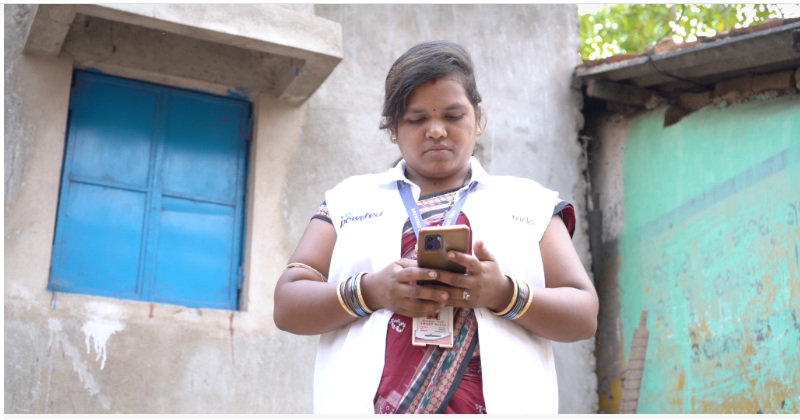

Unequal digital access is turning AI readiness into an aspiration rather than a reality for many women, experts warn. UNESCO reports that only 28 percent of the world’s researchers are women, a gap shaped by “discrimination, biases, social norms and expectations.” Beyond representation, meaningful participation in the AI ecosystem requires reliable internet, computing devices, cloud infrastructure and regular exposure to digital tools-resources that many women, especially in low‑income and rural households, lack. The GSMA’s Mobile Gender Gap Report 2025 estimates 885 million women remain unconnected across low‑ and middle‑income countries, and around 60 percent of them live in South Asia and Sub‑Saharan Africa.
Inequality often starts at home: in resource‑constrained families, devices are commonly prioritised for male children, leaving girls with intermittent access. This pattern, observed across India and other developing countries, compounds regional divides. Data from the International Telecommunication Union show persistent disparities in internet access between urban and rural areas, and UNICEF found during the pandemic that many children could not participate in remote learning because households lacked devices and connectivity. These early gaps shape confidence, exposure and long‑term career pathways, limiting who can pursue AI education and tech careers.
There are hopeful signs: some rural women in Jharkhand and other regions are finding paid digital work such as data annotation for AI systems, demonstrating that inclusive opportunities can be created outside metropolitan centres. Yet such examples remain patchy, and scaling them will require targeted investment in infrastructure, digital literacy and safe, local work opportunities.
Closing the access gap is only the first step; capability building must follow. Indian colleges and training programmes are rapidly introducing subjects like generative AI, large language models, prompt engineering, AI DevOps and multimodal systems. Technical training is valuable, but experts stress that it must be paired with critical thinking, verification skills and problem‑solving. AI systems can produce inaccuracies or “hallucinations”; high‑profile cases-lawyers sanctioned in the United States for submitting AI‑generated fake citations, and similar incidents flagged in Indian courts-underline the professional risks of unverified AI outputs.
Preparing for the future of work therefore depends on foundational skills: reasoning, curiosity and learning agility. The World Economic Forum has noted that nearly a quarter of jobs are expected to change over five years, and many professionals must retrain for technologies that did not exist during their formal education.
Progress in entry‑level roles is visible-women in India now account for about 31 percent of new AI roles (up from 26 percent the prior year), roughly 35 percent of entry‑level positions and 36 percent of the overall tech workforce-but leadership remains skewed. Women hold about 23 percent of leadership roles and 17 percent of C‑suite positions, reflecting a persistent “leaky pipeline.” Evidence from organisational research shows gender‑balanced teams are better at spotting biases and making inclusive decisions; in AI, diversified leadership matters not just for fairness but for building systems that serve wider populations and reduce unintended harms.
Kiran Khatter is a professor at BML Munjal University with more than 18 years of experience across academia and industry; her work focuses on AI, urban sensing, fuzzy theory and decision‑making systems, and she contributes to international policy and academic discussions on AI and education.
Original Source: https://nenews.in/tech/ai-readiness-means-women-dont-just-use-systems-they-build-them-too/48369/
Category: Tech,Artificial Intelligence (AI),UNICEF
Tags:
Publish Date: 2026-04-18 14:54:00