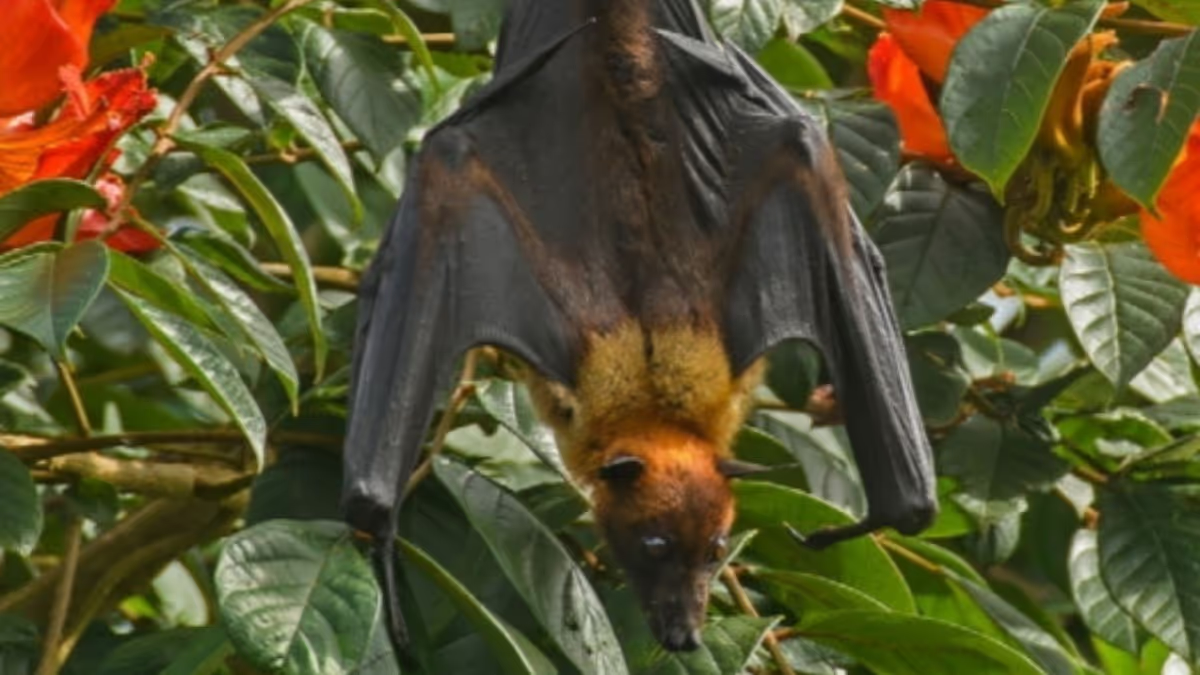

A landmark national assessment released on International Bat Appreciation Day has warned of steep declines in bat populations across Assam and the wider Northeast, citing habitat loss, mining and intensive agriculture as primary threats. Titled State of India’s Bats (2024–25), the report is the first comprehensive nationwide evaluation of India’s bats in more than 20 years. It records 135 species nationally, including 16 endemics, and notes that seven species are classified as threatened by the International Union for Conservation of Nature (IUCN).
The report highlights the Northeast as a major biodiversity hotspot: Meghalaya alone hosts 66 species. At the same time, researchers say the region faces growing pressures. In Assam, entire colonies of Indian flying foxes (Pteropus giganteus) are being displaced as roost trees are felled and land use shifts for development and agriculture.
Prepared over two years by 36 experts from 27 institutions, the study was led by the Nature Conservation Foundation and Bat Conservation International, with significant input from the Zoological Survey of India. Its findings draw on extensive fieldwork, published studies and expert consultations to map distribution, threats and conservation priorities.
Investigators identified multiple drivers of decline: urban expansion and deforestation fragment habitats; destructive mining for coal, limestone and sand damages cave systems many bats depend on; and pesticide-heavy tea estates along with monoculture rubber and oil-palm plantations erode foraging and breeding grounds. The report also flags traditional hunting in neighbouring states, rising pollution and large gaps in taxonomy and long-term monitoring data.
To counter the crisis, authors propose a 10-year conservation roadmap for the Northeast that stresses community-led protection of roosting sites, pollution impact studies and strengthened pathogen surveillance to reduce zoonotic risks. They also call for changing public attitudes to recognise bats’ ecological value.
Conservationists warn Assam stands at a critical junction: without immediate, coordinated action the state risks losing bat diversity and the vital ecosystem services bats provide, including pollination, natural pest control and forest regeneration.
Original Source: https://www.indiatodayne.in/assam/story/assam-in-focus-as-national-report-flags-severe-bat-habitat-crisis-in-northeast-1377414-2026-04-17?utm_source=rssfeed
Category:
Tags:
Publish Date: 2026-04-17 22:41:00