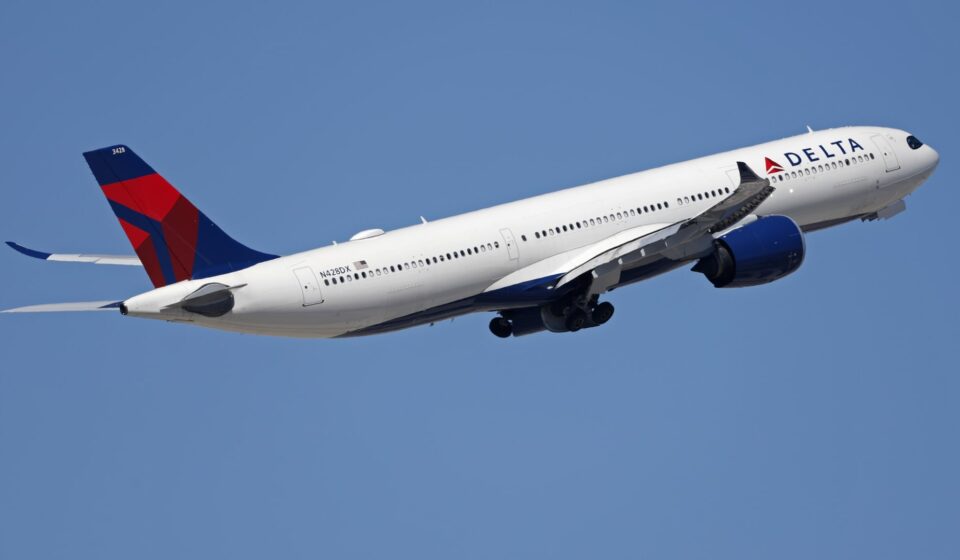

Delta Air Lines CEO Ed Bastian announced that the airline will “meaningfully reduce” its capacity growth plans in the near term, responding to soaring fuel costs magnified by recent geopolitical tensions in the Middle East. This strategic pullback comes as analysts and investors react to the airline’s premarket stock surge of over 11%, a rise reflective of broader gains among U.S. carriers following a dip in oil prices.
In its latest earnings forecast for the second quarter, Delta expects adjusted earnings per share between $1 and $1.50, surpassing the anticipated $1.41 from analysts. The airline also projected low-teens revenue growth year-over-year, outperforming Wall Street’s estimate of approximately 10%. Delta indicated that overall capacity for the year is likely to remain flat, a decision grounded in significant economic pressures.
Delta’s fuel expenses are anticipated to escalate by $2 billion this quarter, largely due to a sharp increase in jet fuel prices, which have surged nearly 88% since February 27, amidst heightened conflict involving Iran, according to the Airlines for America industry group. The carrier expects fuel costs to hover around $4.30 per gallon in the second quarter.
Bastian emphasized that despite rising travel costs, demand for air travel remains robust. He noted that Delta’s clientele continues to invest in premium offerings, such as more spacious seating and enhanced onboard services. However, he acknowledged uncertainty regarding when or if consumers might scale back their travel plans.
Delta’s ownership of a refinery, which converts crude oil into jet fuel and other products, provides a crucial advantage over competitors facing the same fuel price pressures. Bastian stated, “While we don’t know where fuel prices are headed, that refinery will continue to support us as costs remain high.” The refinery is expected to contribute about $300 million to Delta’s pre-tax profits this quarter, further solidifying the company’s financial outlook.
While Delta remains optimistic about achieving potentially record earnings this year, it has held off updating its full-year forecast amid the volatile fuel market. Bastian remarked, “As we gain further insights into the duration of this fuel spike in the coming months, our picture will become clearer.”
Delta is also responding to the current economic climate by joining other airlines, including JetBlue Airways and United Airlines, in raising checked bag fees and implementing surcharges in response to rising fuel costs. Demand for premium travel options saw a 14% increase in revenue in the first quarter compared to the previous year, a notable trend as the carrier adjusts to shifting consumer preferences.
The airline’s recent performance has prompted competitive adjustments across the industry. United Airlines, for example, is investing in upgrades to its premium seating and onboard technology, a strategy Bastian acknowledged, saying, “I think they’re smart trying to copy us.”
In the first quarter, Delta reported a net loss of $289 million, or 44 cents per share, a stark contrast to net income of $240 million, or 37 cents per share, from the previous year. However, after accounting for one-time items, adjusted net income was $423 million, or 64 cents per share, reflecting a year-over-year increase from $291 million, or 45 cents per share. Overall adjusted revenue rose over 9% to $14.2 billion, demonstrating resilience amid challenging market conditions.
As Delta navigates these volatile times, it aims to strike a balance between capacity management and profitability, with the long-term outlook remaining cautiously optimistic.
Original Source: https://www.cnbc.com/2026/04/08/delta-air-lines-q1-2026-earnings.html
Category :
Tags:
Publish Date: 2026-04-08 17:21:00