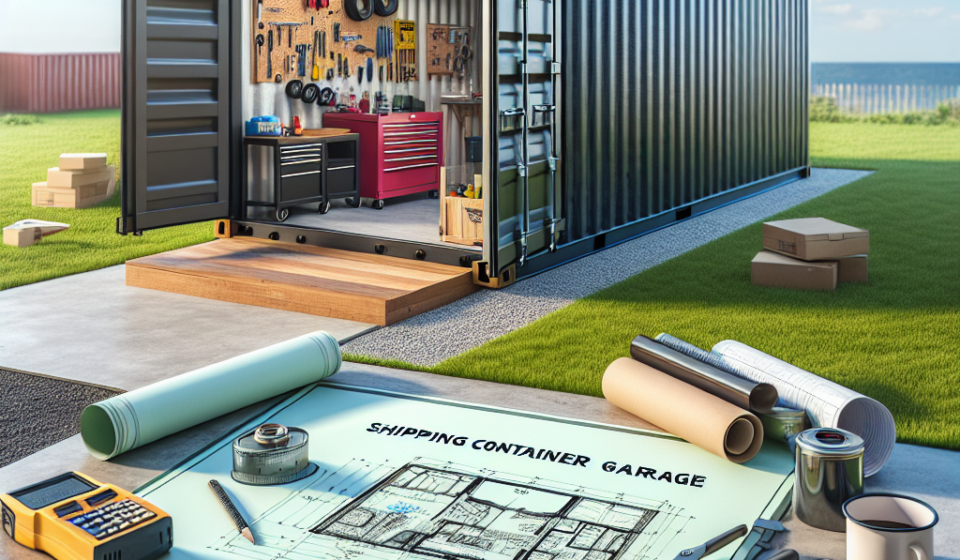

We fetishize modularity in technology – containers, microservices, plug‑and‑play APIs – because they promise speed, portability and repeatability. But when the same thinking migrates from code to concrete (or steel), the hard trade‑offs reappear: regulatory friction, human comfort, lifecycle cost, and site specificity. Converting a shipping container into a garage is a useful case study that exposes those trade‑offs in stark relief.
Context
I recently read a practical piece that outlined the pros and cons of using shipping containers as garages: durability and portability on one hand; tight interior dimensions, ventilation and thermal challenges, and a cascade of regulatory permissions on the other. It’s a neat, literal example of repurposing modular hardware – and a useful prompt to think strategically about reuse and governance.
What it means for architects, founders and city planners
1) Modularity is not a substitute for systems thinking. A container is a well‑engineered box. That doesn’t make it a building. Foundations, access, ventilation, insulation, drainage, fire safety and classification under local building codes are all system integrators’ concerns. In software terms: a Docker image isn’t a production platform until you add orchestration, networking, security and observability.
2) Upfront purchase cost vs total cost of ownership. The arithmetic that makes containers attractive often ignores permit costs, site preparation, transport and the nominal cost of making them habitable (insulation, windows, ventilation, electrical and fire suppression). Short timelines can produce long regulatory or maintenance tails – essentially technical debt in the built environment.
3) Governance and classification matter. Zoning, building departments and homeowner associations can each apply different rules. When a modular asset sits across multiple jurisdictions – or when classification is ambiguous (“is this a shed, a garage or a temporary structure?”) – delays, fines or mandated removal are real operational risks. Any rapid‑deployment strategy must bake in regulatory due diligence.
4) Climate and human comfort are non‑negotiable. Steel boxes amplify thermal swings. Simple retrofits (insulation, reflective coatings, passive ventilation) change usability dramatically, and their design should be climate‑aware. In hot, humid or high‑rain zones, condensation, corrosion protection and elevated foundations are essential – not optional.
5) Opportunity for frugal innovation and micro‑enterprise. Where regulatory pathways exist, containers can be rapid, low‑capex solutions for last‑mile logistics, pop‑up workshops, storage for MSMEs, or rural service points – provided the system constraints above are respected.
Actionable checklist for decision‑makers
– Confirm zoning and building code classification before buying. Get written guidance from local authorities.
– Estimate TCO, not just purchase price: transport, crane/placement, foundation, insulation, HVAC/ventilation, electrical and permit fees.
– Design for thermal comfort and moisture control: insulation, reflective paints, passive cross‑ventilation, and a small HVAC plan for extremes.
– Factor safety & insurance: fire suppression, egress, and load‑bearing verification if modifying the structure.
– Plan logistics early: access routes for delivery, crane/placement windows, and anchoring against wind/flood.
– Vendor & warranty: prefer suppliers who offer remediation for rust, structural mods, and certified welding; demand references for similar installs.
– Engage the community: homeowner associations and neighbors are often the source of late resistance – mitigate by early consultation.
A conditional note for India and the Northeast
The fundamentals above hold globally, but in India the variance between municipal rules is large. In many parts of the Northeast, monsoon intensity and local topography make elevation, drainage and corrosion protection especially important. Conversely, the portability and speed of deployment make container solutions attractive for micro‑logistics hubs, mobile workshops, or disaster‑response staging areas – if planners proactively address approvals and climate hardening.
Closing
Repurposing is a powerful lever – both in technology and in the built environment – but power without governance becomes liability. Treat a shipping container as a component of a larger system: design the interfaces (permits, foundations, climate controls) before celebrating portability. That’s how modularity becomes durable value rather than expensive novelty.
About the Author Sanjeev Sarma is the Founder Director of Webx Technologies Private Limited, a leading Technology Consulting firm with over two decades of experience. A seasoned technology strategist and Chief Software Architect, he specializes in Enterprise Software Architecture, Cloud-Native Applications, AI-Driven Platforms, and Mobile-First Solutions. Recognized as a “Technology Hero” by Microsoft for his pioneering work in e-Governance, Sanjeev actively advises state and central technology committees, including the Advisory Board for Software Technology Parks of India (STPI) across multiple Northeast Indian states. He is also the Managing Editor for Mahabahu.com, an international journal. Passionate about fostering innovation, he actively mentors aspiring entrepreneurs and leads transformative digital solutions for enterprises and government sectors from his base in Northeast India.