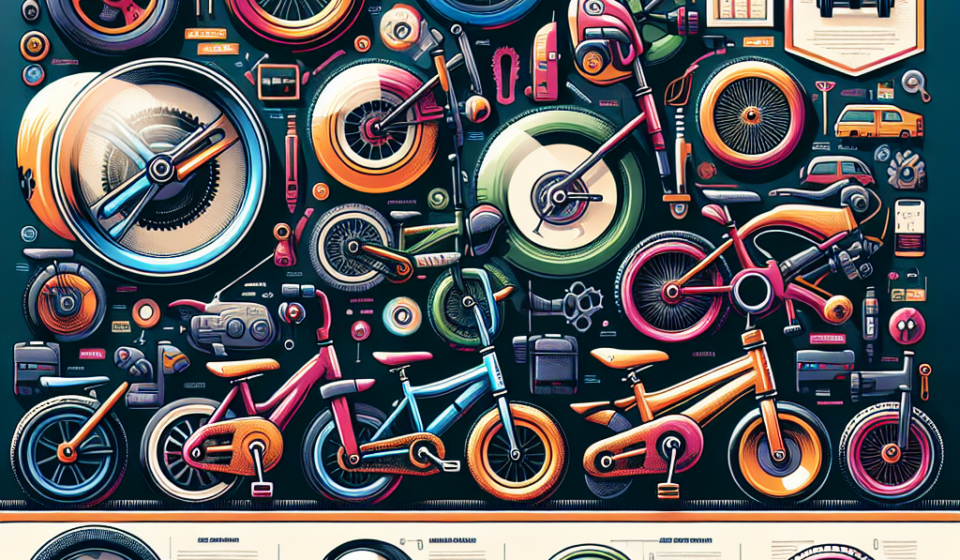

We build habits the same way we build systems: with attention to fit, friction, and failure modes. Yet when people shop for kids’ bikes they often behave like capacity planners who over-provision everything “just in case.” The result is a beautiful product sitting unused – or worse, a bike that’s unsafe because it doesn’t match the rider.
Context (the signal)
I recently read a consumer roundup that compared kid-focused bikes, helmets, and accessories – scoring them on design, weight, and features like MIPS, coaster vs hand brakes, and accessory ecosystems. The reviews highlight an important tension: manufacturers push bells, leather saddles, and tech features, while the critical determinants of safety and long-term value are often practical and low-glamour.
Analysis – what this means for product design and systems thinking
There are clear architecture lessons beneath the surface of a children’s bike review.
– Fit over future-proofing. Sizing a child’s bike by wheel size and inseam – not by age or aspirational growth – is analogous to right-sizing infrastructure. Overprovisioning creates control and safety problems for the user and technical debt for the owner. Buy a bike that fits today; plan upgrades as a deliberate lifecycle event.
– Prioritize core safety (brakes, fit) over cosmetic features. In engineering terms this is “hardening the critical path.” A disc brake or properly tuned hand brake materially reduces risk more than an alloy frame looks nice. In software, we don’t ship UX animations before we secure authentication flows; the same prioritization should apply to physical products.
– Modularity and serviceability beat shiny one-offs. A bike with standard components, easy-to-source parts, and a local service network is like a system designed with clean interfaces – you can replace modules without a forklift upgrade. For parents, that reduces total cost of ownership; for product teams, it reduces churn and warranty exceptions.
– Scaffolding vs dependency. Training wheels are a tempting shortcut – like boilerplate frameworks that lock you into a mental model. But when you remove the scaffold, users often need to relearn fundamentals. Teaching balance and choosing the correct initial platform (balance bike vs training wheels) is akin to teaching engineers foundational principles rather than handing them heavy frameworks too early.
– Safety features are resilient design. Helmets with MIPS and emergency ID chips are examples of layered defense – protect against rotational forces and provide post-incident information. In system design, layered defenses (monitoring, observability, zero trust) reduce blast radius and improve recovery.
A practical framing for founders and technical leaders
If you build products or advise customers, treat physical-product choices like architectural decisions: measure the user, prioritize safety and serviceability, and accept that iterative upgrades beat speculative future-proofing.
Localization – a small but real Bharat connection
In markets like India’s Northeast, terrain and supply-chain realities matter. Simpler, serviceable designs and a healthy secondary market are not just frugal choices – they’re resilience features. Local repair ecosystems and standardized components increase uptime and provide predictable lifecycle economics for families and institutions alike.
Takeaways
– Measure first: size by inseam/stand-over height, not by age.
– Prioritize stopping power and fit over cosmetics or speculative features.
– Choose modular and serviceable components to lower TCO.
– Avoid scaffolding that forces relearning; teach fundamentals (balance) before adding complexity.
– Consider the local service network and resale ecosystem when choosing brands.
Closing thought
Good design makes the complex easy for the user. Whether you’re specifying a kid’s bike or an enterprise platform, the highest return often comes from humility – respecting the fundamentals, designing for the real user in front of you, and accepting upgrade as a planned event rather than a hedge against the future.
About the Author Sanjeev Sarma is the Founder Director of Webx Technologies Private Limited, a leading Technology Consulting firm with over two decades of experience. A seasoned technology strategist and Chief Software Architect, he specializes in Enterprise Software Architecture, Cloud-Native Applications, AI-Driven Platforms, and Mobile-First Solutions. Recognized as a “Technology Hero” by Microsoft for his pioneering work in e-Governance, Sanjeev actively advises state and central technology committees, including the Advisory Board for Software Technology Parks of India (STPI) across multiple Northeast Indian states. He is also the Managing Editor for Mahabahu.com, an international journal. Passionate about fostering innovation, he actively mentors aspiring entrepreneurs and leads transformative digital solutions for enterprises and government sectors from his base in Northeast India.