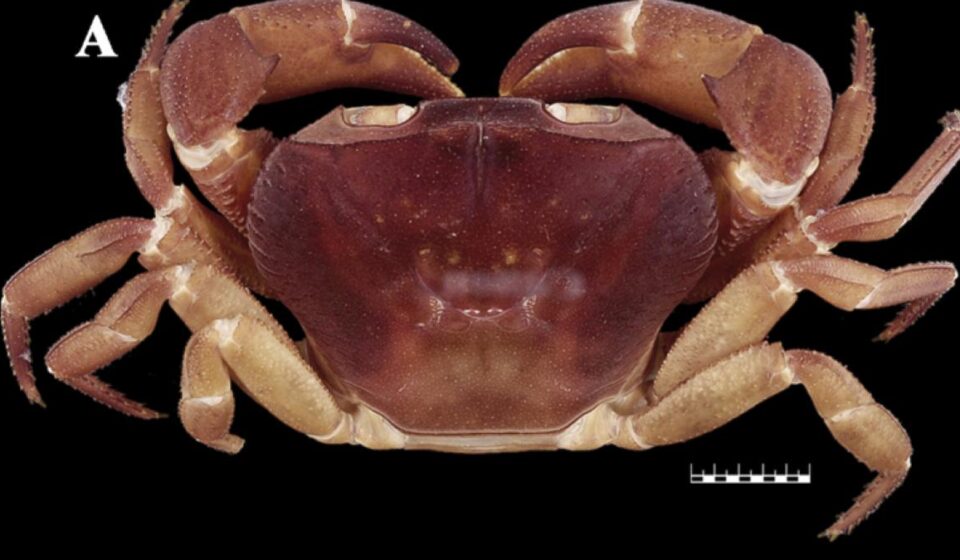
Discover the Marvel of Nature: The Enigmatic Crab in Silent Valley Displays Stunning Male and Female Traits!

A remarkable discovery in Silent Valley National Park has unveiled a tiny crab exhibiting both male and female biological traits. This unique crab, belonging to the endemic species Vela carli, was found in tree holes within the lush forests of the Western Ghats. Researchers observed this rare condition-known as gynandromorphy-in three specimens, marking the first documentation of such a phenomenon in Vela carli.
Gynandromorphy is a rare occurrence where an individual displays characteristics of both sexes. While this condition has been recorded in several marine and freshwater crab species, it is unprecedented within the Gecarcinucidae family, which includes Vela carli. “The crabs showed male reproductive structures alongside female features, including gonopores,” noted K.S. Anoop Das, Head and Assistant Professor at the Centre for Conservation Ecology, MES Mampad College.
This groundbreaking study was conducted in collaboration with crab specialist Sameer K. Pati and Purnima Kumari from the Zoological Survey of India. Their findings were published in the esteemed journal Crustaceana, bringing attention to this intriguing aspect of freshwater biodiversity.
The researchers suggest that the gynandromorphic trait may arise from intrinsic developmental processes rather than environmental factors. “Our study area is free from pollutants, which leads us to believe that this dual-sex condition may serve as a survival strategy,” explained Das. He posited that the ability to procreate without the presence of male or female counterparts could enhance the crab’s chances of survival.
The crabs were collected during biodiversity surveys, where over 120 specimens were examined. Remarkably, only three displayed this dual-sex condition, highlighting the rarity of gynandromorphy in natural populations. The study was supported by funding from the Department of Science and Technology, Science and Engineering Research Board, now known as the Anusandhan National Research Foundation.
The surprising habitat of these crabs-inside tree holes-indicates the richness of ecosystems present in these unique environments. “Discovering crabs in tree holes underscores the biological mysteries forests contain,” added Das, emphasizing the ecological significance of such findings.
The implications of this research extend beyond the unusual trait displayed by Vela carli. It opens up new avenues for understanding the biodiversity and ecological adaptations of these crabs in the Western Ghats. By studying the unique conditions that lead to such phenomena, scientists can gain valuable insights into the evolutionary pressures faced by freshwater species.
As interest in conservation and biodiversity grows, this discovery highlights the need for continued exploration and research into unexplored ecosystems. The Silent Valley National Park serves as a critical habitat for diverse species, and findings like these reinforce the importance of preserving such environments for future generations.
This exceptional case of gynandromorphy not only showcases the diversity of life in the Western Ghats but also invites further research into the biological complexities of crustaceans and their adaptations. The ongoing study of Vela carli could lead to more discoveries that deepen our understanding of nature’s intricacies.
Published – March 16, 2026, 09:37 PM IST.
Original Source: https://www.thehindu.com/sci-tech/energy-and-environment/crab-in-silent-valley-found-displaying-both-male-and-female-biological-traits/article70751063.ece
Category : Environment
Tags:
Publish Date: 2026-03-17 02:44:00