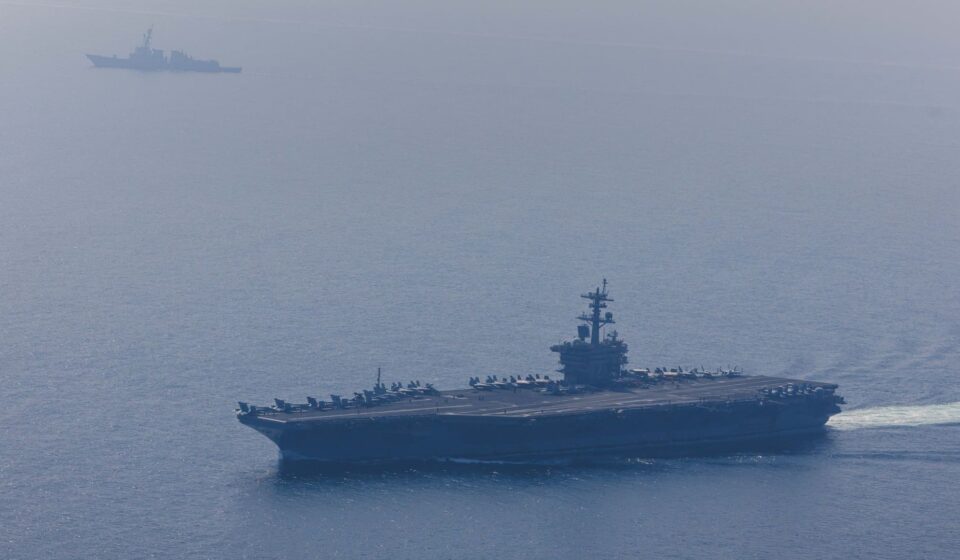

In the latest installment of “Inside India,” the focus is on India’s evolving foreign policy landscape amidst the ongoing U.S.-Israel conflict with Iran. This geopolitical tension is prompting New Delhi to reassess its major trade initiatives destined for Europe, a crucial trading partner. India recently secured its most significant trade agreement, yet the current situation may shift its strategic priorities.
India has been developing two key transport corridors aimed at reducing trade costs and transit times to Europe. The first is the International North–South Transport Corridor (INSTC), designed to facilitate shipments from India to Russia, Central Asia, and Europe via Iran’s Chabahar Port. The second is the India–Middle East–Europe Economic Corridor (IMEC), which links India to Europe through Gulf ports and Israel’s Haifa Port.
Experts suggest that only one of these corridors currently holds promise for India’s export ambitions amid the escalating conflict. Rafiq Dossani, an economist at the RAND Corporation, emphasizes that if the U.S. and Israel prevail, IMEC would likely take precedence over the revival of Chabahar. This corridor has garnered significant support, with former U.S. President Donald Trump lauding it as “one of the greatest trade routes in history” alongside Indian Prime Minister Narendra Modi. Meanwhile, Israeli Prime Minister Benjamin Netanyahu calls it “the largest cooperation project in our history,” which could redefine regional dynamics.
Iran’s uncertain future heavily influences this decision. Dossani notes that if Iran remains in conflict, it is unlikely to escape economic sanctions. Conversely, even if it were to lose, any potential lifting of sanctions would more likely benefit the victors rather than Iran itself. Political and structural instabilities only amplify doubts surrounding India’s $120 million investment in the Chabahar Port’s Shahid Beheshti terminal, particularly given that the U.S. waiver allowing operations there is set to expire soon.
Chietigj Bajpaee, a senior research fellow at Chatham House, comments that the Chabahar-Zahedan railway, pivotal for the INSTC, faces potential delays as the conflict continues. Given these uncertainties, many experts argue that India should pivot strongly towards IMEC, especially as logistical challenges have emerged from the disrupted routes through the Suez Canal. A report from Indian media outlet Mint indicates that major shipping carriers have curtailed transit through the Red Sea and Suez Canal due to the ongoing conflict, leading to increased transit times by up to 20 days and freight costs soaring by 40% to 50%.
Harsh Pant, Vice President of Studies and Foreign Policy at the Observer Research Foundation, asserts that the current crisis underscores the necessity of IMEC. According to Pant, its successful implementation could lead to reductions in logistical costs by up to 30% and transportation time by 40%, compared to traditional routes. Rick Rossow, a senior adviser at the Center for Strategic and International Studies (CSIS), echoes this sentiment, stating that IMEC aligns better with the geographic areas of India’s unfolding trade agreements.
While IMEC appears poised to stand out among India’s connectivity strategies, experts warn that its success hinges on a stable regional environment, which remains elusive.
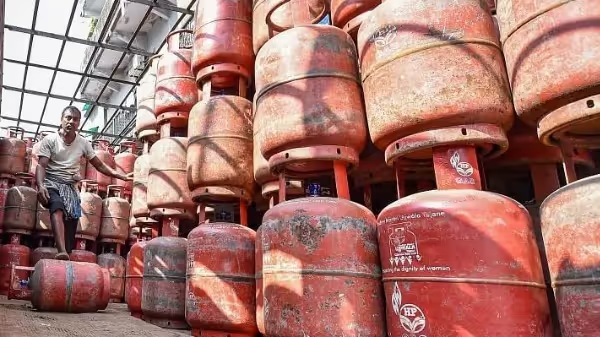
Meanwhile, developments on the ground indicate tensions at various domestic fronts. India’s Ministry of Petroleum and Natural Gas has mandated oil refineries to prioritize cooking gas supplies for households, putting at risk the operations of over three million businesses reliant on commercial gas. Additionally, India is subtly signaling a potential thaw in its relationship with China by easing regulations to welcome Chinese investments, marking a shift after nearly six years of strained ties.
Looking ahead, key economic indicators will be released soon, including inflation and unemployment data, further shaping India’s economic landscape as it navigates these complex dynamics.
Original Source: https://www.cnbc.com/2026/03/12/us-israel-iran-india-trade-europe.html
Category :
Tags:
Publish Date: 2026-03-12 09:57:00