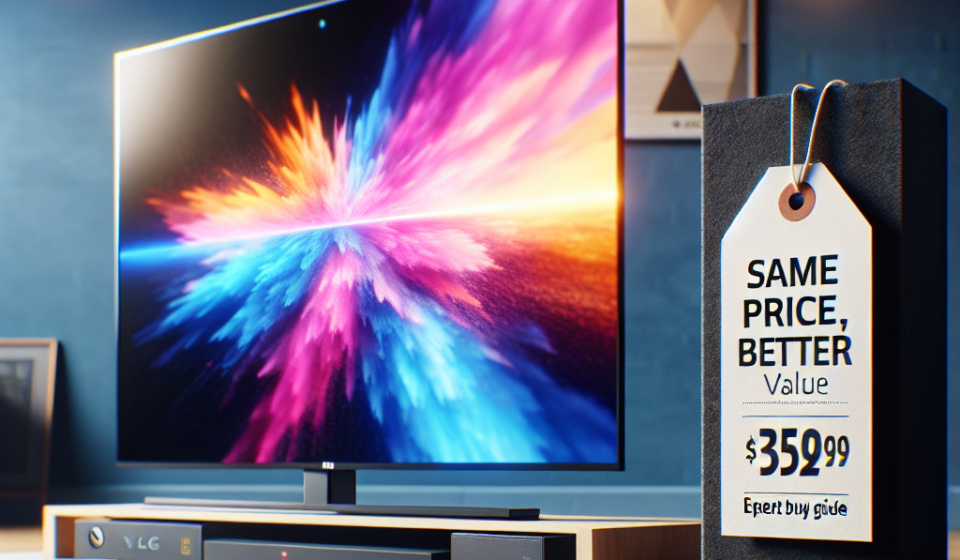

We obsess over specs and quarterly upgrades, but rarely pause to ask what steady pricing from a premium vendor actually signals about an industry. When a leading OLED maker launches a new generation of sets – with upgraded AI silicon, higher refresh rates and brighter panels – yet keeps prices essentially unchanged, that’s not just a consumer win. It’s a strategic signal about maturity, supply-chain engineering, and where value will migrate next.
Context (the signal)
I recently read the announcement about LG’s new C6 and G6 OLED ranges: refreshed hardware (Alpha-class AI SoC, high refresh-rate gaming modes, Dolby vision/Atmos support, and burn‑in mitigation) while retail pricing remains inline with last year’s models. That combination – noticeable capability upgrades without price inflation – is the trigger for the observations below.
Analysis – what this means for architects, CTOs and product leaders
1) Product maturity shifts value from raw hardware to software and ecosystem
When hardware reaches a mature cost curve, incremental hardware improvements no longer justify higher consumer prices. The real differentiation moves up the stack: software experiences, platform partnerships, AI-driven personalization and content ecosystems. For enterprise architects that means investments in middleware, APIs, and partner integrations deliver more durable competitive advantage than squeezing another 10–20% GPU uplift into a product.
2) Edge AI is mainstreaming – plan accordingly
The new sets ship with on-device AI processors and gaming-grade refresh rates. That’s an architectural reminder: doing inference at the edge (on the device) lowers latency, reduces recurring cloud costs, and improves privacy. For product teams, the implication is clear – design systems that natively support heterogenous compute: cloud for heavy model training, edge for inference, and an efficient orchestration layer between them.
3) Reliability and lifecycle matter as much as features
Manufacturers emphasizing burn‑in protection and extended lifecycles are buying customer trust. In software terms, that’s the parallel of investing in resilience and maintainability – treating technical debt like a product liability. A bold feature set with poor long-term reliability will erode adoption faster than a conservative feature roadmap with strong SLAs and update policies.
4) Standards and partnerships amplify reach
Support for Dolby formats and Filmmaker Mode is an example of purposeful alignment with content and platform partners. For enterprises, choosing standards-based integrations rather than proprietary silos increases both reach and longevity. It’s the difference between a single-product sale and an enduring platform.
5) Supply-chain resilience reduces price volatility
Keeping prices stable amid component shortages (earlier RAM constraints were cited industry-wide) suggests manufacturers are either improving procurement or accepting lower margins to preserve market share. For tech leaders, the lesson is to architect supply and deployment pipelines that can absorb volatility – diversify suppliers, plan for components as a strategic asset, and model pricing scenarios in product planning.
A short Bharat note (where it genuinely connects)
Stable pricing on advanced consumer devices matters in India. TVs are increasingly “first screens” for OTT, education, and local-language services in smaller towns. When premium displays become cost-accessible, the on-device AI and improved UX can enable richer vernacular interfaces and localized content discovery – accelerating digital inclusion beyond metropolitan markets. That’s relevant to product teams building services for Bharat: think lightweight, localized apps that leverage edge capabilities rather than assuming continuous high-bandwidth connectivity.
Actionable takeaways
– Reorient R&D: prioritize software, UX and ecosystem partnerships over incremental hardware-only gains.
– Adopt edge-first architecture where latency, privacy or cost matter; standardize model deployment pipelines.
– Treat long-term reliability as a product KPI; bake it into SLAs and roadmap priorities.
– Model supply-chain volatility in pricing and margin plans; diversify critical components.
– Favor standards-based integrations to extend platform reach and reduce lock-in.
Closing thought
Stable prices on smarter devices are more than a consumer bargain – they’re an inflection point that reallocates competitive advantage from silicon cost to software experience, ecosystem, and operational resilience. For architects and founders, that’s both a challenge and an opportunity: build the layers above the chip well, and you own the customer relationship for the next decade.
About the Author Sanjeev Sarma is the Founder Director of Webx Technologies Private Limited, a leading Technology Consulting firm with over two decades of experience. A seasoned technology strategist and Chief Software Architect, he specializes in Enterprise Software Architecture, Cloud-Native Applications, AI-Driven Platforms, and Mobile-First Solutions. Recognized as a “Technology Hero” by Microsoft for his pioneering work in e-Governance, Sanjeev actively advises state and central technology committees, including the Advisory Board for Software Technology Parks of India (STPI) across multiple Northeast Indian states. He is also the Managing Editor for Mahabahu.com, an international journal. Passionate about fostering innovation, he actively mentors aspiring entrepreneurs and leads transformative digital solutions for enterprises and government sectors from his base in Northeast India.