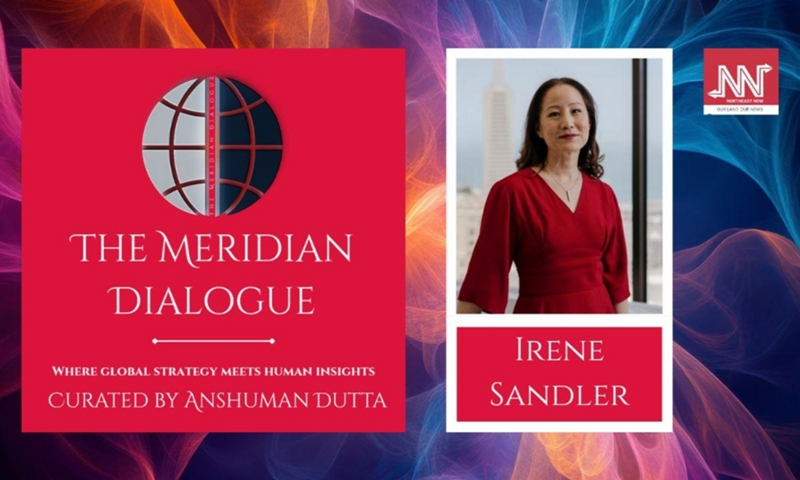

Irene Sandler, Chief Marketing Officer at Mechanical Orchard, says marketing must evolve from a support function into strategic intelligence that shapes business direction. Speaking with The Meridian Dialogue, Sandler — whose career spans early programming and senior marketing roles at firms including Cisco and Cognizant — argues that in an era of abundant technology and short attention spans, marketing must help leaders decide what their companies stand for and who they serve, not simply execute campaigns.
Sandler recalls Peter Drucker’s observation that marketing was once one of the “only” two functions of business alongside innovation, and says the discipline slipped into executional roles as technology firms elevated product and engineering. That balance is reversing: with anyone able to build a tech product, technical excellence no longer guarantees demand, and relevance and growth are leadership decisions rather than problems for marketing to fix alone.
On brand and purpose, Sandler insists authenticity matters more than clever positioning. A brand that “stands for something,” she says, starts with creating real value for a defined audience, then aligns values, stakeholder treatment, and public presentation consistently. Without that internal alignment, external messaging rings hollow.
As automation and AI reshape marketing, Sandler rejects the label “data-driven” in favor of “data-informed,” citing Ronald Coase’s warning that “If you torture the data long enough, it will confess to anything.” Data should illuminate patterns and reduce blind spots, she says, but judgment-built from experience and discernment-must decide priorities, tradeoffs, and non-negotiable principles. “AI can now create beautiful prose, but good writing comes from good thinking,” she notes.
Trust, Sandler adds, is not a product of clever narratives but of consistency between words and actions. “There’s no narrative in the world that will build trust if actions and words conflict,” she says, arguing that lasting trust depends on predictable, aligned behavior over time rather than momentary engagement.
Reflecting on leadership through change, Sandler points to two guiding principles developed across startups and large organizations: retain curiosity within constraints, and be willing to do the work you ask of others so empathy comes from experience. These approaches help preserve culture amid rapid growth and complex transformation.
Sandler also warns that marketing’s ethical influence cannot be delegated to one function. CEOs and leadership teams shape public perception more than any campaign; what leaders tolerate or fund communicates values far louder than manifestos. Similarly, her work modernizing legacy systems at Mechanical Orchard highlights that technical problems are often socio-technical-entangled with incentives, habits, and fear of loss. People “feel the pain of loss twice as strongly as the satisfaction of gain,” she says, which makes change as much emotional as technical.
Looking ahead, Sandler believes the core competency for marketing leaders will be synthesis: the ability to connect technology, economics, human behavior, and ethics and apply judgment across disciplines. In a world where AI can out-expert humans in narrow tasks, the scarce skill will be integrating domains and anticipating second- and third-order consequences.
Original Source: https://nenow.in/business/interview-the-meridian-dialogue-with-irene-sandler-chief-marketing-officer-at-mechanical-orchard.html
Category: Business,Top News
Tags:
Publish Date: 2026-03-11 20:31:00