
When institutions blur mission boundaries, the first casualty is trust – and trust is the most expensive asset an organization has.
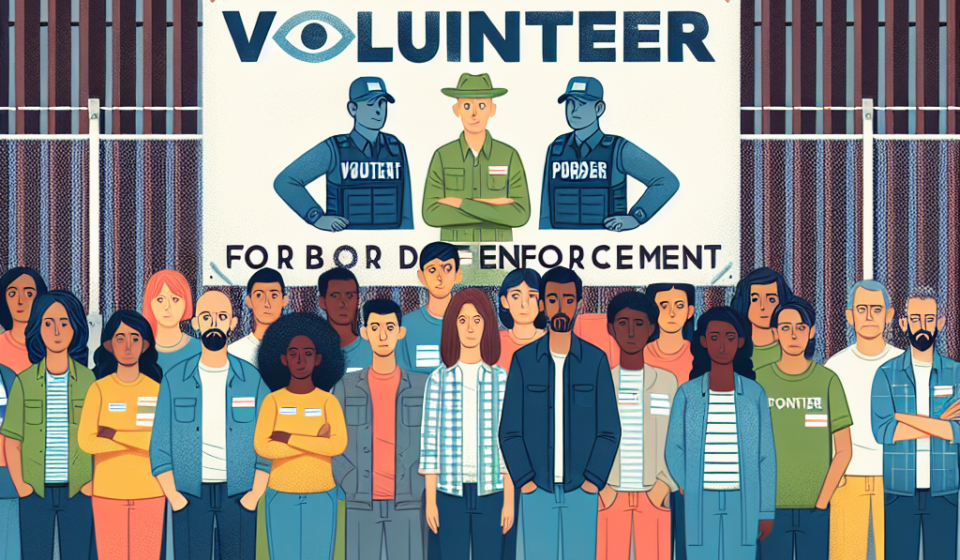
I recently read reporting about the U.S. Department of Defense encouraging civilian employees to volunteer for immigration-enforcement details with DHS. Beyond the immediate policy debate, this episode exposes a set of organizational and architectural risks that every technology leader – public and private – should study closely.
The signal: senior leadership is asking civilian staff to be repurposed from their core duties to support a politically sensitive mission. The friction is not purely logistical; it’s about consent, capability alignment, institutional neutrality, and long-term operational resilience.
What this means for enterprise and public-sector leaders
1. Mission creep creates technical and human debt. Redirecting staff from ongoing projects may solve a short-term capacity problem but compounds risk: delayed roadmaps, unmaintained systems, and growing single‑person dependencies. From a chief architect’s perspective, what looks like a temporary reallocation often becomes permanent attrition and undocumented tribal knowledge loss.
2. Consent and coercion erode culture and retention. Policies framed as “encouragement” but pressured through supervisory channels feel like mandates. That perception damages morale and increases turnover risk – especially among specialist talent whose skills are portable. Talent flight is a recurring hidden cost that degrades delivery velocity more than any budget cut.
3. Dual-use roles demand strict governance. When civilian or technical staff are asked to support enforcement activities, questions arise about data access, privacy, auditability, and role separation. Systems designed to serve public services are rarely built with law‑enforcement workflows or evidentiary chains of custody in mind. That mismatch multiplies legal and reputational exposure.
4. Digital trust is mission-critical. Governments and enterprises alike run on citizen and customer trust. Any move that appears to repurpose public-facing platforms or staff for politically charged tasks risks undermining that trust. For technology teams, this is a reminder that architectures must enforce policy boundaries technically – not just procedurally.
Practical actions for CTOs, Heads of Architecture and Public-Sector CIOs
– Clarify policy boundaries with legal counsel and HR: define voluntary vs. mandatory, escalation paths, and protections against retaliation. Publish clear FAQs for staff.
– Maintain strict separation of duties in systems: use role-based access controls (RBAC), immutable audit logs, and data-minimization principles before any cross-agency detail occurs.
– Protect continuity: identify critical projects and create sprint-based coverage plans rather than ad-hoc reassignments; document knowledge to reduce single points of failure.
– Treat talent as strategic capital: offer clear career paths, compensatory allowances, or upskilling options for volunteers; avoid punitive pressure through supervisory channels.
– Short-term capacity vs. long-term capability trade-off: prefer buy (contract or temporary hires) when the need is operational and short-lived, and build when the change is strategic and permanent.
– Communicate externally and transparently: for public agencies, publish impact assessments explaining how service delivery, privacy, and neutrality are preserved.
A wider lens: technologists are not neutral bystanders
Technology leaders must recognise that technical decisions and staffing choices are political and ethical vectors as much as operational ones. Building systems that can be repurposed quickly is a legitimate capability – but so is designing guardrails that prevent misuse. Zero Trust architectures, auditable data flows, and strong separation of duties aren’t just cybersecurity best practices; they are governance primitives that preserve institutional legitimacy.
For those of us advising state and national bodies – whether in Northeast India or elsewhere – the lesson is universal: avoid short-term expedients that damage long-term civic and operational capital. Invest in modular capability, legal clarity, and employee safeguards. That combination keeps institutions resilient without sacrificing the public trust that underpins every digital service.
Takeaways
– Short-term staff redeployments are cheap solutions with expensive downstream costs.
– Technical guardrails must mirror policy decisions; don’t rely on goodwill or informal assurances.
– Treat employee consent and protection as part of your architecture and risk model.
– Prefer external capacity when urgency outweighs strategic alignment.
Closing thought: organizations that respect role boundaries and bake protections into their technical and HR architecture will be the ones that retain both capability and trust through turbulent times.
About the Author Sanjeev Sarma is the Founder Director of Webx Technologies Private Limited, a leading Technology Consulting firm with over two decades of experience. A seasoned technology strategist and Chief Software Architect, he specializes in Enterprise Software Architecture, Cloud-Native Applications, AI-Driven Platforms, and Mobile-First Solutions. Recognized as a “Technology Hero” by Microsoft for his pioneering work in e-Governance, Sanjeev actively advises state and central technology committees, including the Advisory Board for Software Technology Parks of India (STPI) across multiple Northeast Indian states. He is also the Managing Editor for Mahabahu.com, an international journal. Passionate about fostering innovation, he actively mentors aspiring entrepreneurs and leads transformative digital solutions for enterprises and government sectors from his base in Northeast India.