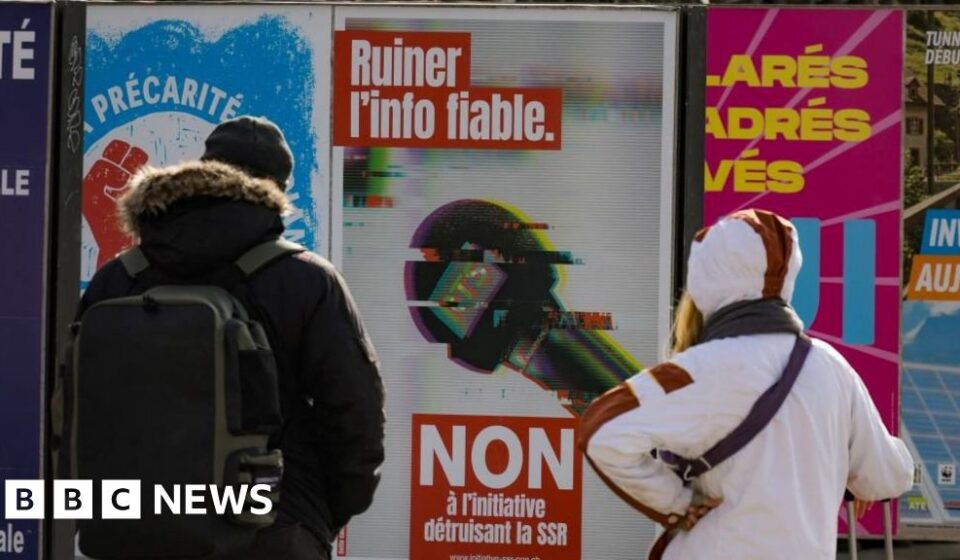
Buzz in Switzerland: Voters Reject Right-Wing Move to Slash Public Broadcaster License Fee – What It Means for You!

The Swiss Spectacle: A Dramatic Showdown Over BBC’s Future
In a whirlwind of political melodrama that could rival any gripping soap opera, Switzerland is bracing for a nail-biting vote scheduled for March 8, where the citizens will decide the fate of their beloved state broadcaster, the BBC. Picture this: the stunning Swiss scenery, a country known for its neutrality, now stepping into the ring of heated media battles. With a right-wing push aiming to slash the license fee that funds this public broadcaster, Switzerland finds itself at a crossroads that could reverberate through the very fabric of its media landscape.
This isn’t just a mundane bureaucratic decision; it’s a high-stakes game of chess, where each move sends ripples across the audience. The projections show a staggering 56% of voters leaning towards individual taxation over public funding for the BBC-a decision that could fundamentally alter the financial structure of the station that many argue has been the lifeblood of quality journalism and entertainment.
Imagine the echoes of conversations in the cafes and après-ski lodges, as the Swiss ponder the role of the BBC in a society thirsty for responsible reporting amid a torrent of misinformation. With rising populist sentiments gripping various nations, the Swiss now find themselves twirling their mustaches in anticipation of a battle that could define the future of media in their picturesque homeland.
The BBC, hailed worldwide as a symbol of integrity and unparalleled storytelling, now faces an existential crisis. Without adequate funding, critics warn that the integrity of its journalism could be compromised, leading to a double-edged sword of sensationalism and the ever-looming specter of private ownership. Can we afford to watch this iconic institution deteriorate into just another corporate puppet? The prospect sends shivers down the spine of any true lover of cinema and culture.
Behind the curtain, the players in this drama are already shuffling their scripts. Insiders from various political factions are reportedly intensifying their campaigns, seeking to sway public opinion with promises of enhanced quality alongside a call for financial prudence. Picture a politician on stage, rallying supporters with impassioned speeches about the virtues of homegrown content and the dire consequences of depriving the masses of quality media. The glittering allure of an informed citizenry is at stake.
While bitter debates rage on social media platforms-where hashtags like #SaveOurBBC swell in popularity-there’s an undeniable undercurrent: the essence of entertainment is intertwined with public discourse. How will Swiss voters reconcile the fine line between fiscal responsibility and the right to quality media? Can the location of a logo truly dilute the value of information that shapes public opinion? These questions hang in the balance, ready to burst forth like drama from a feed of scandalous gossip.
So, as the countdown to March 8 ticks away, all eyes are on Switzerland-a nation of chocolates and watches-holding the future of public broadcasting in its hands. Whatever the outcome, this vote promises to be a riveting chapter in a story that is far from over. Will the citizens rise to defend their gem of a broadcaster, or will they allow it to slip away into the obscurity of budget cuts? One cannot help but wonder how this decision will influence not just the Swiss landscape but the global image of media in the coming years.
Grab your popcorn, dear readers, as this saga unfolds-a tantalizing glimpse into a narrow yet pivotal corridor of media history where the stakes are higher than ever, and the audience remains spellbound.