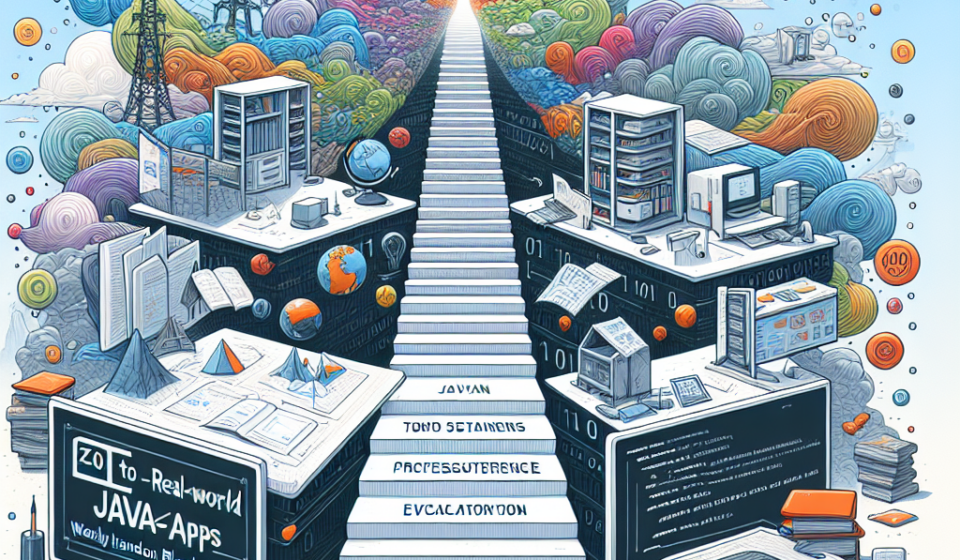

We celebrate “learn-by-doing” stories – but too often we stop at the narrative of a weekend victory. The real question for enterprises and for regional talent ecosystems is: how do those small, courageous learning experiments scale into production-grade skills that reduce organizational risk rather than increase technical debt?
Context (signal)
I recently came across a public weekly log by an engineering student who is going from zero to building real-world applications with Java, sharing weekly progress, code, bugs and resources. The format – fundamentals-first, public accountability, and incremental projects – is simple, honest, and increasingly common among early-career engineers.
Analysis – what this pattern means for architecture, hiring and strategy
There are three important principles behind this form of learning that matter to CTOs, architects and founders.
1) Democratized entry, uneven outputs
Platforms and open-source hosting make it trivially easy to “start building.” That democratizes access to software development, but it also means organizations will see a larger, more heterogeneous talent pool. The implication for hiring is straightforward: portfolios now matter more than degrees. But portfolios need curation – a GitHub repo full of toy programs is not the same as a project that demonstrates tests, CI, documentation, and clear separation of concerns. As architects, we must design evaluation rubrics that distinguish curiosity from production-readiness.
2) The missing scaffolding: feedback loops and tooling
Many learners follow tutorials and ship a working feature – great for momentum – yet miss the scaffolding that makes software maintainable: code review, test-driven development, automated builds, observability, and basic security hygiene. The trade-off is speed vs. stability. For companies recruiting junior talent, investing in mentorship and lightweight governance (templates for PRs, linting, starter CI pipelines) converts raw enthusiasm into reliable contributors while limiting cultural debt.
3) From learning projects to systems thinking
A beginner project becomes enterprise-safe when the author starts considering system-level concerns: modular design, dependency management, backward compatibility, data contracts, and failure modes. This is where the leap from “app that works on my machine” to “app that survives production” happens. Architects should create micro-pathways that explicitly teach these concerns – not as optional extras but as fundamental checkpoints in any learning-to-contributing journey.
Actionable recommendations
For CTOs and Founders
– Create apprenticeship pathways: 3–6 month rotations with hands-on mentors, and deliverables that include tests, CI, and a deployment checklist.
– Standardize starter kits: repo templates with linting, basic security scans, CI, and README checklists so newcomers learn good defaults.
– Evaluate projects, not just commits: require a small demo, test coverage, infrastructure-as-code snippets and a short design note explaining trade-offs.
For learners
– Make every small project include automated tests and a CI file – even a single test changes how you think about design.
– Practice deliberate debugging: log hypotheses, reproduce steps, fix, and document. That “bug diary” matters in interviews.
– Seek code review early; feedback accelerates learning far more than solo trial-and-error.
Localization: why this matters for talent in Northeast India
Initiatives like these scale particularly well in regions where formal industry exposure is limited. Low-cost cohorts, community-run code reviews, and STPI-affiliated incubators can convert motivated students into dependable contributors for remote-first teams. Practical measures – offline-friendly learning materials, weekend mentorship sessions, and local hands-on labs – reduce friction for learners who face intermittent connectivity or fewer local internship opportunities.
Takeaways
– Learning-in-public is powerful, but organizations must add scaffolding to make it enterprise-useful.
– Invest early in mentorship, default tooling, and evaluation rubrics that reward maintainability over novelty.
– Regional talent programs that combine public accountability with infrastructure (CI templates, code review networks) create reliable hiring pipelines.
Closing thought
Enthusiasm is the spark; process and mentorship are the fuel. If we want public learners to become dependable engineers, we must architect the pathways that bridge curiosity and craftsmanship.
About the Author Sanjeev Sarma is the Founder Director of Webx Technologies Private Limited, a leading Technology Consulting firm with over two decades of experience. A seasoned technology strategist and Chief Software Architect, he specializes in Enterprise Software Architecture, Cloud-Native Applications, AI-Driven Platforms, and Mobile-First Solutions. Recognized as a “Technology Hero” by Microsoft for his pioneering work in e-Governance, Sanjeev actively advises state and central technology committees, including the Advisory Board for Software Technology Parks of India (STPI) across multiple Northeast Indian states. He is also the Managing Editor for Mahabahu.com, an international journal. Passionate about fostering innovation, he actively mentors aspiring entrepreneurs and leads transformative digital solutions for enterprises and government sectors from his base in Northeast India.