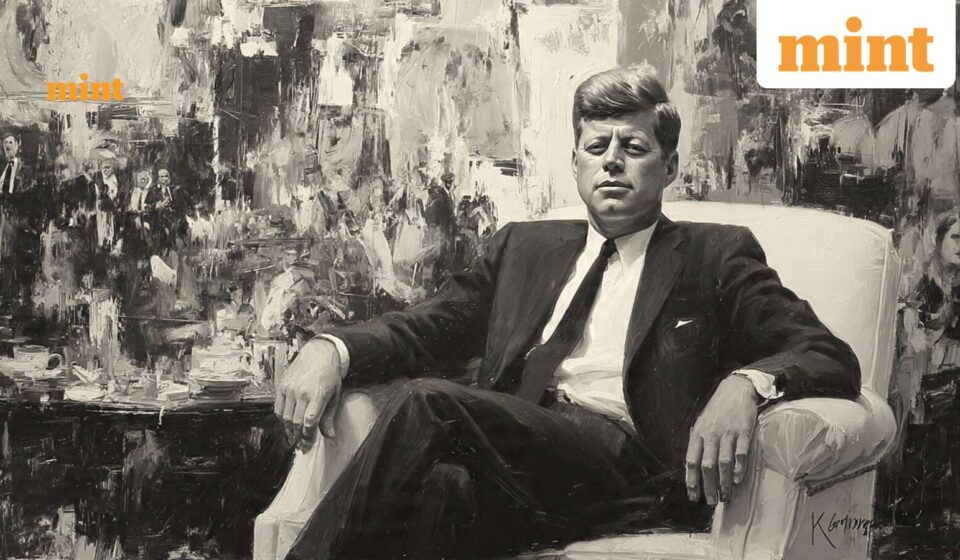

On September 25, 1961, President John F. Kennedy delivered a powerful message at the United Nations General Assembly: “Mankind must put an end to war. Or, war will put an end to mankind.” In the midst of the Cold War, with the United States and the Soviet Union enmeshed in a nuclear arms race, this stark declaration highlighted the unprecedented risks associated with war-a reality that has evolved dramatically since the dawn of human conflict.
Kennedy’s words were not mere rhetorical flourishes; they reflected a cold hard truth. Nuclear weapons had redefined warfare, turning it into a potential pathway to human extinction rather than a contest over territory or influence. By 1961, it was evident that a single miscalculation could lead to catastrophic consequences, erasing cities in mere moments and thrusting humanity into an unmatched crisis. This shift prompted Kennedy to elevate the discourse surrounding war; he positioned peace not as an abstract ideal but as an existential necessity.
The former President underscored a crucial choice facing humanity: to deliberately manage conflict or risk allowing it to spiral beyond control. This warning acted as a clear, urgent call to action. Resolving disputes does not equate to eradicating differences; it involves establishing systemic frameworks that prevent disagreements from escalating into destructive warfare.
While the immediate concerns in 1961 centered around nuclear arsenals, Kennedy’s warning remains pertinent today. Armed conflict is no longer confined to traditional battlefields. The surge in advanced military technologies-from precision weaponry to cyber warfare and artificial intelligence-has only intensified the stakes. In this evolving landscape, the responsibility for peace is collective. Cooperation among nations emerges not as a moral luxury, but as a fundamental survival strategy.
Kennedy’s poignant message carries a weight beyond political strategy; it touches the lives of everyday people. The ravages of war lead to displaced families, collapsing economies, and lasting generational trauma. His speech, delivered during a critical moment of the Cold War just before the Cuban Missile Crisis, was a clarion call for both superpowers to step back from the brink of confrontation. He advocated for comprehensive disarmament under international oversight and urged the strengthening of the United Nations as a platform for peaceful dialogue rather than militaristic aggression.
Through historical hindsight, Kennedy’s warning takes on a prophetic quality. The Cuban Missile Crisis of 1962 exemplified how precarious global peace could be, nearly drawing the world into a nuclear conflict. The lessons from that time remain actionable for today’s geopolitical landscape.
As we face modern dilemmas, we must prioritize dialogue over escalation, recognize the ethical obligations that accompany technological advances, and embrace a shared global responsibility for tackling complex challenges. Peace is inherently active; it requires planning, compromise, and perseverance.
Kennedy’s assertions resonate with renewed urgency: humanity still possesses the means to self-destruct. The choice he articulated persists-either we consciously limit war, or war limits our very existence.
In a world where the stakes are continually rising, his message is one we cannot afford to ignore.
Categories: International Relations, Disarmament, Cold War
Tags: John F. Kennedy, Nuclear Weapons, Peace, Global Responsibility, Cold War
Original Source: https://www.livemint.com/news/trends/quote-of-the-day-2-march-2026-us-president-john-f-kennedy-nuclear-war-11772437814934.html
Category :
Tags:
Publish Date: 2026-03-02 13:31:00