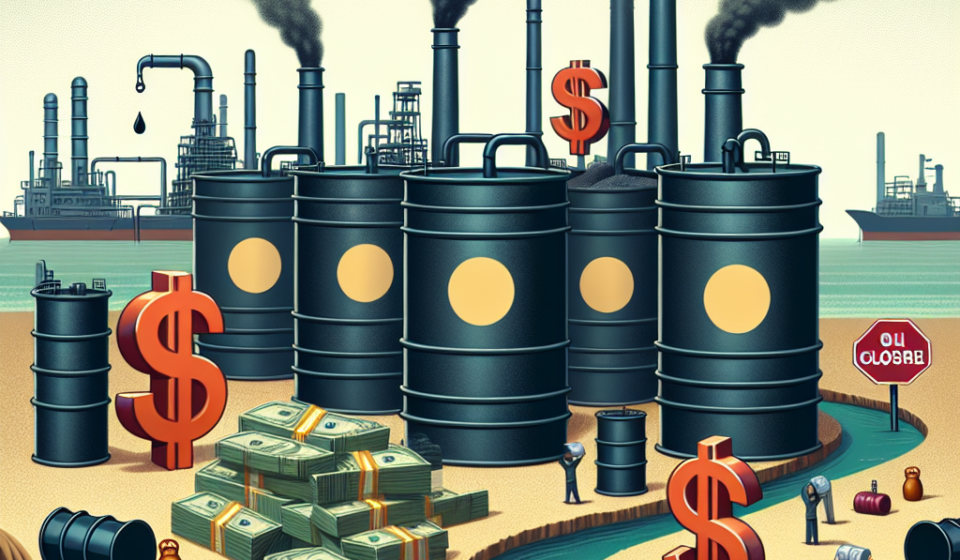

When markets begin to move before a single barrel is physically stopped, you are witnessing information – and risk – racing ahead of reality. That gap between expectation and physical disruption is the operational problem too many organisations overlook.
Context
Recent reporting highlights that tanker movements and port choices around the Strait of Hormuz have already shifted: shipments are being rerouted or delayed, and aggregate outbound flows have dipped even before any formal closure. Analysts warn that the real disruption would be more than lost volume – it would be a structural shock to voyage times, insurance costs, freight rates and energy security for import-dependent economies.
Analysis – why architects and leaders should care
This is not just an energy story. It is a systems-design problem that exposes weaknesses in supply-chain visibility, risk modelling and strategic resilience.
1) Information leads operations. Markets price in geopolitical risk quickly because traders see vessel tracks, cargo nominations and insurance repricing in near real time. Enterprises that rely on monthly reports or static forecasts will be blind to cascading impacts: longer transit times, shortages of specific crude grades, LNG supply interruptions and spiking freight/insurance costs.
2) Fleet productivity is a hidden tax. Longer voyages and detours reduce tanker throughput even if production continues. That creates a mismatch between nominal supply and available cargo – a nuance that simple inventory metrics miss. For businesses, the result is higher landed cost and unpredictable lead times.
3) Systemic knock-on effects. When freight and insurance rise, the cost to move all commodities and finished goods rises. That transmits rapidly into transport-heavy sectors (e.g., retail, FMCG, aviation) and into inflation-sensitive markets. Financial instruments will amplify these moves long before physical shortages bite.
What practical steps should a CTO, COO or Founder take?
– Treat strategic supply chains as real-time distributed systems. Invest in vessel/commodity visibility (AIS feeds, port call data, terminal nominations) and integrate them into procurement and ERP systems. Event-driven architectures and streaming analytics turn noisy signals into operational triggers.
– Build simple scenario playbooks, not just long reports. Define threshold-based actions (e.g., reroute, increase shore inventories, shift to alternate grades, invoke force majeure clauses) and automate parts of the response where possible.
– Use digital twins and Monte Carlo stress tests to quantify ‘time-to-recover’ and cash-flow impacts under multiple closure durations and insurance repricing scenarios. Don’t guess – measure the exposure across SKUs, suppliers and logistics nodes.
– Revisit Build vs Buy: buy trusted maritime and analytics feeds (specialists beat ad-hoc builds for speed and coverage). Build the orchestration layer – the integration, decision rules and playbooks – inside your stack so you can act.
– Hedging and commercial levers matter. For energy-intensive businesses, financial hedges, flexible contracts and supplier diversification (including swaps or alternate sourcing corridors) are essential complements to technical visibility.
– Align with risk-transfer partners. Insurance and freight markets will change rapidly; maintain active dialogue with brokers and logistics partners and stress-test contract terms and contingency capacities.
India and the regional angle
For India – a heavy importer of crude and LNG – the risk is immediate. Higher oil and LNG prices rapidly affect fiscal calculations, transport budgets and industrial costs. For enterprises operating in the Northeast, while the immediate import routes differ, the macro shock filters through fuel prices, logistics costs and consumer demand. Central and state planners should accelerate strategic reserve planning, diversify source geographies, and invest in demand-side resiliency (fuel efficiency, renewables and storage).
Takeaways
– Visibility + orchestration beat visibility alone.
– Scenario-ready playbooks reduce reaction time and strategic debt.
– Combine technical measures (real-time feeds, digital twins) with commercial hedges and contract flexibility.
– Policy and enterprise preparedness should work in parallel: reserves, alternate corridors and demand management are all part of resilience.
Closing thought
Geopolitical risk will always be with us; the real advantage goes to organisations that convert noisy early signals into disciplined, measurable, and repeatable responses.
About the Author
Sanjeev Sarma is the Founder Director of Webx Technologies Private Limited, a leading Technology Consulting firm with over two decades of experience. A seasoned technology strategist and Chief Software Architect, he specializes in Enterprise Software Architecture, Cloud-Native Applications, AI-Driven Platforms, and Mobile-First Solutions. Recognized as a “Technology Hero” by Microsoft for his pioneering work in e-Governance, Sanjeev actively advises state and central technology committees, including the Advisory Board for Software Technology Parks of India (STPI) across multiple Northeast Indian states. He is also the Managing Editor for Mahabahu.com, an international journal. Passionate about fostering innovation, he actively mentors aspiring entrepreneurs and leads transformative digital solutions for enterprises and government sectors from his base in Northeast India.