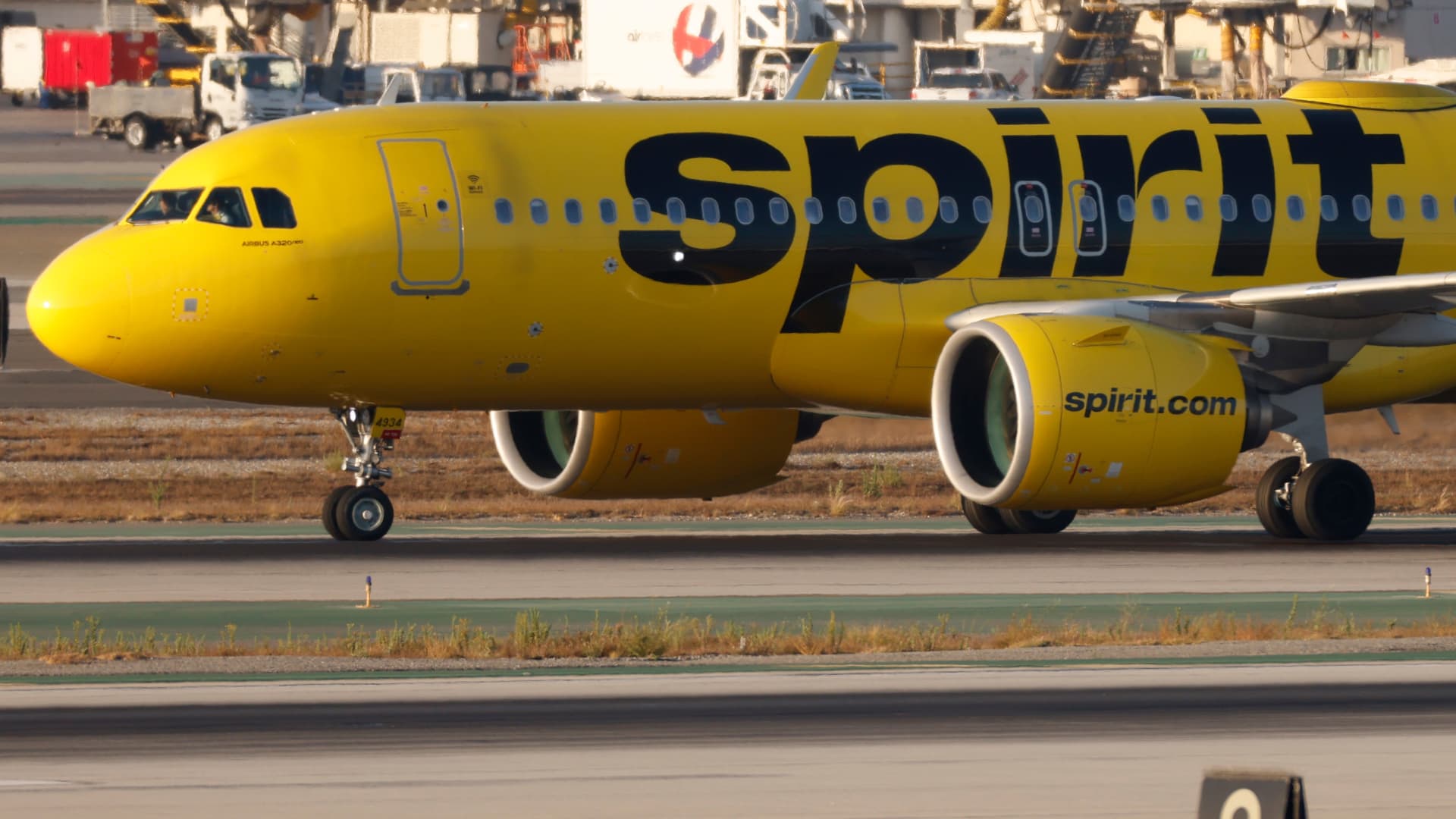

Spirit Airlines is embarking on a significant transformation as it prepares to navigate its second bankruptcy in less than a year. In a recent court filing, the budget airline announced plans to streamline its operations, focusing on high-demand travel periods and popular routes while expanding its premium seating options. This strategic pivot aims to position Spirit for a successful exit from bankruptcy, projected for late spring or early summer 2024.
Marshall Huebner, Spirit’s attorney from Davis Polk, revealed that the airline intends to retire more Airbus aircraft as part of its restructuring efforts. Spirit’s fleet will shrink from a current debt of $7.4 billion to an estimated $2.1 billion as it aims to emerge leaner and more competitive. “Spirit will emerge as a strong, leaner competitor that is positioned to profitably deliver the value American consumers expect at a price they want to pay,” said Spirit’s CEO Dave Davis.
The company plans to modify its network and flight schedules to enhance aircraft usage during peak travel times while scaling back operations during quieter periods. Additionally, Spirit will introduce more premium economy options and revamp its loyalty program to attract a broader customer base.
Future fleet plans primarily involve older Airbus models, with a possibility of forgoing high-cost NEO aircraft. Huebner noted that the precise size of Spirit’s fleet will rely on negotiations with aircraft lessors. The airline anticipates reducing its annual fleet costs by approximately $550 million — a striking 65% decrease from its pre-bankruptcy levels. Moreover, Spirit aims to yield another $300 million in savings through cuts unrelated to its fleet.
In recent months, Spirit has already adjusted its Airbus fleet size and furloughed some pilots and flight attendants to minimize costs, although some cabin crew members were recalled ahead of the spring break travel season. An in-principle agreement with creditors has been established, allowing secured lenders to provide material liquidity to Spirit by releasing cash collateral.
Throughout its second bankruptcy process, Spirit explored potential mergers with Frontier Airlines and investment firm Castlelake, though no agreements materialized. Huebner hinted that future industry transactions could still be a possibility. “This emergence will allow Spirit to do many things from a position of strength and stability, including to consider potential future industry transactions,” he stated.
However, Spirit faces an uphill battle as it competes with larger airlines that command significant market share in the U.S. aviation sector. The landscape is increasingly competitive, influenced by rising labor costs and a consumer trend favoring more upscale travel experiences. “Every single day counts, and every dollar counts. The airline industry remains as competitive today as it was last week, and we must secure our needs from other stakeholders to expedite our exit from Chapter 11,” Huebner emphasized.
Spirit’s journey has not been without hurdles, including a substantial engine recall from Pratt & Whitney and a thwarted acquisition attempt by JetBlue Airways, which was blocked by a federal judge in early 2024. Last December, Spirit forecasted a net profit of $252 million for the year, though it reported a significant loss of nearly $257 million shortly after exiting its first Chapter 11 bankruptcy in March.
As the airline seeks to redefine its footprint in the competitive market, it is poised to emerge from this challenging period more focused and primed for recovery.
Original Source: https://www.cnbc.com/2026/02/24/spirit-airlines-bankruptcy-flights.html
Category :
Tags:
Publish Date: 2026-02-24 23:31:00