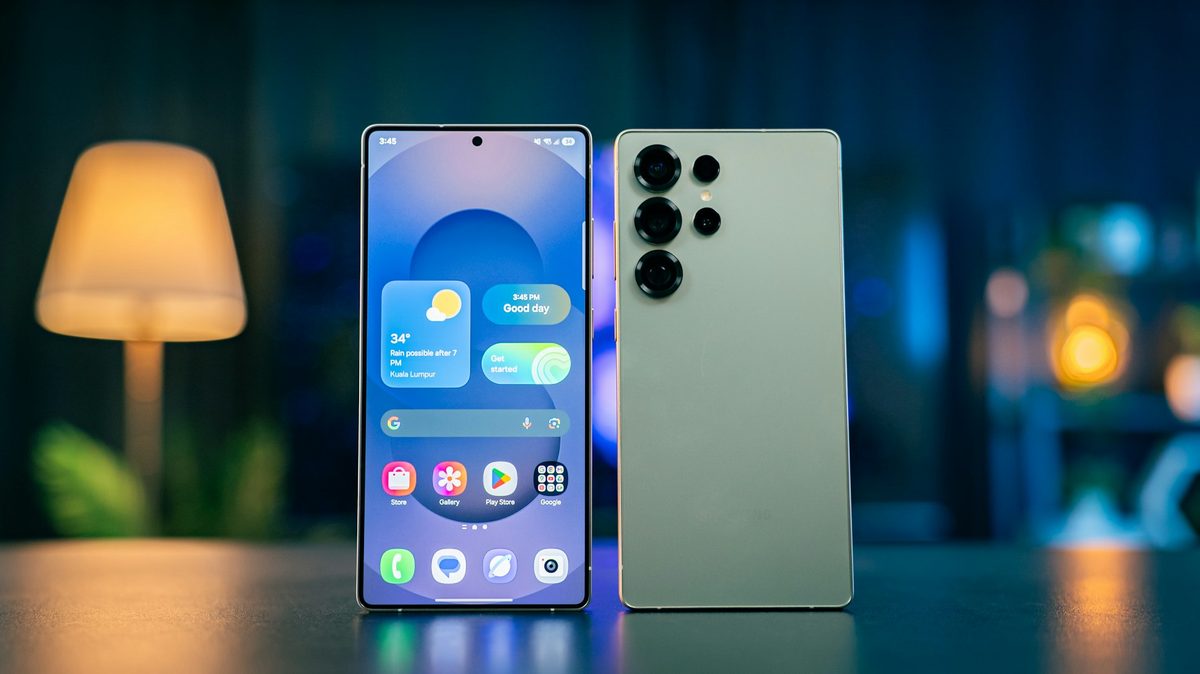

We celebrate headline GPU wins because they’re easy to communicate: “X% faster in benchmark” sounds decisive. But as a chief architect I’ve learned to treat single-number victories as signals, not verdicts. A strong ray‑tracing score is interesting – it tells you where the silicon was optimized – but it doesn’t, on its own, define the user or enterprise experience.
The signal: industry reports show Samsung’s Exynos 2600 (with the Xclipse 960 GPU) posting a leading Basemark In Vitro 1.0 ray‑tracing score, outperforming contemporary Adreno and Mali parts by measurable margins, while its CPU single‑core performance trails the latest Snapdragon chips. The SoC’s GPU leverages AMD’s RDNA 4 ray‑tracing IP, indicating a deeper AMD–Samsung collaboration on graphics tech.
What this means for architecture and product strategy
– Specialization vs balance: The Exynos 2600 is architected to win specific visual workloads. For gamers and AR/VR experiences that rely on ray tracing or advanced rasterization, that’s a differentiator. But most enterprise and consumer mobile apps are latency‑sensitive UI/UX workloads where single‑thread CPU responsiveness, scheduler behavior, and OS-level power management matter more than peak GPU throughput. Product teams must ask: what is the dominant workload for our users? Optimize for that, not for benchmark headlines.
– The software stack is the battleground: Raw GPU horsepower only pays off when drivers, APIs (Vulkan, hardware ray tracing extensions), and middleware (game engines, rendering libraries) make use of it. Deep IP partnerships – like RDNA licensing – shorten the gap between desktop/console graphics techniques and mobile implementations, but they also increase reliance on vendor roadmaps and driver maturity. Evaluate vendor support cadence and driver stability before committing.
– Thermals and battery are the silent constraints: Higher GPU performance typically means more power draw and thermal throttling over sustained loads. For phones deployed in hot climates or used for long gaming/AR sessions, sustained performance matters more than a short benchmark spike. For enterprise device fleets, battery life and predictable performance trump occasional peak FPS.
– Heterogeneous compute and edge AI: Modern SoCs are heterogeneous platforms. A strong GPU can be repurposed for ML inference and on‑device vision workloads – but only if frameworks (TensorFlow Lite, ONNX Runtime, vendor NN APIs) are well supported on that GPU. CTOs planning on-device AI should validate not just topology but toolchain maturity.
Practical guidance for CTOs, product leaders and founders
– Profile real workloads first. Don’t buy to a benchmark. Create a short matrix: UI latency, background sync, ML inference time, sustained thermal behaviour, battery drain under realistic usage. Let that drive SoC choice more than synthetic scores.
– Expand your procurement checklist beyond peak numbers: include driver update cadence, long‑term security patching, region-specific firmware support, and thermal/power profiles under sustained load.
– For consumer devices or gaming‑heavy propositions, prioritize GPU and multimedia capabilities – but insist on sustained performance metrics. For enterprise apps, especially those involving mapping, forms, or conversational UI, prioritize single‑core responsiveness and predictable GC/heap behavior.
– Plan for fragmentation. Regional SoC variants are back on the table: OEMs will continue shipping different silicon into different markets. If you manage a device fleet in India (or deploy apps to a broad customer base), include a device‑level compatibility and performance matrix in your QA pipeline.
A brief India/Northeast note (why it’s relevant)
India is mobile‑first and price‑sensitive. A device that offers noticeably better graphics for the same price can drive adoption in consumer segments (mobile gaming, video creators). For public sector or field deployments across Northeast India, the calculus is different: thermal resilience, battery life, and reliable app responsiveness in poor connectivity environments matter more than extreme graphics. Choose to optimize for the user context, not the spec sheet.
Takeaways
– Treat benchmark leads as hypotheses to test, not final decisions.
– Match SoC strengths to your primary user workloads.
– Validate sustained performance, power, and driver maturity.
– Expect and plan for regional silicon fragmentation.
The larger trend is clear: heterogeneous, purpose‑built silicon is accelerating. That’s a healthy market – it gives product teams more levers – but it also raises the bar for rigorous workload validation. The smart architecture decision today is the one grounded in measured user behaviour, not the loudest chart.
About the Author
Sanjeev Sarma is the Founder Director of Webx Technologies Private Limited, a leading Technology Consulting firm with over two decades of experience. A seasoned technology strategist and Chief Software Architect, he specializes in Enterprise Software Architecture, Cloud-Native Applications, AI-Driven Platforms, and Mobile-First Solutions. Recognized as a “Technology Hero” by Microsoft for his pioneering work in e-Governance, Sanjeev actively advises state and central technology committees, including the Advisory Board for Software Technology Parks of India (STPI) across multiple Northeast Indian states. He is also the Managing Editor for Mahabahu.com, an international journal. Passionate about fostering innovation, he actively mentors aspiring entrepreneurs and leads transformative digital solutions for enterprises and government sectors from his base in Northeast India.