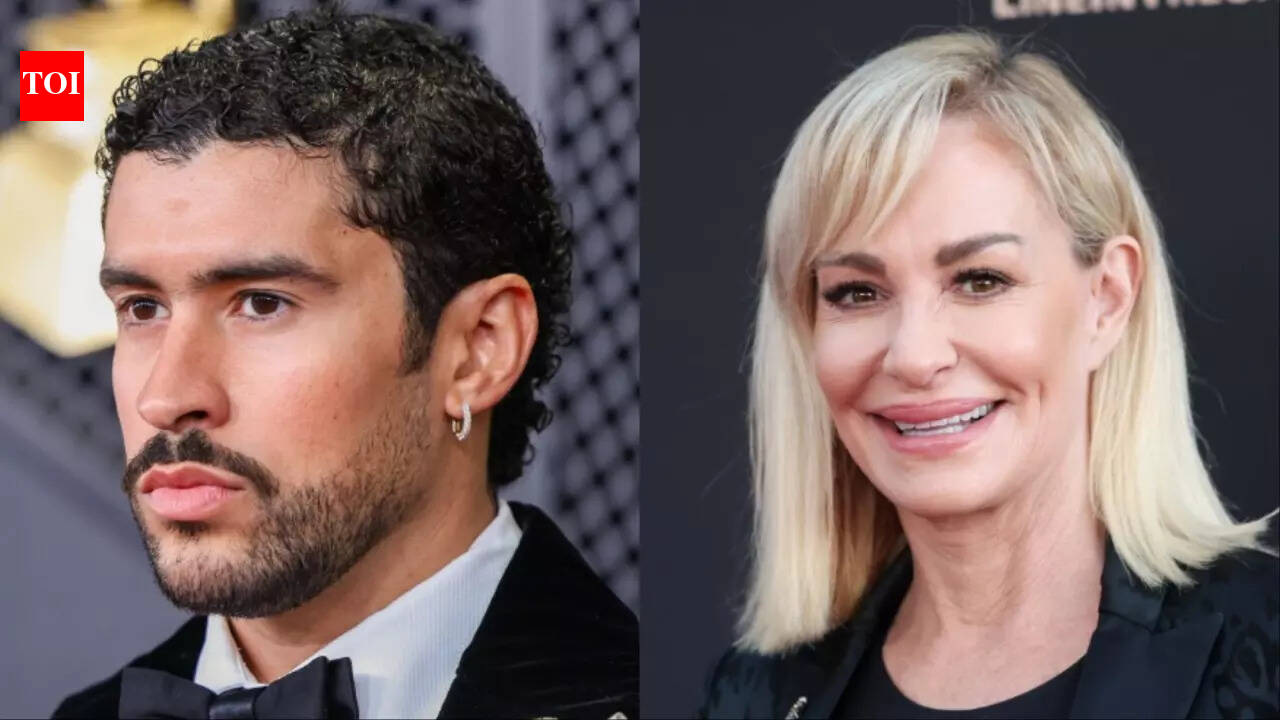
Exclusive: Taylor Armstrong’s Heartwarming Apology to Bad Bunny-Did She Go Too Far With ‘Were You Entertained?’ Comment?

Bad Bunny, Taylor Armstrong, and the Halftime Show Drama: A Deeper Dive into the Art of Apology
Oh, the drama of the entertainment world! Just when we thought the Super Bowl LX halftime extravaganza was all about the music and the spectacle, it turned into a tempest in a teapot, courtesy of none other than “Real Housewives of Beverly Hills” star Taylor Armstrong. Grab your popcorn, everyone; this saga is unspooling with all the precision of a well-edited film!
In a bold, albeit ill-timed comment, Armstrong questioned the creative choices of the Super Bowl halftime show, featuring reggaeton sensation Bad Bunny, who lit up the stage with vibrant performances in Spanish. Her take? “Were you entertained? I’m embarrassed for the NFL and Apple for the Super Bowl halftime show totally in Spanish with a Cuban flag!!” Ouch! Talk about throwing shade. In an era where diversity in media is not just welcomed but demanded, it didn’t take long for social media to light up with backlash.
But wait! Before you turn the page, the plot thickens. Following a social media firestorm, Armstrong issued an apology that, let’s just say, was crafted with all the finesse of a last-minute script rewrite. In her regretful missive, she stated, “The Super Bowl is such a huge American tradition, and while I personally didn’t connect with the creative direction of this year’s halftime show, that doesn’t take away from the fact that Bad Bunny IS an American and that the Spanish language is a prominent aspect of American culture.” One could almost hear the PR team sighing with relief-but was it sincere? After all, apologies today often come wrapped in a bow of corporate politeness rather than heartfelt sentiment.
It begs the question: are we losing the meaning of free speech in the age of instant backlash? When Armstrong’s comment landed like a thud, it unearthed a deeper conversation about the thin line between the urge to react impulsively and the subsequent fallout of those reactions. Can we really consider free speech absolute when the very act of speaking can lead to a flurry of apologies that may or may not be genuine?
Reflecting on this modern conundrum, it is hard not to draw parallels to the infamous episode involving Drew Brees. Remember the Hall of Fame quarterback? Back in 2020, he faced a storm of criticism after his comments against players kneeling during the anthem in support of social justice. His remarks were roundly condemned, leading him to issue an apology that oozed regret and corporate-speak, declaring, “In an attempt to talk about respect, unity, and solidarity… I made comments that were insensitive.” Sound familiar?
The drama might fade, but the echo of those words and apologies lingers in the digital town square. In the age of cancel culture, every slip-up can turn into a scandal, and each apology risks landing flat as it dances around the themes of sincerity and ownership. It’s a never-ending cycle, perpetuated by quick fingers and even quicker tempers.
So, what can we glean from Armstrong’s misadventure? Perhaps the lesson is that digital dialogues come with consequences, and that moment of slip could pave the way for a far-reaching impact. Let’s not forget that in the cacophony of comments, it’s the authenticity of our voices that truly matters-even in the world of glitz and glamour. Keep the drama rolling, but don’t forget to mind the message!