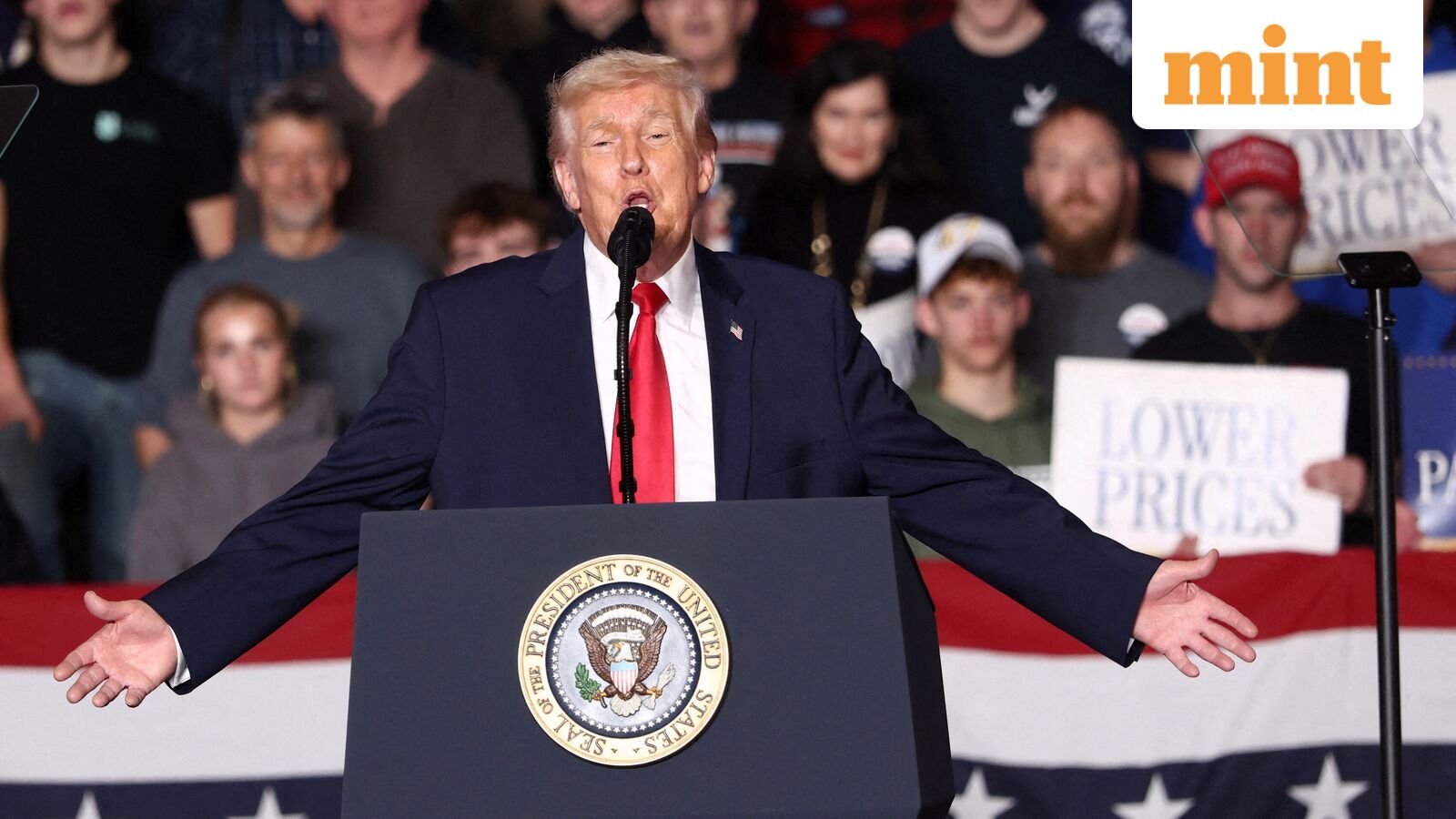
Is Trump’s Trade War Hurting You? $200 Billion Price Tag: Will Republicans Face the Wrath in the Midterms?

The financial ramifications of former President Trump’s trade war are becoming increasingly evident as a recent analysis of U.S. Census data reveals that states crucial for this year’s midterm elections have collectively paid over $134 billion in tariffs from March 2025 to November 2022. The total tariff bill across all U.S. states during this period amounts to approximately $199 billion, according to data compiled by Trade Partnership Worldwide. This indicates that these politically significant states have shouldered a considerable portion of the overall financial burden, as reported by CNBC.
Trump’s administration initiated extensive trade duties in March 2022, as part of an aggressive strategy targeting key trading partners, including China, the European Union, Japan, and India. Amid rising economic pressures, Trump has dismissed concerns about affordability, labeling them a “Democratic hoax.” Treasury Secretary Scott Bessent also recently testified before Congress, asserting that tariffs do not contribute to inflation.
The impact of these tariffs, along with the surging cost of living, is expected to influence the upcoming midterm elections significantly. Recent CNBC survey data indicates that many Americans feel the weight of escalating prices and are dissatisfied with the overall economic situation. A January poll conducted by The New York Times and Siena University found that 54% of voters oppose Trump’s tariffs.
“Americans struggling with affordability rightly blame tariffs for higher prices on many everyday purchases,” said Dan Anthony, executive director of the We Pay the Tariffs small business coalition and president of Trade Partnership Worldwide. He further emphasized, “The president could eliminate tens of billions in taxes in the states that will determine the 2026 elections. He just doesn’t want to.”
Anthony’s coalition aims to shed light on how tariffs function and their actual beneficiaries. Despite tariffs being imposed on foreign goods, the financial burden often falls on American businesses and consumers. Importers pay the tariffs upfront, but they typically pass these costs on to retailers, leading to higher prices for everyday items such as cars, electronics, and food, ultimately impacting affordability for voters.
The data shows that certain states are particularly affected by these tariffs, with California facing the highest bill at $38 billion, followed by Michigan at $13 billion, Illinois at $9.6 billion, Pennsylvania at $6.3 billion, North Carolina at $5 billion, and South Carolina at $5.2 billion.
As the election season heats up, all 435 seats in the U.S. House of Representatives and 33 Senate seats are up for grabs. The Republicans currently hold narrow majorities in both chambers, and Democrats need to capture four additional seats to claim control of the Senate. To maintain their majority in the House, Republicans can afford to lose no more than two seats.
The midterm election primary season kicks off on March 3, with voters in Arkansas, North Carolina, and Texas preparing to cast their ballots for party candidates. As economic conditions continue to unfold, the influence of tariffs and their effects on affordability may emerge as pivotal issues for voters across the nation.
Original Source: https://www.livemint.com/news/us-news/trumps-trade-war-costs-us-states-200-billion-will-republicans-feel-the-tariff-pinch-in-midterms-11770813959997.html
Category :
Tags:
Publish Date: 2026-02-11 20:00:00