
The Celestial Perspective: Bridging Earth and Space Through Data
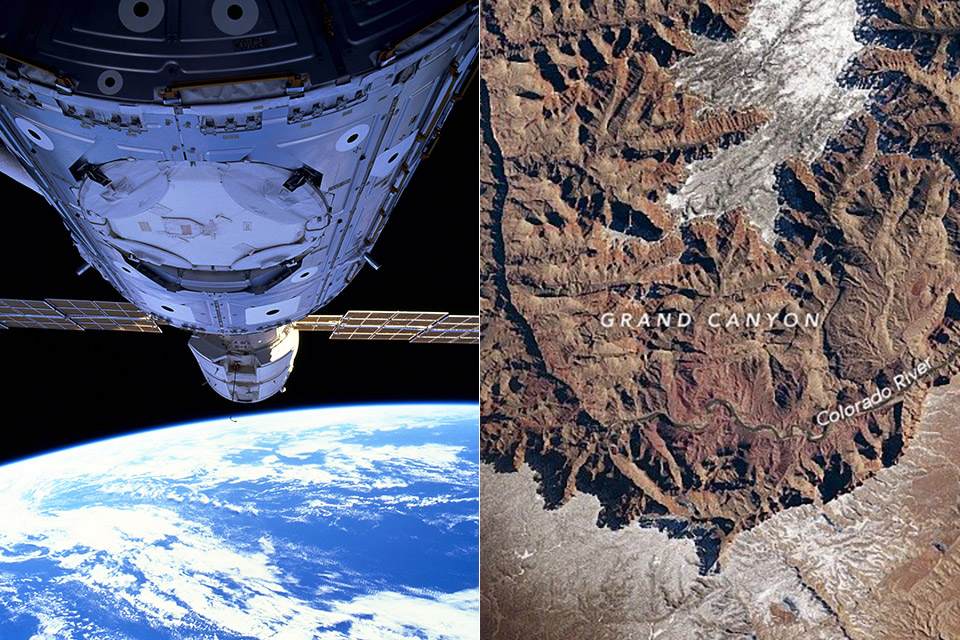
When we think of Earth observation, it’s easy to assume that the images captured from space merely serve an aesthetic purpose. However, the breathtaking photograph of the Grand Canyon taken from the International Space Station on January 26, 2026, reminds us that there’s much more at stake. In a world filled with data points and complex structures, such imagery offers critical insights that have implications far beyond their initial visual impact.
This photograph, highlighting stark contrasts of snow against the canyon’s red-brown rock, is a testament to the power of perspective. The layering of snow provides clarity, transforming a well-known landmark into a vivid map of elevation-a representation of geological processes that occurred over millennia. This shot exemplifies how data visualization can lead to better comprehension of our environment, crucial for various fields including geology, climate science, and even urban planning.
Contextualizing the Data
The photograph captures a rare view, showcasing not only the natural beauty of the Grand Canyon but also the environmental dynamics at play. Ground-level conditions differed dramatically from what was observed at higher altitudes, with warmer air causing precipitation to fall as rain in the canyon, while the rims were coated in snow. This disparity underscores the importance of holistic observation-examining phenomena from multiple perspectives yields more comprehensive insights.
Analyzing the Implications for Enterprise Architecture
From an enterprise architecture standpoint, this situation serves as a metaphor for the need to adopt a multidimensional approach to data collection and analysis. As technology continues to evolve, engineering teams must embrace this principle: we can no longer rely solely on localized data. Organizations should build comprehensive data ecosystems that collect insights from various sources and elevations-figuratively speaking-allowing for a deeper understanding of both market trends and consumer behavior.
Trade-offs are vital here. Organizations may be tempted to prioritize speed in data collection, rushing to hit market demands. However, this can lead to significant long-term debt and overlooked insights. The focus should pivot towards integrating robust data governance frameworks that combine real-time analytics with historical data to paint a complete picture, similar to how the image from orbit adds layers of understanding to a well-known location.
The Call to Action for CTOs and Founders
For CTOs and founders, the takeaway is clear: build infrastructures that are adaptable, comprehensive, and capable of harnessing disparate data streams. Invest in integrated platforms that can analyze data in real-time while considering long-term visibility. Encouraging cross-functional teams within your organization ensures diverse perspectives contribute to the decision-making process, akin to how sunlight and shadows from various angles can reveal the intricate design of landscapes.
Moreover, organizations should foster a culture that values cross-departmental data sharing, breaking down silos that inhibit a holistic view. As the Grand Canyon serves as a reminder of the layers of earth and time, your enterprise must recognize the layers of information that, when examined together, offer more than the sum of their parts.
A Local Perspective: The Northeast Factor
For regions like Northeast India, where connectivity can be unpredictable and infrastructure development is still growing, the lessons from this photograph can serve as a beacon. The need for a comprehensive digital public infrastructure (DPI) cannot be overstated. As we invest in technology, consideration must be given to local challenges-connecting rural areas seamlessly despite environmental variability.
By leveraging scalable digital solutions that mirror practices from the cutting-edge world of space exploration, we can foster innovation and ensure that all regions, including the Northeast, can benefit from the digital economy.
Closing Thought
As we capture more images of our world from above, we must remember that each photo represents not just beauty but information that can lead to better decision-making and strategic planning. The future belongs to those who can interpret these images-not just as art but as vital data for understanding our changing world.
About the Author
Sanjeev Sarma is the Founder Director of Webx Technologies Private Limited, a leading Technology Consulting firm with over two decades of experience. A seasoned technology strategist and Chief Software Architect, he specializes in Enterprise Software Architecture, Cloud-Native Applications, AI-Driven Platforms, and Mobile-First Solutions. Recognized as a “Technology Hero” by Microsoft for his pioneering work in e-Governance, Sanjeev actively advises state and central technology committees, including the Advisory Board for Software Technology Parks of India (STPI) across multiple Northeast Indian states. He is also the Managing Editor for Mahabahu.com, an international journal. Passionate about fostering innovation, he actively mentors aspiring entrepreneurs and leads transformative digital solutions for enterprises and government sectors from his base in Northeast India.