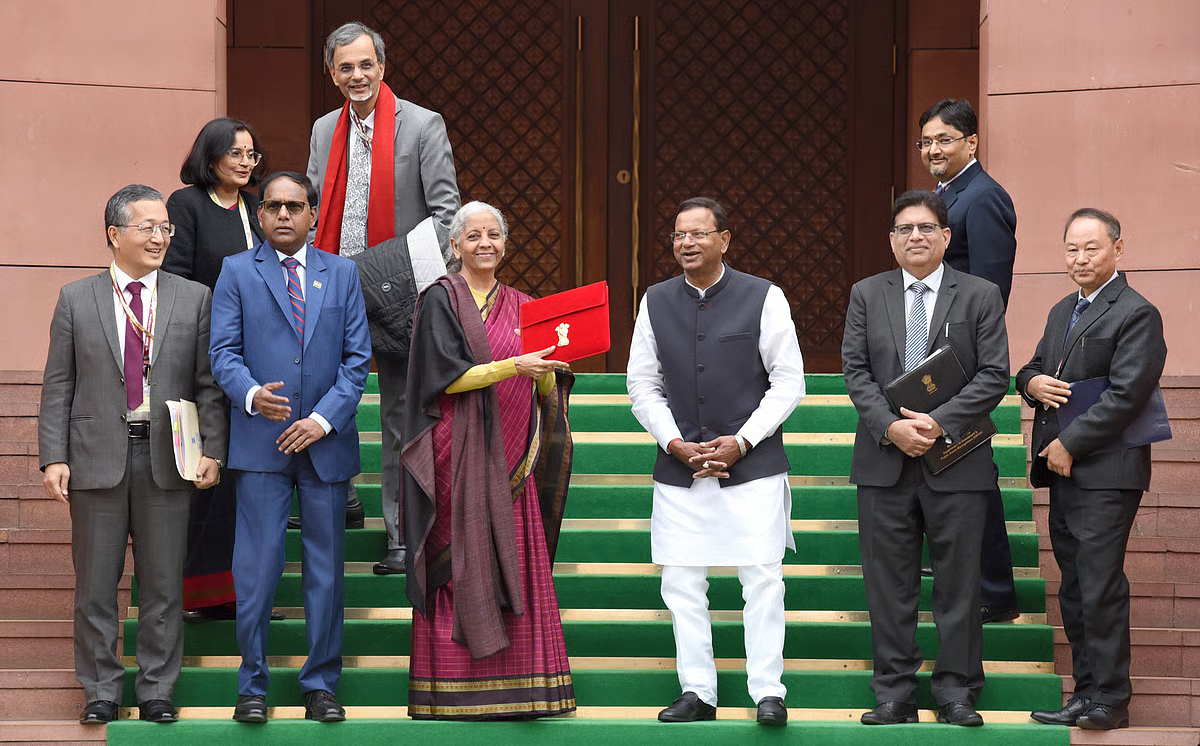

The Union Budget for 2026–27, unveiled by Finance Minister Nirmala Sitharaman, illustrates a government aiming to maintain economic growth while adhering to fiscal discipline in a challenging global landscape. As major economies face slowdowns, geopolitical tensions, and fluctuating financial markets, India’s Budget 2026 leans toward caution instead of populism and favors continuity over drastic measures. Although the lack of significant tax cuts and bold announcements left some middle-class citizens and investors disappointed, the budget reflects a commitment to long-term structural changes driven by public investment, manufacturing growth, and regulatory adjustments.
A key highlight of Budget 2026 is its commitment to fiscal prudence. The government projects the fiscal deficit to be 4.3 percent of GDP for the upcoming financial year, signaling its intent to pursue a credible consolidation strategy. This emphasis on macroeconomic stability has been a recurring theme in recent budgets, underlining that sustainable growth cannot be achieved through unchecked borrowing. By reaffirming long-term debt reduction goals, the government aims to instill confidence among investors, credit rating agencies, and international partners that India is committed to prudent public finances even as it invests heavily in growth-oriented sectors.
This investment is evident in the substantial allocation for capital spending. Public capital expenditures have been increased again, highlighting the government’s strategy of leveraging infrastructure development as a catalyst for growth. Sectors such as roads, railways, ports, and urban infrastructure have been prioritized, with expectations that such investments will stimulate private sector engagement, create jobs, and enhance overall productivity. Introduction of new high-speed railway corridors connecting major economic centers adds both a symbolic and practical aspect to this initiative, aiming to improve regional connectivity and market integration over the long term.
Manufacturing and self-reliance are central themes in the budget’s outline. Building on previous efforts, Budget 2026 aims to establish India as a global manufacturing hub. Increased support for sectors like semiconductors, electronics, pharmaceuticals, and textiles demonstrates lessons gleaned from recent global supply chain challenges. The focus on domestic production of essential materials, including rare earths and critical minerals, also underscores a growing recognition of economic security as a facet of national security. Although these initiatives may take years to yield results, they represent a pivot from consumption-driven growth toward an economy grounded in production, exports, and technology.
Contrary to some expectations, the budget did not introduce significant adjustments to personal income tax brackets, a decision that attracted criticism from those seeking relief amid rising living costs and stagnant real incomes. Markets also reflected their discontent in the wake of the budget, expressing disappointment over the absence of eye-catching tax incentives. However, the government introduced several measures aimed at simplifying compliance and enhancing the taxpayer experience, including extensions for filing deadlines and steps to streamline reporting requirements. This suggests a gradual, rather than immediate, shift toward more comprehensive tax reforms.
The announcements regarding the financial sector reveal a balance of ambition and caution. Proposals to deepen corporate bond markets and reassess foreign exchange regulations aim to modernize India’s financial framework and align it more closely with global capital trends. However, the increase in the securities transaction tax on derivatives trading has triggered debate. The government justifies this move as an effort to mitigate speculative trading and bolster market stability, yet the sharp market reaction raises concerns about liquidity and investor confidence. This situation exemplifies the broader challenge of balancing regulatory oversight with the need for vibrant, competitive financial markets.
Defense spending is another focal point, with a notable increase in budget allocation reflecting growing geopolitical uncertainties. Beyond immediate security needs, increased defense expenditure has implications for domestic manufacturing, research and development, and technological collaborations. The push for indigenous defense production aligns with a larger aim of self-reliance, potentially benefiting the broader industrial landscape.
Budget 2026 also seeks to address social and developmental needs, albeit without large welfare expansions. Initiatives to support women entrepreneurs, small and medium businesses, and farmers indicate a focus on targeted interventions instead of universal programs. For example, employing digital platforms and artificial intelligence in agriculture aims to boost productivity and decision-making through technology rather than merely expanding subsidies. While modest, such measures signal a shift toward more efficient governance.
Overall, Budget 2026 reflects a theme of consolidation and continuity. It does not aim to radically shift India’s economic direction but instead builds incrementally on established strategies. Its strengths lie in its long-term vision of infrastructure-led growth, manufacturing improvement, fiscal responsibility, and gradual regulatory reform. However, it also faces political challenges, particularly regarding limited immediate relief for households and the absence of bold tax reforms that many anticipated.
Ultimately, the effectiveness of Budget 2026 will hinge not on its announcements but on its implementation. Timely execution of infrastructure projects, effective conversion of manufacturing incentives into actual investments, and meaningful regulatory reforms will be critical for easing challenges faced by businesses and taxpayers alike. As the global economy remains volatile, the budget’s cautious approach may prove wise, but the government must ensure that caution does not devolve into complacency. As India strives to evolve into a $5-trillion economy and beyond, sustained reform efforts, efficient implementation, and inclusive growth will be vital measures of this budget’s legacy.
Original Source: https://www.sentinelassam.com/more-news/editorial/budget-2026-a-careful-balancing-act-between-reform-stability-and-long-term-growth
Category: Editorial
Tags:
Publish Date: 2026-02-03 12:25:00