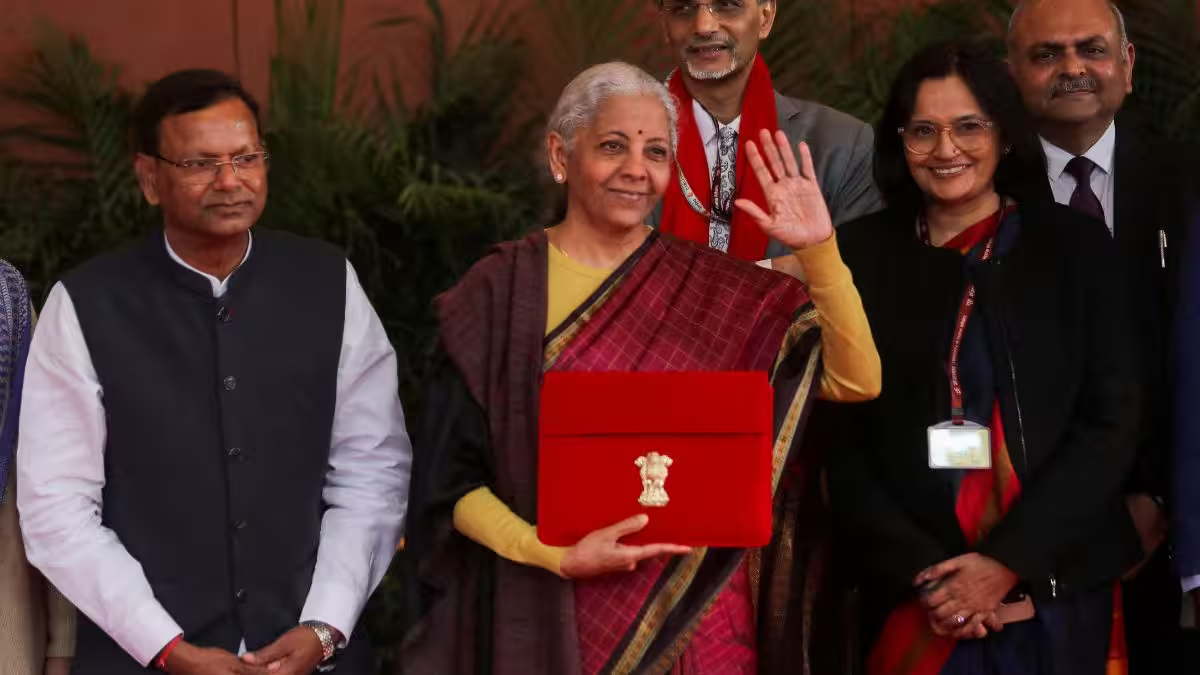

In the Union Budget for 2026-27, Finance Minister Nirmala Sitharaman presented a nominal GDP growth estimate of 10%, describing it as a “realistic” projection. This statement comes amid declining inflation and robust economic growth. Government data revealed that nominal GDP is expected to grow by 10% based on the First Advance Estimates for FY26. Additionally, the Economic Survey for 2025-26 predicted real GDP growth for FY27 to be between 6.8% and 7.2%. With retail inflation averaging a mere 1.7% from April to December 2025, concerns arose regarding whether the underlying deflator in Budget calculations might be optimistic.
During a post-Budget press conference, Sitharaman was asked if the inflation assumption of approximately 2.8% seemed conservative, especially given the projected real growth of 7.2%. She dismissed concerns about being overly cautious by stating that inflation is currently low in India and is expected to remain so. “Inflation is down in India, and it is remaining there for some time,” she asserted, explaining that the nominal GDP assumption reflects a realistic approach.
The Economic Survey indicated that the Consumer Price Index (CPI) inflation was the lowest since the CPI series began. This decline has alleviated pressure on households and supported real consumption, mechanically affecting nominal GDP. With inflation under control, nominal growth-which includes both real growth and inflation-naturally adjusts downward. However, Sitharaman emphasized that CPI inflation is not the only variable that influences the GDP deflator, which also accounts for price changes across other economic sectors, such as investments and government consumption. In FY26, notable growth in services-9.3% in the first half-alongside steady manufacturing performance, suggests that inflation dynamics may vary from retail prices.
Nominal GDP projections play a crucial role in fiscal management; they impact the calculations for fiscal deficit, revenue, and debt ratios. A conservative assumption of nominal GDP limits the government’s financial flexibility and keeps expenditure growth in check while enhancing the credibility of fiscal consolidation targets.
The 2026-27 Budget strategy indicates a preference for caution over excessively optimistic projections, especially given the current fragility in global markets and ongoing trade uncertainties. While market analysts often favor higher nominal GDP estimates to facilitate spending, overestimating can lead to diminished credibility if actual growth fails to meet those expectations.
India’s economic indicators remain solid, with foreign exchange reserves reaching $701.4 billion as of mid-January 2026, providing an 11-month import cover. The current account deficit in Q2 FY26 was relatively stable at around 1.3% of GDP, and the gross non-performing assets in scheduled commercial banks have dropped to a historic low of 2.2%.
In this context, the nominal GDP figure in the Budget appears to align more closely with a reality of lower inflation rather than just an exercise in caution. If inflation stabilizes at current rates, nominal growth is likely to align more closely with real growth. The government aims to set realistic expectations rather than inflate figures artificially. For a government that has focused on credibility-reflected in sovereign rating upgrades received in 2025-this realistic approach could prove to be a wise strategic choice. The effectiveness of this prudence will ultimately rely on the fluctuating dynamics of growth, inflation, and tax revenues as FY27 progresses. For now, the 2026-27 Budget signals that New Delhi prioritizes macroeconomic stability over inflated nominal growth, a stance that, while appearing conservative, may fortify the foundations of fiscal policy in a lower inflation environment.
Original Source: https://www.firstpost.com/india/union-budget-2026-govt-pegs-nominal-gdp-growth-at-10-fm-calls-projection-realistic-13974986.html
Category: India
Tags:
Publish Date: 2026-02-02 14:28:00