Empowering Health: How Fortified Laddoos Combat Vitamin D Deficiency in Govt School Girls

A team of researchers from the Central University of Haryana (CUH) in Mahendragarh has made a significant discovery regarding Vitamin D deficiency among adolescent girls in the state. Their study unveiled that nearly 88 percent of girl students sampled from various government schools across three districts in Haryana were either deficient in Vitamin D or had inadequate levels. The research, funded by the Haryana State Council for Science, Innovation, and Technology, aims to assess the prevalence and management of Vitamin D deficiency among adolescent girls.
In 2023, a cross-sectional clinical study was conducted encompassing 1,009 adolescent girls from government schools in Mahendragarh, Bhiwani, and Kurukshetra. The findings revealed that approximately 49.95 percent of the girls were deficient in Vitamin D, and 37.85 percent had insufficient levels. Dr. Anita Kumari, the project investigator from the Department of Nutrition Biology, expressed concern, noting that Vitamin D deficiency is a global health issue. Despite Haryana’s leadership in agricultural production, the prevalence of deficiency remains baffling.
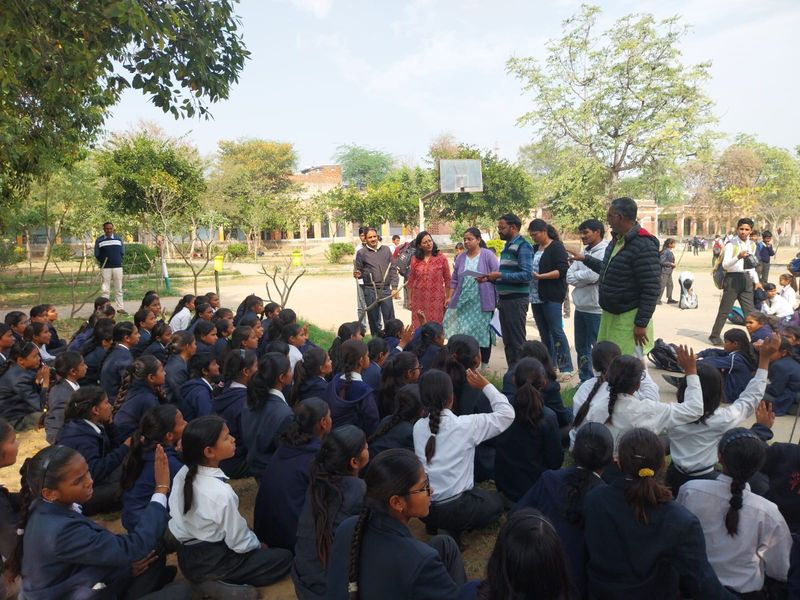
Instead of conventional Vitamin D supplements, the researchers developed an innovative solution using a homemade approach. From March to May 2025, an impact assessment study was performed with Vitamin D-deficient adolescent girls at a government school in Mahendragarh. The participants consumed two fortified, Vitamin D-enriched laddoos made from biofortified button mushrooms daily for three months, allowing researchers to monitor changes in Vitamin D levels.
Results were encouraging; within two to three months, many participants exhibited a significant increase in Vitamin D levels. Both control and experimental groups were evaluated every 30 days throughout the three-month dietary intervention. The control group showed no change in Vitamin D levels by the 90th day, while 48 percent of the Vitamin D-deficient girls in the experimental group experienced increased levels after two months. By the end of the 90 days, 47 percent of the initially deficient girls moved to insufficient levels, with 5 percent improving to sufficient levels.
Dr. Anita concluded that regularly consuming Vitamin D-enriched laddoos made from biofortified mushrooms proves to be an effective functional food to mitigate cases of hypovitaminosis D among the subjects. The technology behind these Vitamin D-enriched products is now ready for commercialization, promising to benefit society at large. The research team expressed gratitude to CUH Vice Chancellor Prof. Tankeswar Kumar and the Department of Science and Technology, Haryana, for funding and supporting their study, acknowledging the efforts of school principals, teachers, and students who participated.
Original Source: https://www.tribuneindia.com/news/haryana/govt-school-girls-overcome-vit-d-deficiency-with-fortified-laddoos/
Category:
Tags:
Publish Date: 2026-02-02 03:32:00