
The Future of Responsive Materials: Bridging Nature and Technology
In an age where technology increasingly mimics nature, the latest research from Stanford University highlights a fascinating intersection of materials science and color dynamics. Researchers have developed a polymer system that changes its properties in response to water, offering insights into future applications that could reshape industries.
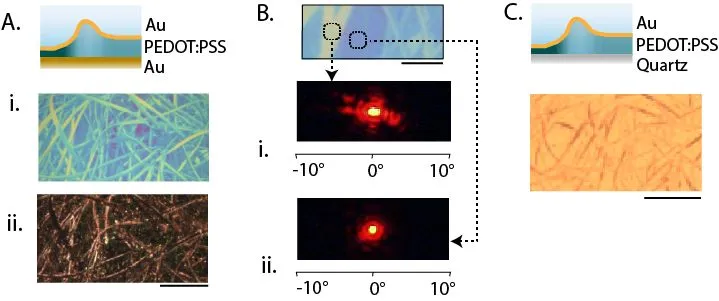
This innovation utilizes poly(3,4-ethylenedioxythiophene) polystyrene sulfonate (PEDOT:PSS) and leverages electron beam lithography to create intricate patterns. When exposed to water, these polymers exhibit varying degrees of swelling based on the electron beam’s intensity, leading to the emergence of unique colors and patterns. The implications of this study open avenues not only for reactive textiles but also for advanced materials in various sectors, including electronics, healthcare, and environmental monitoring.
The Evolution of Material Technology
As highlighted, the modifications made to PEDOT:PSS lead to fundamentally novel behaviors that contrast traditional static materials. This prompts a strategic zoom-out: about a decade ago, the focus of material science was predominantly on durability and efficiency. Fast forward today, and the paradigm has shifted toward adaptable materials that can respond to external stimuli.
What does this mean for enterprises? Industries will have to adapt their approaches to product development and lifecycle management. Innovators must consider how new materials can integrate with existing technologies and leverage these unique properties for competitive advantages. The concept of “intelligent materials” could revolutionize product designs, providing manufacturers and designers with unprecedented capabilities.
Implications for Enterprises: Strategic Considerations
From a Chief Architect’s viewpoint, this evolution toward responsive materials necessitates a critical evaluation of several factors:
-
Scalability and Integration: Companies must strategize around how to efficiently scale production while ensuring that new materials can be seamlessly integrated into existing manufacturing processes.
-
Cost and Investment: Investing in R&D for new materials can be daunting, yet firms must weigh the potential long-term benefits against short-term costs. The trade-off between innovating new product lines versus optimizing legacy systems becomes crucial.
-
Sustainability and Ethical Considerations: The incorporation of responsive materials offers opportunities for sustainable innovations. However, the ethical implications surrounding sourcing, production, and disposal must be considered to foster a circular economy.
-
User Experience and Consumer Engagement: As responsive materials become mainstream, the way consumers interact with products will evolve. Companies must prepare not just for changes in manufacturing, but also shifts in user experience design.
A Consideration for the Indian Context
While the technological advancements described may seem distant from the everyday realities in Northeast India, they hold a valuable lesson for local entrepreneurs. With industries increasingly looking for local manufacturing angles, the principles of responsive materials could inspire local innovation.
In a region rich with natural resources but often challenged by infrastructure, developing technologies that respond dynamically to local conditions could pave the way for niche applications in agriculture, textiles, and sustainable architecture. As we seek to modernize, fostering a local ecosystem that embraces such innovations may not only boost efficiency but also drive economic resilience.
Takeaways
- Adapt or Risk Obsolescence: Companies must actively engage in R&D to adapt to the new materials landscape.
- Innovate with Integrity: Emphasizing sustainability in new product lines can differentiate brands in a competitive market.
- Localize the Global: Entrepreneurs should consider localized applications of responsive technology to drive regional growth.
In closing, as we traverse the fascinating landscape of materials that dynamically respond to their environments, we stand at a crossroads of innovation and opportunity. The continued exploration in this field will undoubtedly influence not only industries but also the fabric of everyday life, echoing the complexity and beauty found in nature itself.
About the Author
Sanjeev Sarma is the Founder Director of Webx Technologies Private Limited, a leading Technology Consulting firm with over two decades of experience. A seasoned technology strategist and Chief Software Architect, he specializes in Enterprise Software Architecture, Cloud-Native Applications, AI-Driven Platforms, and Mobile-First Solutions. Recognized as a “Technology Hero” by Microsoft for his pioneering work in e-Governance, Sanjeev actively advises state and central technology committees, including the Advisory Board for Software Technology Parks of India (STPI) across multiple Northeast Indian states. He is also the Managing Editor for Mahabahu.com, an international journal. Passionate about fostering innovation, he actively mentors aspiring entrepreneurs and leads transformative digital solutions for enterprises and government sectors from his base in Northeast India.