Unveiling the Majestic Aravalli Hills: Discover the Epic Story of Their Formation and Unique Beauty

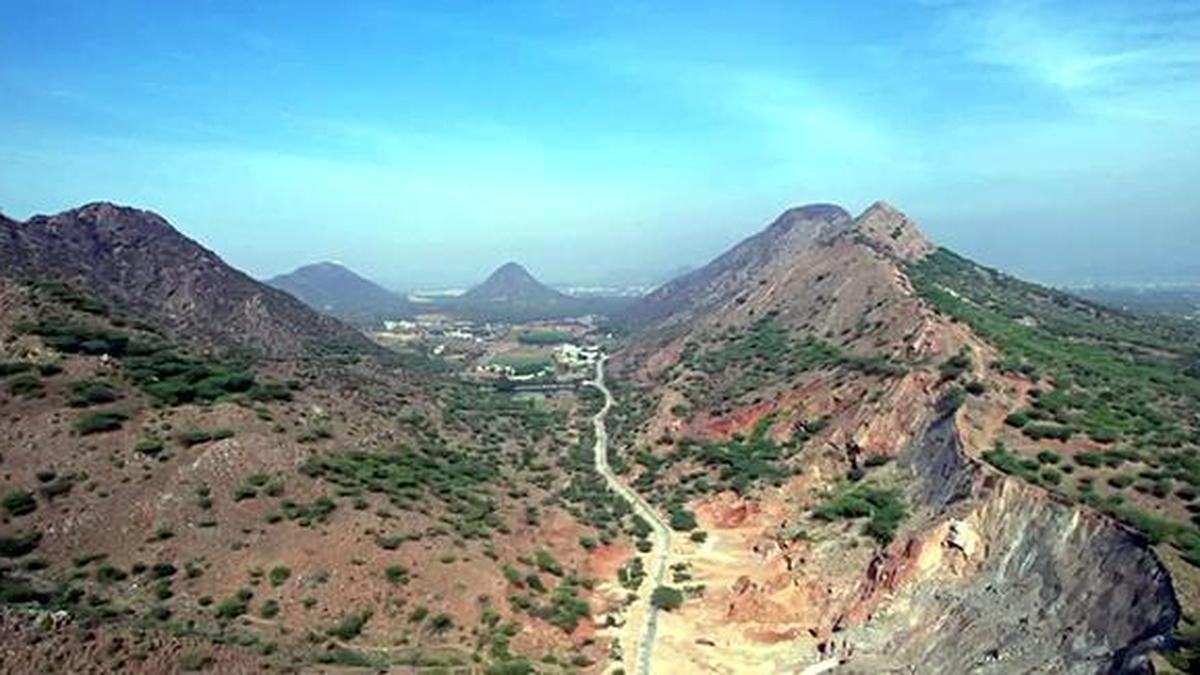
Aerial shots reveal the Aravalli Hills in Ajmer, an unassuming yet significant geological feature that comprises some of India’s oldest rocks. Geologists have long studied these hills, which chronicle a vast history of Earth’s crust development in northwestern India. They form part of the ancient Aravalli-Delhi orogenic belt, characterized by two main rock sequences: the older Aravalli Supergroup and the younger Delhi Supergroup.
Before the Aravalli sediments took shape, an older crust already existed in the region. Researchers describe this crust as the foundational layer upon which the Aravalli succession accumulated. This layering process began with the stretching and thinning of crust, leading to the formation of basins that gradually filled with rivers and shallow seas, depositing sedimentary layers of sand, mud, and volcanic materials.
Over time, tectonic forces transformed these basins. The sedimentary layers folded, fractured, and were thrust over each other. Increased burial and heating induced metamorphism, altering the original materials: sandstone became quartzite, mudstone transitioned to phyllite or schist, and limestone transformed into marble. Geological studies have validated the existence of significant crustal structures indicative of compression and thrust activities below the surface, suggesting continuous tectonic and thermal dynamics long after the initial sedimentation.
Evidence of intrusive magmatic activity, notably granitoid bodies, further complicates the Aravalli’s geological narrative. Zircon dating has provided insights into these intrusions, with one study from 2003 pinpointing the age of the Chang pluton granitoid gneiss at approximately 967.8 million years. These findings emphasize that tectonic and thermal processes were ongoing even after the sedimentary phase.
Yet, the Aravalli Hills we see today did not emerge overnight. Over millions of years, weathering processes shaped the landscape. Resistant rocks like quartzite have maintained their ridged form, while weaker rocks have eroded more rapidly. A comprehensive review conducted in 2022 highlighted the significance of multiple geological events over extended periods, indicating that the hills are remnants rather than a newly formed mountain range.
The geology of the Aravalli Hills profoundly affects local ecosystems, influencing soil types and water movement. Quartzite formations dominate many ridges, resulting in thin soils that struggle to retain moisture and nutrients, impacting plant diversity and the vulnerability of these ecosystems to erosion. When weathered, water tends to collect in fractures and joints rather than in pores, leading to uneven groundwater distribution. Consequently, while some areas may yield water, neighboring regions may remain dry due to less effective rock fracturing.
Rainfall patterns in the Aravalli Hills further complicate the ecosystem. Most monsoon rains occur within a few months, alternating with long dry spells. A study conducted in July 2025 for the Northern Ridge in Delhi reported average annual rainfall of 710 mm, a climate that favors drought-resilient plants. The thin soils compounded by limited water accessibility mean that even small disturbances can have lasting implications. Quarrying and mining disrupt soil layers and modify drainage patterns. Research from 2018 in the Asola Bhatti area observed erosion consistent with these activities, linking them to diminished soil quality and biodiversity.
In summary, the Aravalli Hills provide an intricate tapestry of geological history that continues to shape both the environment and ecosystems in this region of India. Continuous research and awareness can help mitigate the impact of human activities on this ancient landscape.
Original Source: https://www.thehindu.com/sci-tech/science/how-the-aravalli-hills-formed-and-why-they-look-the-way-they-do/article70445750.ece
Category : Science
Tags:
Publish Date: 2025-12-28 12:23:00