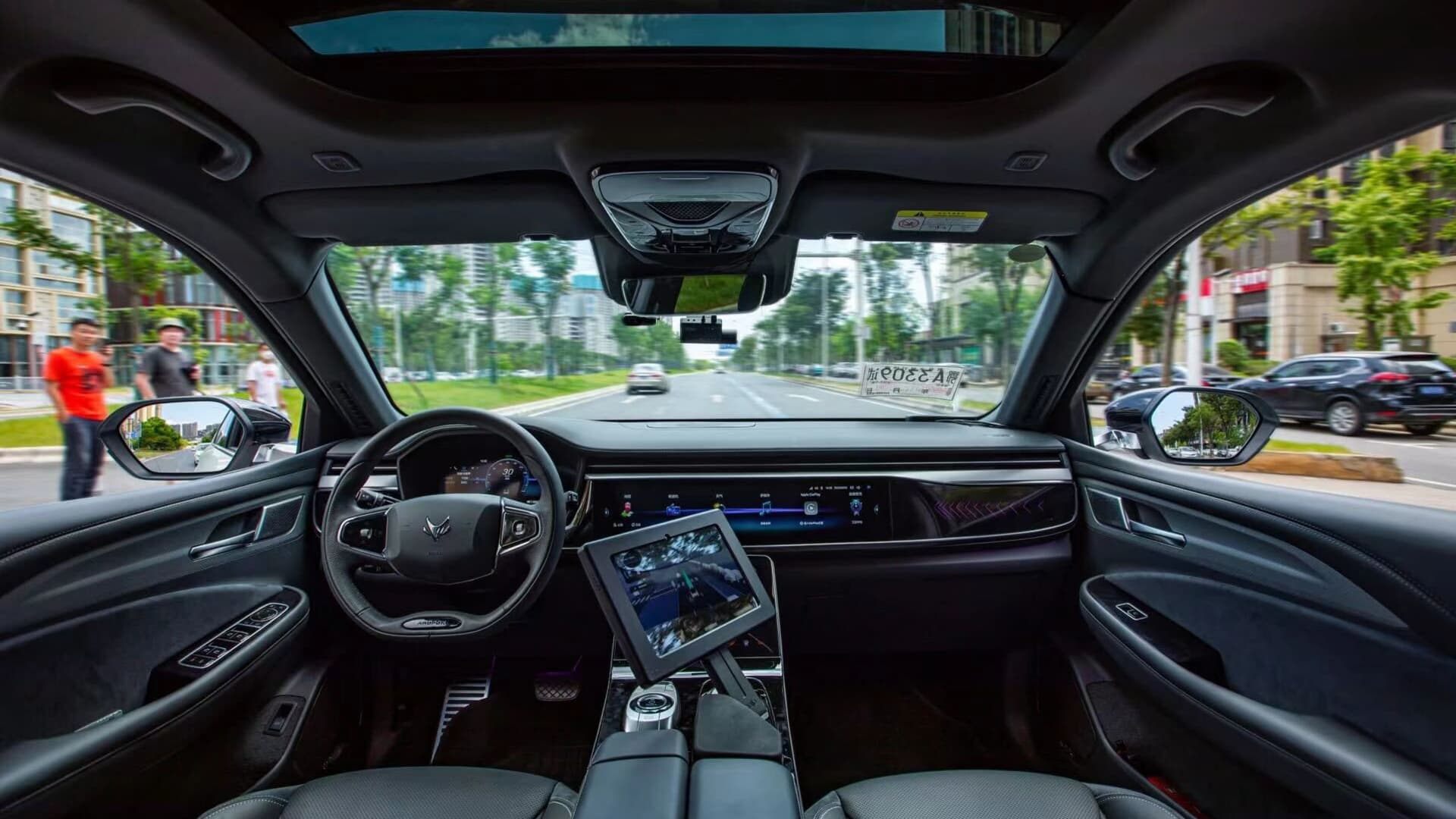

Chinese tech giant Baidu made waves Monday by announcing its ability to sell certain robotaxi rides without human staff, marking a significant leap in the autonomous driving landscape. At a time when the industry is buzzing about reaching a crucial turning point, Baidu is poised to lead the charge. “I believe robotaxis have reached a tipping point, both in China and the U.S.,” Baidu CEO Robin Li stated during an earnings call, emphasizing that increased public exposure to driverless rides is likely to hasten regulatory approval.
This sentiment reflects a growing optimism shared by industry figures, including Nvidia CEO Jensen Huang and Xpeng Co-President Brian Gu, who has shifted from cautious to confident about technological advancements. Xpeng is set to roll out its robotaxis next year in Guangzhou, further demonstrating the rapid evolution of this sector.
According to Goldman Sachs, the global market for robotaxis is expected to exceed $25 billion by 2030, presenting significant opportunities for growth. As competitors in the U.S. like Waymo and Tesla remain cautious, Chinese companies are aggressively expanding overseas, asserting that they are on the brink of turning robotaxi services into viable businesses rather than simply incurring losses in a bid for market share. Over the last 18 months, Baidu, Pony.ai, and WeRide have established partnerships with Uber, allowing users in specific regions to request robotaxis via the popular ride-hailing app-a move deemed vital for operational efficiency and achieving profitability, as noted by Counterpoint Senior Analyst Murtuza Ali.
Baidu’s Apollo Go division has already made progress, achieving per-vehicle profitability in Wuhan through its deployment of over 1,000 vehicles. This profitability is enabled by a fare structure 30% lower than that in Beijing and significantly cheaper than comparable prices in the U.S. or Europe. Moreover, Baidu has developed its own electric robotaxi vehicles, cutting manufacturing costs by 50%. Halton Niu, the general manager for Apollo Go’s international business, highlighted the importance of scale, stating, “If you only deploy 100 to 200 cars in a small area, you can never become profitable.”
In contrast, U.S. competitors like Waymo operate a fleet of over 2,500 vehicles, expanding into Texas and Florida and eyeing a market entry in London next year. Tesla, which debuted its Cybercab in Shanghai, is slowly testing its robotaxi offerings in Texas and received a permit to operate in Arizona. Meanwhile, Amazon’s Zoox is ramping up its U.S. expansion but has not announced international plans.
While Baidu is exploring European trials, particularly in Switzerland, it has recently received authorization in Abu Dhabi to charge for fully driverless rides-just as WeRide secured a similar permit. However, Pony.ai remains furthest from profitability, with plans for a fully autonomous service in Dubai by 2026.
In the race for fleet size and safety, larger volumes equate to competitive advantages. Pony.ai aims to deploy 1,000 robotaxis in the Middle East by 2028, while WeRide plans a similar fleet rollout next year. Niu reported that Apollo Go currently operates around 100 vehicles in Abu Dhabi and Dubai, with plans to expand rapidly. Kai Wang, a strategist at Morningstar, pointed out that more extensive field testing leads to better safety outcomes.
Despite some initial achievements, the robotaxi sector remains in flux, with limited operational zones even within China. Yet, as regulatory landscapes evolve, and support from Beijing intensifies, experts predict a significant increase in robotaxi availability in China by 2026, laying the groundwork for broader global adoption.
Original Source: https://www.cnbc.com/2025/11/20/global-robotaxi-race-heats-up-between-us-and-chinese-rivals.html
Category :
Tags:
Publish Date: 2025-11-20 12:44:00