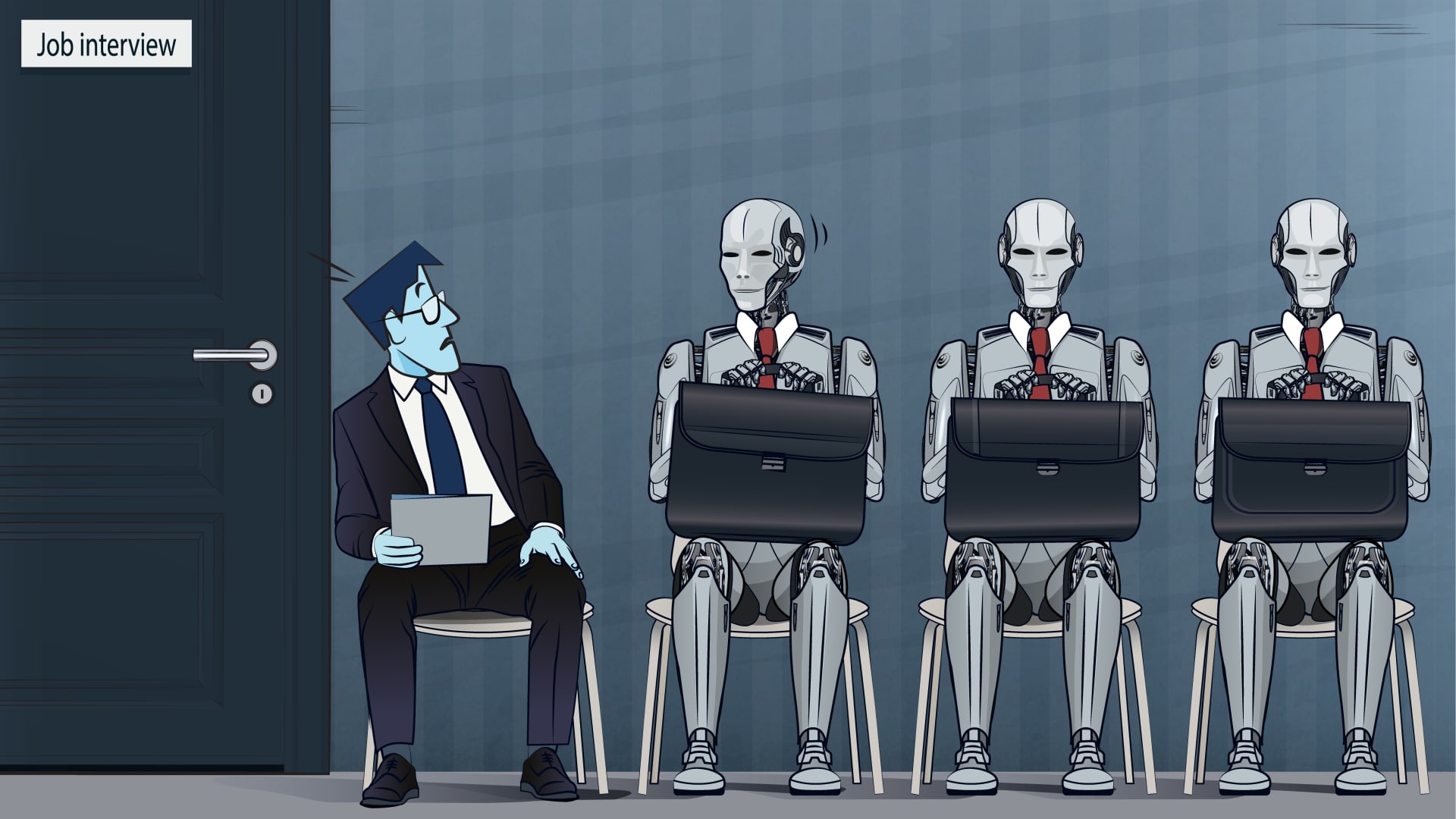

The U.S. job market is facing a significant downturn as postings for entry-level positions have plummeted by approximately 35% since January 2023, according to Revelio Labs. Amidst this decline, larger companies are increasingly announcing AI-driven layoffs, with the most vulnerable workers appearing to be those in junior and entry-level roles. Notably, Amazon recently cut 14,000 corporate jobs as part of its strategy to focus on investments in generative AI.
This trend is not limited to Amazon; companies like Accenture, Salesforce, Lufthansa, and Duolingo are also reducing their workforce while ramping up AI initiatives. A survey from the Chartered Institute of Personnel and Development (CIPD) indicates that 62% of U.K. employers foresee a decline in junior, clerical, managerial, and administrative jobs due to AI advancements. Concurrently, the number of available graduate roles has also dwindled, as highlighted by the Institute for Student Employers’ annual survey showing nearly 17,000 graduate vacancies attracted 1.2 million applications in the U.K., underscoring the intense competition facing young job seekers.
Experts caution that cutting back on entry-level positions could have long-term repercussions for companies. Fabian Stephany, an assistant professor at the Oxford Internet Institute, emphasizes that recruiting junior talent should be viewed as an investment in a company’s future. While entry-level workers may make mistakes and require training, eliminating these positions risks creating a talent bottleneck that could eventually force companies to hire externally, increasing costs and trapped in a “talent doom cycle.”
Chris Eldridge, CEO of tech recruitment firm Robert Walters for the U.K. and North America, echoed this sentiment, arguing that cultivating young talent is essential for organizational health. “If you remove too many junior roles, you can starve the internal talent pipeline,” he stated, warning that a significant decrease in entry-level positions could hinder a company’s future leadership development.
Moreover, Stephany highlights that companies which neglect to nurture young employees run the risk of losing connection with consumers and mainstream culture. He argues that organizations must reflect societal diversity to create relevant products. “A firm is part of society, and if it doesn’t reflect society adequately, it’s very hard to imagine a business model that doesn’t need this generational bridge,” he said.
Eldridge also pointed out how fresh perspectives from junior employees can lead to innovative ideas within companies. “A substantial percentage of great ideas come from those in their first few years,” he noted, advocating for the value of reverse mentoring to bridge the generational gap and to ensure knowledge transfer within organizations.
Matthew Prince, co-founder and CEO of Cloudflare, announced his company’s intention to hire 11,000 interns during this AI era, stressing that learning from the next generation is vital for leveraging AI technologies effectively. He stated, “50-year-old CEOs like myself aren’t going to be the ones to teach companies how to take advantage of AI.”
Finally, Stephany emphasized the value of “tacit knowledge”—the unspoken understanding that employees accumulate over time, which is essential for maintaining a company’s culture and operational efficiency. Eldridge reinforced this point, describing young employees as “culture carriers” who contribute to the organization’s environment and performance by seeking to learn and innovate.
As technology continues to evolve, the push for AI in the workplace raises questions about the future of entry-level jobs, underscoring the need for a balanced approach that values both automation and human talent.
Original Source: https://www.cnbc.com/2025/11/16/why-replacing-junior-staff-with-ai-will-backfire-.html
Category :
Tags:
Publish Date: 2025-11-16 12:30:00