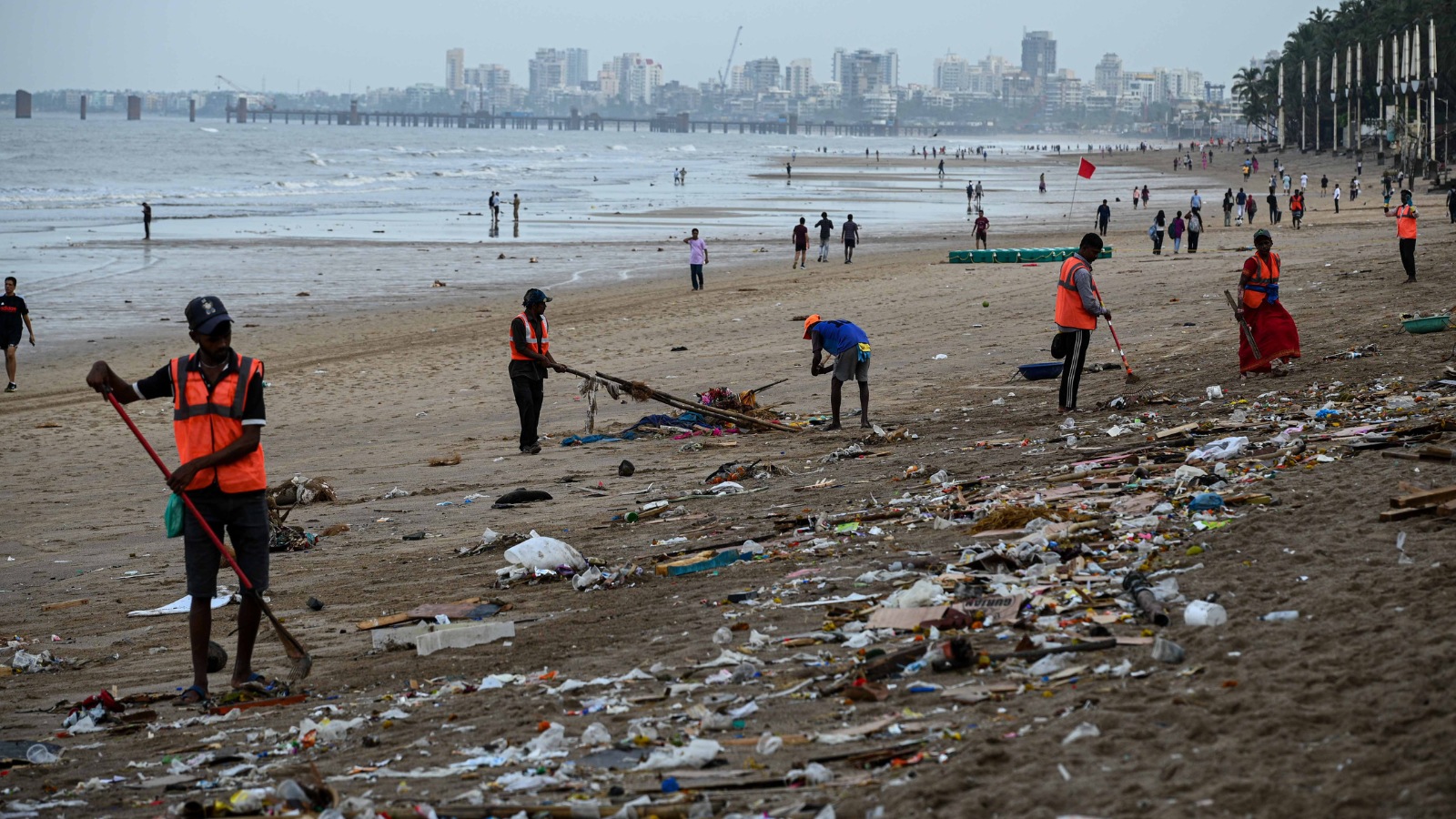

Mumbai has ranked among the top 10 dirtiest cities in India, as highlighted in the newly released Swachh Survekshan 2025 report. With the growing challenge of managing urban waste, Kiran Dighavkar, Deputy Municipal Commissioner of the Brihanmumbai Municipal Corporation’s solid waste management department, discussed the significant obstacles faced by the civic authority and the strategies in place to enhance waste management.
The Brihanmumbai Municipal Corporation (BMC) has recently issued a significant ₹4,000-crore tender aimed at transforming Mumbai’s waste management system. Dighavkar explained that solid waste management is a dynamic field. He emphasized the importance of adapting to new directives from the Central Government, especially following the recent rollout of the Construction and Demolition Waste Management Rules for 2025. Given the unique challenges of a dense population and limited space-Mumbai is surrounded by water on three sides-it becomes crucial for the BMC to continually upgrade its systems.
In a recent survey, Mumbai was noted as the eighth dirtiest city in India. According to Dighavkar, the main issue lies with the public’s behavioral patterns. Drawing from a recent study trip to Singapore, he noted that cleaning occurs mechanically just once a day. In contrast, Mumbai struggles even with daily morning cleanings, now planning to add evening sweeps. A staggering portion of the city’s population, approximately 50%, lives in informal settlements where waste is generated continuously. Unlike designated residential areas, slums do not adhere to specific waste collection timings, causing substantial challenges. Despite employing 30,000 workers to clear streets each morning, the bins fill up again within hours. With Mumbai operating 24/7, waste generation is constant, complicating effective collection efforts. Additionally, the surge in the city’s floating population exacerbates waste accumulation, with daily work-related influx bringing the daytime population to around 40 lakh.
Addressing whether there are ways to change these behaviors, Dighavkar acknowledged the difficulty of initiating such transformations in a city of Mumbai’s size. However, he mentioned bolstering accountability through updated solid waste management bylaws established in 2025. The introduction of extended producer responsibility shifts waste ownership from just the municipal body to the public, encouraging individuals and businesses to take responsibility for the waste they generate.
The new ₹4,000-crore plan aims to revamp the garbage collection framework. Historically, the BMC relied on contractors for vehicles while employing its own laborers for collection, which created accountability challenges. Under the new approach, contractors will provide the vehicles and oversee garbage collection, allowing for direct accountability as payment will be based on collected waste volume. This model incentivizes contractors to maximize collection efforts. Changes to the appearance and capacity of waste vehicles are also planned, phasing out outdated equipment.
However, the proposal faced criticism, particularly concerning the potential privatization and job security of existing workers. Dighavkar reassured concerned unions during recent discussions, confirming that no workers would lose their benefits and that their roles would be adapted rather than eliminated.
On waste segregation, Dighavkar mentioned ongoing initiatives. The BMC is working on acquiring dedicated vehicles for dry waste collection and has instructed contractors to deploy dedicated vehicles for this purpose in each ward. Additionally, under Mumbai’s Development Plan 2034, there are plans for 96 dry waste segregation centers, with 46 currently operational and undergoing modernization to facilitate automated sorting processes.
Finally, construction and demolition waste has emerged as a growing concern for the city. Historical predictions indicated that Mumbai’s waste could reach 15,000 metric tonnes per day in the coming years, primarily due to construction activities. Presently, the city generates about 8,000 metric tonnes of this type of waste daily, surpassing overall garbage output. Much of this waste is dumped illegally, contributing to dust pollution, urban encroachment, and environmental degradation. Dighavkar affirmed that addressing construction and demolition waste would be a key focus for the BMC moving forward, with plans for enhanced facilities for waste treatment and recycling aligned with forthcoming regulatory guidelines.
Original Source: https://indianexpress.com/article/cities/mumbai/bmc-deputy-municipal-commissioner-plans-to-improve-waste-management-10355609/
Category: Cities,Mumbai
Tags:
Publish Date: 2025-11-09 18:58:00