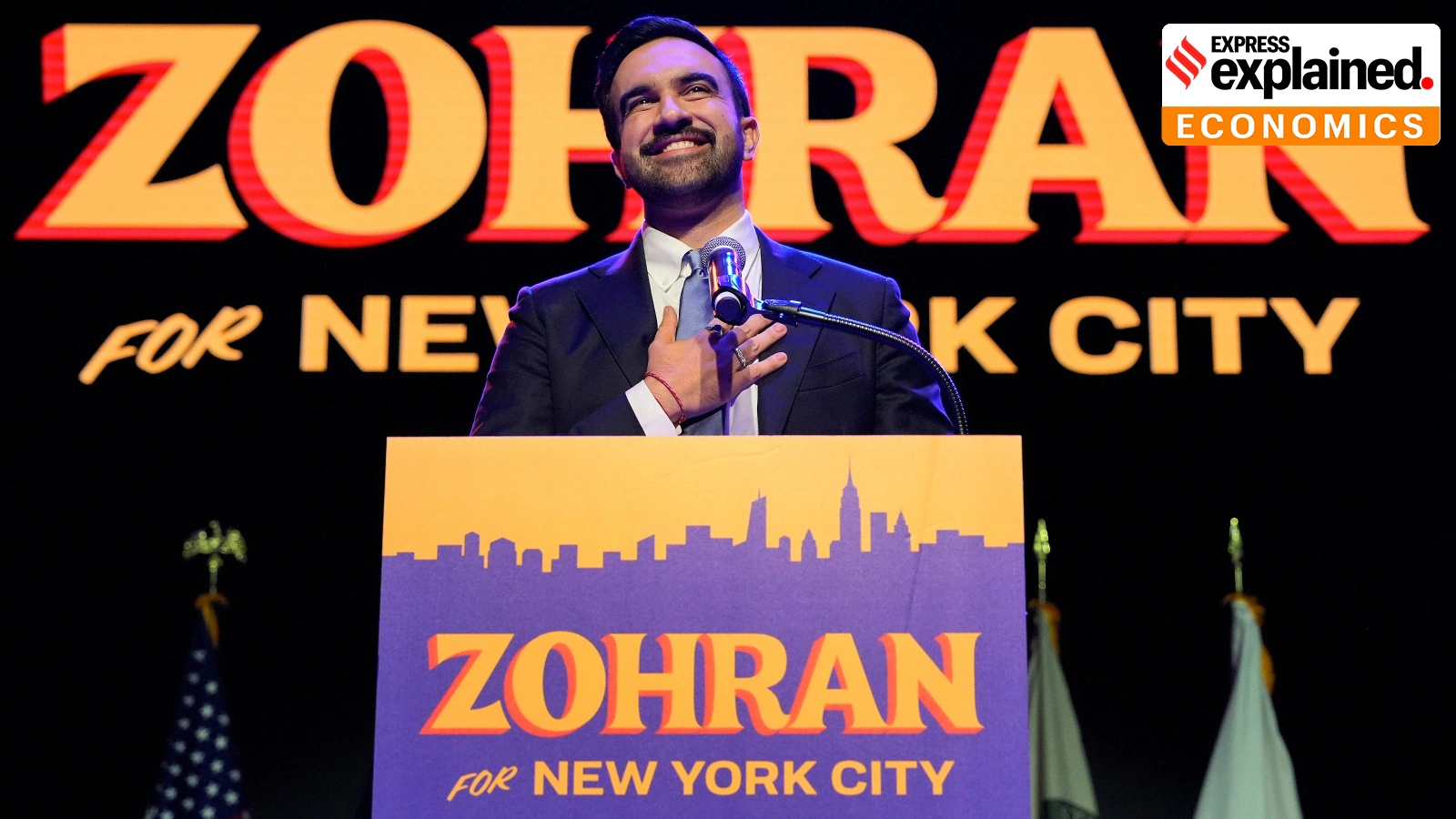

Zohran Mamdani, recently elected as New York’s mayor, identifies as a “democratic socialist,” a stance that has sparked significant concern across the United States. The nation is widely recognized for its capitalist framework, which involves privately owned means of production and market-driven income distribution. Socialism arose primarily as a counter to capitalism, having evolved over time to represent various ideas, including government ownership of production or worker-owned enterprises operating in a competitive market.
Mamdani’s critics argue that his policies could threaten the economic vitality of the city, potentially driving businesses away and imposing burdensome regulations and taxes. Conversely, his supporters view his election as a clear signal for the Democratic Party to pivot leftward in response to Donald Trump’s MAGA movement, which they believe is pushing the country further right.
In a recent interview, when asked about his views on capitalism, Mamdani expressed his disfavor, identifying himself instead as a “democratic socialist.” He referenced civil rights leader Martin Luther King Jr., stating, “Call democracy or call it democratic socialism; there must be a better distribution of wealth for all of God’s children in this country.” He aims to tackle the growing inequality in the U.S. and address affordability issues, aligning with the Democratic Socialists of America, which defines democratic socialism as a system that empowers ordinary people in their workplaces and communities.
The Fiscal Policy Institute has indicated that New York may be experiencing stagflation, a troubling mix of low economic growth and high inflation. The city had a GDP of $1.2 trillion in 2022, with a population of 8.3 million, but it struggled to recover from the significant economic downturn caused by the pandemic. Despite a pre-pandemic economic boom, current housing affordability is alarming, with a median household income of $72,000 juxtaposed against a staggering median home price of $724,000.
Mamdani’s commitment to making New York more affordable has resonated with many voters. During a debate, he outlined ambitious proposals including freezing rents for millions of tenants, providing free and efficient public transportation, and universal childcare. He planned to fund these initiatives by taxing wealthy individuals who supported former President Trump and his opponents.
In addition to freezing rents-important to the 70% of residents who rent-Mamdani intends to create government-run grocery stores aimed at keeping food prices low. He noted that prices have risen faster than incomes for many New Yorkers, and such stores could alleviate financial strain by reducing overhead and sourcing products locally.
Mamdani also advocates for raising the minimum wage to $30 per hour by 2030, followed by automatic increases linked to living costs and productivity. He argues that a living wage is crucial in a city as wealthy as New York and believes that increasing earnings will benefit the economy as a whole.
However, there are three major concerns regarding Mamdani’s proposals. First, many economists question whether government intervention in setting prices can effectively address economic challenges. While freezing rents might offer temporary relief, it can discourage the construction needed to meet future demand, ultimately harming affordability.
Second, the efficiency of government-run businesses is often disputed, with numerous examples highlighting inefficiencies and corruption in such operations. Lastly, there is anxiety that high taxes could push businesses out of the city, resulting in job losses and stifling economic progression. During the debate, former hedge fund manager Whitney Tilson stressed that Mamdani’s tax plans could severely disadvantage NYC businesses compared to neighboring states, potentially leading to a significant economic decline.
Original Source: https://indianexpress.com/article/explained/explained-economics/socialist-zohran-mamdani-mayor-new-york-10347304/
Category: Explained,Explained Economics
Tags:
Publish Date: 2025-11-05 13:54:00