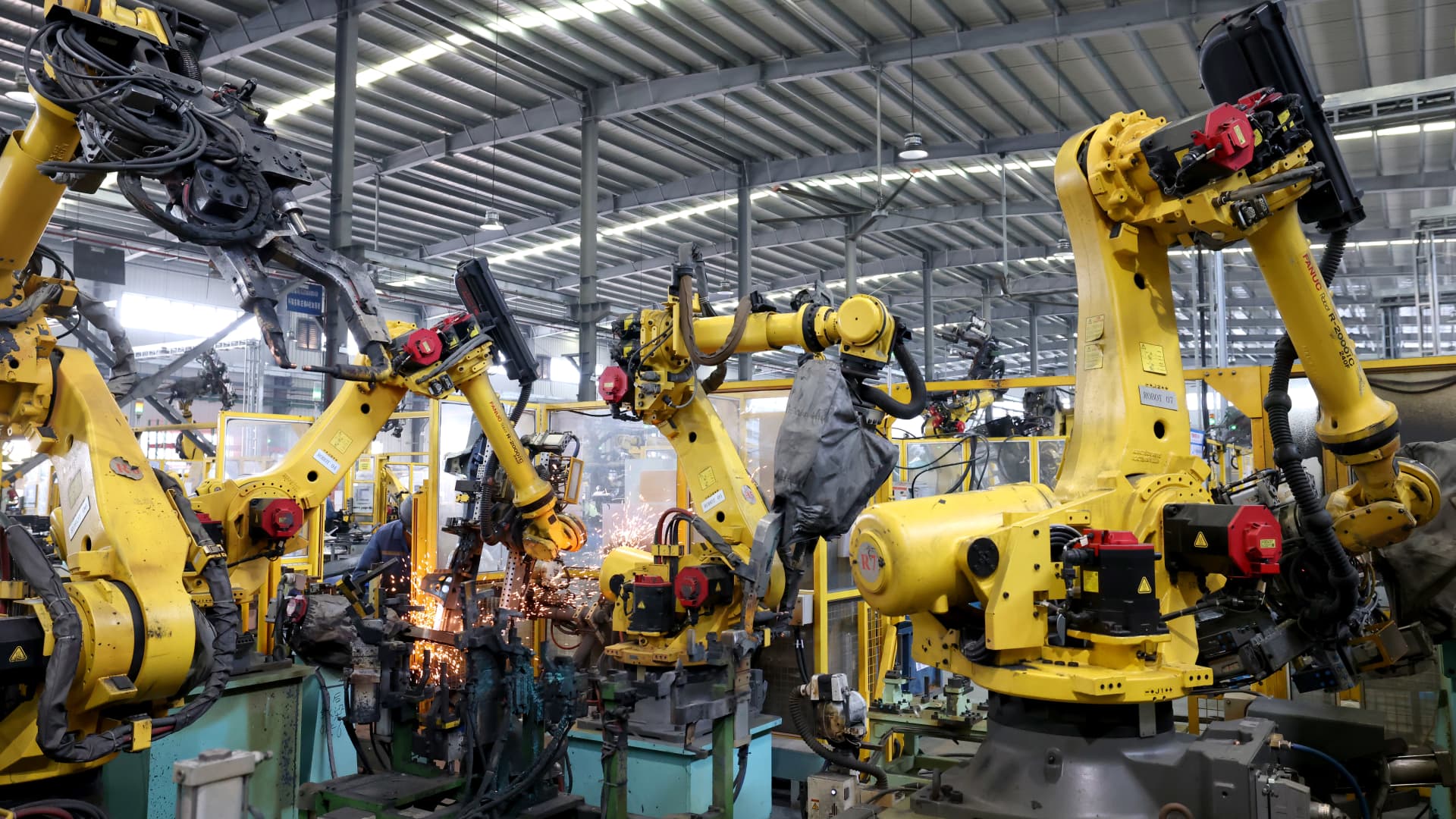

China’s manufacturing sector stumbled in October, with growth falling short of market expectations due to a notable decline in new export orders amid rising trade tensions with the United States. According to the RatingDog China General Manufacturing PMI, produced by S&P Global, the index slipped to 50.6 in October, down from September’s six-month high of 51.2 and below analysts’ forecast of 50.9 sourced from a Reuters poll.
The survey highlighted that new export orders experienced their steepest drop since May, as manufacturers cited “rising trade uncertainty.” Overall business activity and output expanded, but at a slower pace than the previous month. This dampening of optimism was reflected in business confidence, which reached its lowest point in six months. The outlook for production over the coming year has dimmed, with manufacturers expressing the least positive sentiment seen in half a year.
Conversely, the employment indicator within the manufacturing sector reported its first increase since March, rising to its highest level since August 2023. While the private survey indicated growth-remaining above the 50 mark that distinguishes growth from contraction-official figures released last Friday painted a bleaker picture. China’s official manufacturing PMI plummeted to 49.0, marking its most significant contraction in six months. Historically, private surveys such as those conducted by Caixin and S&P Global provide a more optimistic perspective than their official counterparts, focusing on export-oriented manufacturers.
The RatingDog private survey encompasses 650 manufacturers and gathers responses in the latter half of each month, whereas the official PMI surveys a broader sample of over 3,000 companies at month-end. Expecting a gradual recovery in manufacturing activity, Dongming Xie, managing director and head of Asia macro research at OCBC Bank, suggested that the manufacturing PMI could experience limited improvement in the coming months, with business confidence stabilizing following the recent U.S.-China trade truce.
Last week’s trade agreement, established during a meeting between U.S. President Donald Trump and Chinese President Xi Jinping in South Korea, has contributed to easing tensions. The accord entails the U.S. reducing fentanyl-related tariffs on Chinese goods by 50% to 10%, lowering the total tariff rate to approximately 47%. In return, China has paused sweeping export controls on rare earth metals. The U.S. will also suspend the implementation of certain export control regulations, while Beijing will end investigations into American chip companies, such as Nvidia and Qualcomm, and revive purchases of U.S. agricultural and energy products.
In light of these developments, Goldman Sachs has raised its GDP forecast for China, now predicting a 5% growth rate this year, and a slight increase in 2026 projections. Encouraged by the U.S. trade thaw and China’s commitment to enhancing manufacturing competitiveness, analysts note that there has been a notable shift in Chinese export strategies. Manufacturers are increasingly diversifying their markets away from the U.S., focusing on Southeast Asia and Europe, with year-on-year declines in U.S. exports since April.
Despite resilient exports, China’s economy is showing signs of strain, evidenced by a slowdown to 4.8% growth in the third quarter-the slowest pace in a year. Fixed-asset investment has also contracted unexpectedly, marking the first decline since the pandemic. Analysts warn that the high growth base from last year coupled with a fading stimulus effect will likely weigh on China’s economic performance in the upcoming quarters, as challenges in the housing market persist.
Original Source: https://www.cnbc.com/2025/11/03/china-factory-activity-october-pmi-ratingdog-private-survey-shows.html
Category :
Tags:
Publish Date: 2025-11-03 08:05:00