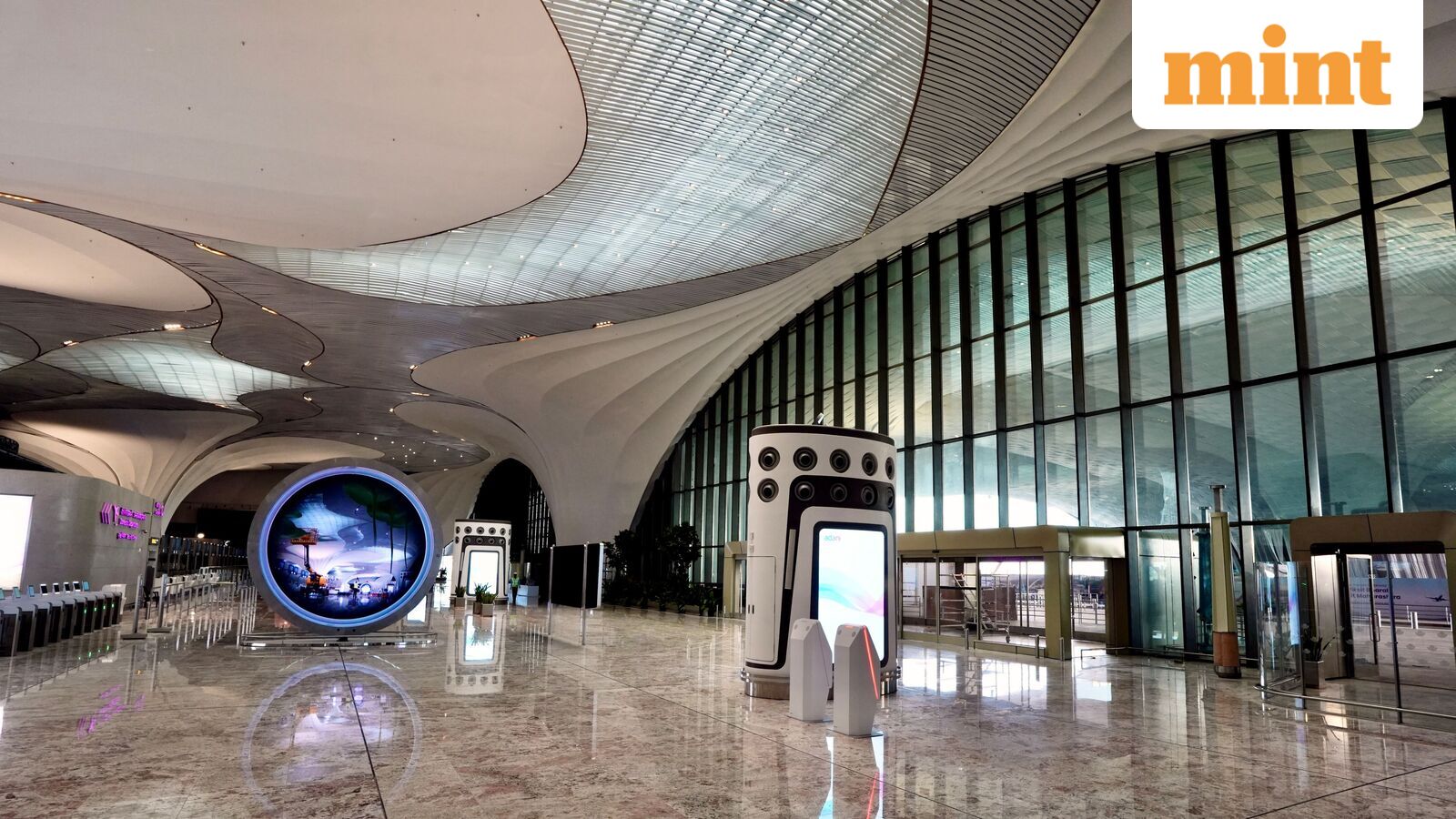

Mumbai is set for a significant aviation upgrade with the imminent opening of Navi Mumbai International Airport, marking nearly three decades of planning and construction. Inaugurated by Prime Minister Narendra Modi, the airport, located about 44 kilometers from the congested Chhatrapati Shivaji Maharaj International Airport (CSMIA), aims to alleviate the heavy traffic faced by travelers in India’s commercial capital.
While the official announcement did not provide specifics on flight routes or ticketing, major Indian airlines are already preparing for takeoff. IndiGo plans 18 daily departures, while Air India is scheduling 20, and Akasa is offering 14, as confirmed by the respective companies. Initially, flights will operate between 8 AM and 8 PM, with international services anticipated once nighttime operations receive approval. To entice global airlines, the airport authority has waived parking fees for the first year for international carriers-a move not available to domestic airlines.
Navi Mumbai Airport is projected to accommodate 20 million passengers annually upon opening, with future expansion expected to raise that capacity to 90 million after the completion of all four terminals and two parallel runways. In comparison, Delhi Airport processes approximately 109 million passengers a year across its four runways, while CSMIA currently manages about 55 million with two intersecting runways. Additionally, Noida International Airport, set to begin operations soon, will start with a capacity of 12 million passengers on one runway and one terminal.
The first terminal at Navi Mumbai Airport is being developed at a cost of ₹19,464 crore, with plans for an additional investment of around ₹30,000 crore for the second terminal by 2029, spearheaded by the Adani Group. Similarly, the Noida International Airport at Jewar is being constructed at a cost exceeding ₹10,050 crore by Yamuna International Airport Private Ltd, a subsidiary of Zurich Airport International AG, collaborating closely with both the federal and Uttar Pradesh state governments. The recently inaugurated Mopa Airport in Goa, which opened in December 2022, was developed at a budget of approximately ₹2,870 crore.
One of the prominent challenges facing Navi Mumbai Airport is its considerable distance from densely populated areas of Mumbai. For example, the commute from Borivali to Mumbai’s Terminal 1 is about 18 km and can be completed in roughly 49 minutes during peak traffic. In contrast, the journey to Navi Mumbai Airport stretches approximately 54 kilometers, potentially taking nearly 142 minutes. Similarly, for passengers traveling from Bandra (West), CSMIA’s Terminal 1 is just 6.5 km away, taking around 37 minutes, whereas Navi Mumbai Airport is about 43 kilometers from Bandra and could require about 94 minutes of travel.
Adani Airports Holdings Ltd (AAHL), fully owned by Adani Enterprises, has rapidly emerged as India’s largest private airport operator since its establishment in 2019, managing seven airports including Navi Mumbai. Currently, one in every four Indian air travelers uses an Adani-run airport. In fiscal year 2025, the group reported a 27% increase in airport revenue, amounting to ₹8,062 crore, with EBITDA rising by 43% to ₹3,480 crore, thereby contributing significantly to Adani Enterprises’ overall financial performance.
As Navi Mumbai International Airport prepares for its passenger debut, it symbolizes a critical step towards addressing Mumbai’s aviation bottleneck, promising substantial enhancements in air travel for one of Asia’s largest cities.
Original Source: https://www.livemint.com/news/navi-mumbai-international-airport-adani-airports-new-mumbai-airport-11759907173505.html
Category :
Tags:
Publish Date: 2025-10-08 15:12:00