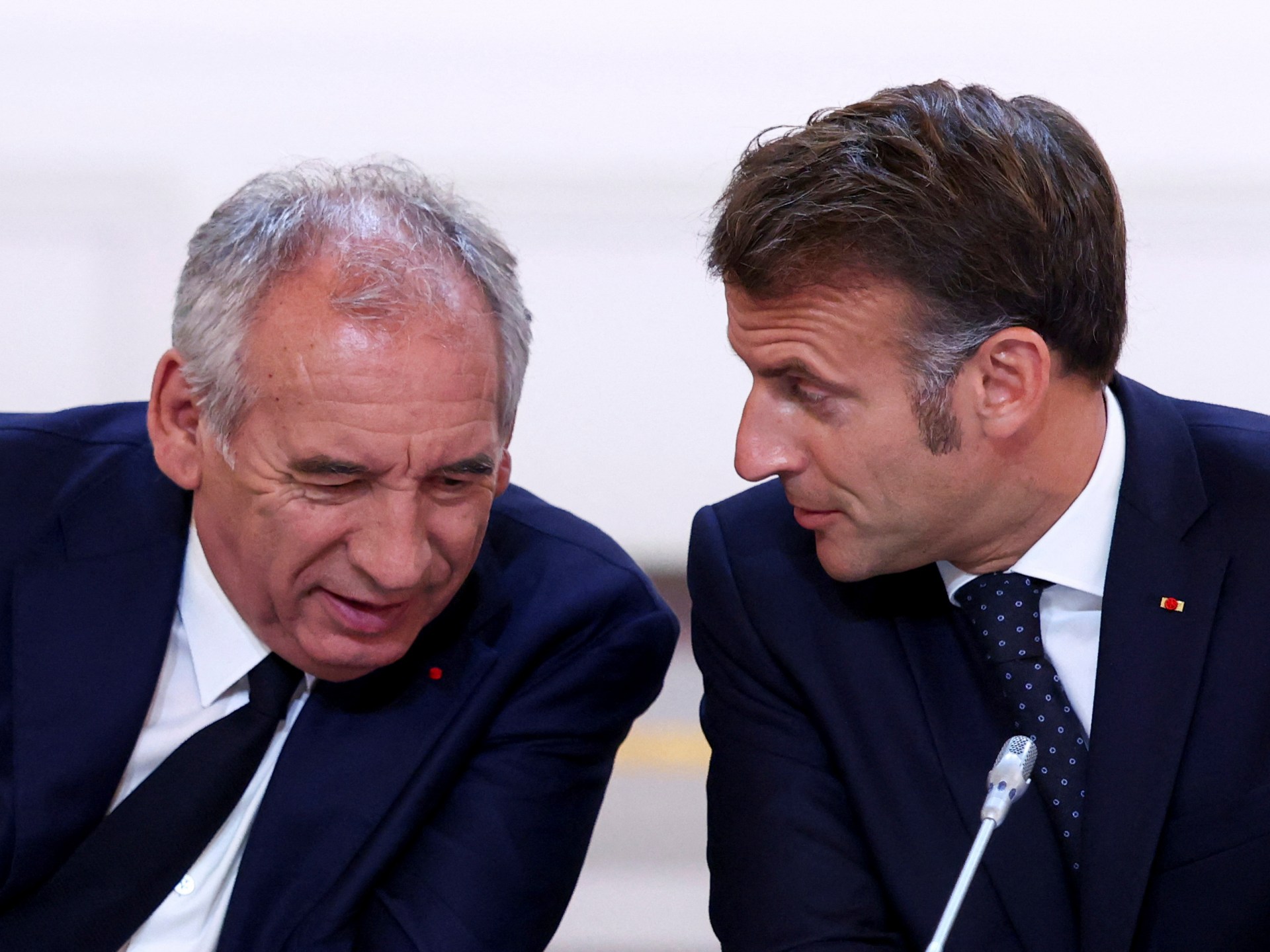

The French government, under Prime Minister François Bayrou, has officially collapsed after losing a crucial vote of no confidence, plunging the eurozone’s second-largest economy into a political crisis and raising uncertainties about President Emmanuel Macron’s future. On Monday, parliament voted against Bayrou’s budget proposal, which aimed to cut $52 billion to address France’s fiscal deficit.
Bayrou, a seasoned political figure at 74, had been in office for just nine months and took the bold step of calling the no-confidence vote himself in hopes of rallying lawmakers. His ouster marks the latest chapter in France’s tumultuous political landscape, characterized by four prime ministers in just under two years-an instability reminiscent of the years following the establishment of the Fifth Republic in 1958.
During his address prior to the vote in the National Assembly, Bayrou emphasized the serious risks facing the economy due to its deep indebtedness. He fielded questions from lawmakers before the vote, which had been widely anticipated given the clear opposition from parties spanning the political spectrum, who together hold 330 of the 577 Assembly seats.
While Bayrou’s government has collapsed, he will remain in office until President Macron determines the next steps. Unfortunately, there is no clear consensus on a successor, complicating the situation further. Macron now faces a critical decision: appoint a new prime minister hopeful of passing the unpopular budget, call for snap elections to re-establish a parliamentary majority, or potentially step down, although he has previously ruled out resigning before his term concludes in 2027.
The composition of parliament remains unchanged, making the appointment of a new premier fraught with risk. Macron, a fiscal conservative, is unlikely to choose a leader advocating for increased state spending, yet some speculate he may consider a shift toward the left to rebuild his government. “If he tries a similarly centrist approach, he’d lose even more credibility,” remarked Stefano Palombarini, an economics professor at the University of Paris VIII. Palombarini added that there is potential for a coalition among Macronist, Socialist, and Green politicians willing to negotiate a government that could last until 2027.
Polling data indicates a challenging landscape for Macron, with only 15% of the electorate expressing confidence in his leadership, down six percentage points from July. Surveys show that between 56% and 69% of the public favors snap elections, reflecting growing disaffection with the current political dynamics, where minority cabinets have ruled since 2022.
The crisis roots back to Macron’s decision to call early parliamentary elections last year following his re-election in 2022. This gamble backfired, resulting in a hung parliament with a fragmented majority, complicating governance and legislative activity, particularly around budget decisions.
Bayrou’s budget proposal, which sought to achieve a €44 billion deficit reduction by freezing welfare spending and eliminating two public holidays, was met with widespread rejection among lawmakers. The current budget deficit stands at an alarming €169 billion, representing 5.8% of GDP, significantly above the EU’s 3% threshold.
Looking ahead, analysts anticipate ongoing tensions, including “Block Everything” protests and union-led strikes, which could escalate further dissatisfaction with Macron’s policies. Palombarini highlighted that should elections be held tomorrow, a Macronist government would likely struggle for re-election. Nonetheless, Macron appears determined to hold on to power, indicating that his influence over French politics will likely persist in the near term.
Original Source: https://www.aljazeera.com/news/2025/9/8/french-no-confidence-vote-whats-next-if-the-government-collapses
Category :
Tags:
Publish Date: 2025-09-08 23:18:00