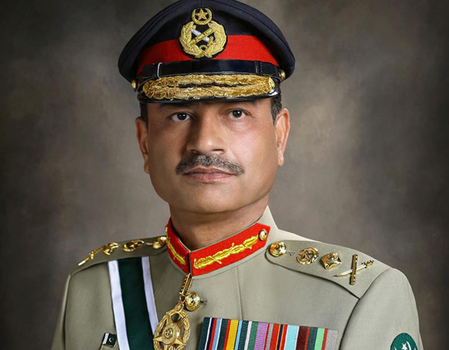

New Delhi, Aug 20: Pakistan’s army chief, Field Marshal Asim Munir, has recently made headlines for claiming that India pleaded for a ceasefire during the latest conflict between the two nations. These remarks were made at an event in Belgium, raising eyebrows and prompting sharp criticism. This is not the first instance of Munir making questionable statements; he has faced accusations of dishonesty previously, both in the United States and Pakistan.
Former Indian Army chief General V. P. Malik commented on Munir’s assertions, suggesting that certain army leaders have a penchant for grandiosity. In a post on X, Malik stated, “Pakistani leaders, particularly some Army Chiefs, have always indulged in bluff and bluster. I believe the right response is to remain alert, respond on the ground when necessary, and to continue building our comprehensive national power. No need to join their daily theatrics.”
Munir’s latest comments were delivered on August 11 during a closed event by the Overseas Pakistani Foundation at Groot-Bijgarden Castle near Brussels, attended by around 500 members of the Pakistani community from across Europe. Abhinav Pandya, the founder of the Usasanas Foundation, an Indian foreign policy and security think tank, described Munir’s statements as “sheer desperation” given the Pakistan Army’s current challenges.
The Pakistan Army has been experiencing significant losses from groups like the Balochistan National Army (BLA), Tehreek-e-Taliban Pakistan (TTP), and the Taliban, all while Munir has been in command. His leadership has drawn heavy scrutiny, especially as he seeks a second term, while the army’s stability hangs in the balance.
In contrast, Munir’s claims appear to be part of an ongoing narrative battle. During India’s Operation Sindoor, U.S. Secretary of State Marco Rubio reportedly communicated with Indian External Affairs Minister S. Jaishankar, conveying that Pakistan had sought a ceasefire following India’s strikes on the Nur Khan airbase. Jaishankar clarified that any ceasefire request needed to come through official military channels.
Pandya emphasized that Pakistan recognizes its inability to compete with India economically or militarily, leading them to rely on narrative warfare. In this context, Munir’s claims serve to rehabilitate his public image and that of the Pakistani military.
When questioned about the reception of Munir’s comments within Pakistan, Pandya noted the complex public sentiment. There is widespread discontent with the leadership, yet a strong undercurrent of support for extremist ideologies exists. Munir seems aware of this dynamic, allowing him to market an anti-India narrative effectively.
Additionally, Pandya pointed out that Pakistani society is heavily influenced by radicalism. Even if the military is not at the forefront, extremist elements could take their place. India, for its part, has condemned Munir’s remarks as typical of Pakistan’s strategies. The Ministry of External Affairs labeled his claims as “nuclear sabre-rattling.”
The MEA’s statement remarked, “Nuclear sabre-rattling is Pakistan’s stock-in-trade.” During Operation Sindoor, India countered Munir’s attempts at intimidation, and even after the operation, Munir asserted in Washington that Pakistan, as a nuclear state, would retaliate if threatened.
Original Source: https://theshillongtimes.com/2025/08/20/asim-munirs-existential-crisis-lies-bluster-and-narrative-battles/
Category: NATIONAL,News Alert
Tags:
Publish Date: 2025-08-20 21:07:00