
Scientists are exploring the origins of life on Earth and the possibility of life beyond our planet, particularly on some of the moons in our solar system. Two notable contenders are Jupiter’s Europa and Saturn’s Enceladus, which may harbor vast salty oceans beneath their icy surfaces. Seafloor volcanoes could heat these oceans and provide essential chemicals for life. On Earth, deep-sea volcanoes also support microbial life, including organisms called thermophiles, which thrive in extreme temperatures-some conditions hot enough to boil water on the surface. These microbes survive by consuming chemicals emitted from active volcanoes, operating without sunlight or oxygen.
Because thermophiles existed before the advent of photosynthesis and oxygen on Earth, researchers believe they may provide insights into the earliest forms of life on our planet and potentially on other celestial bodies. To evaluate whether life could exist on these ocean worlds, NASA launched the Cassini spacecraft in 1997 to orbit Saturn. The agency has also deployed three spacecraft to study Jupiter: Galileo in 1989, Juno in 2011, and the upcoming Europa Clipper mission, set for 2024. These missions aim to examine Europa and Enceladus closely, utilizing various instruments to measure their habitability.
Understanding how similar environments function is crucial for planetary scientists to interpret data collected from these missions. Researchers at the University of Massachusetts Amherst are studying thermophiles from hydrothermal vents to gain insights into the potential for life in extreme environments. The lead researcher recalls being fascinated by volcanoes after experiencing the eruption of Mount St. Helens in 1980. This led to a long career studying samples from hydrothermal vents located off the coasts of Washington and Oregon.
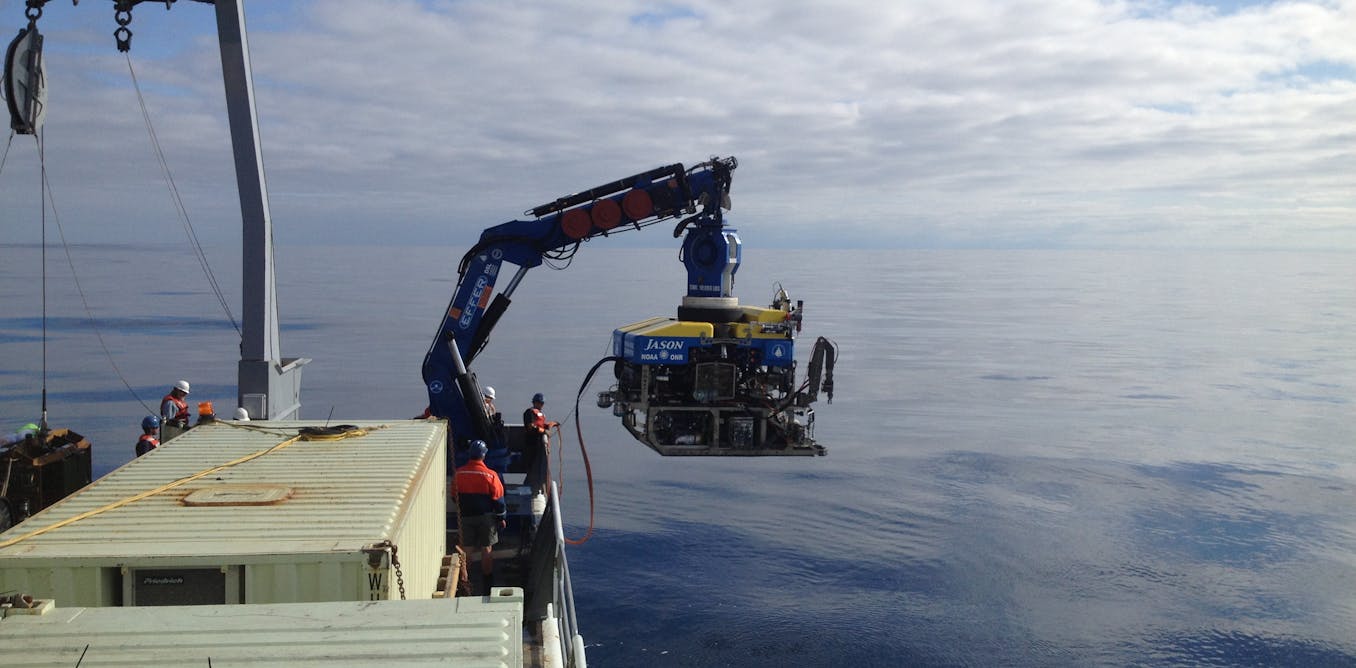
Submarine pilots play an essential role in collecting samples from these vents, using submarines and remotely operated submersibles. These vehicles descend into the ocean to gather rocks and heated fluids escaping from the seafloor. They often remain on the ocean floor for about a day, making multiple trips during each expedition. Within the rocks, superheated hydrothermal fluids, mixing with cold seawater, create ideal conditions for thermophiles to thrive.
Upon returning to the surface, researchers analyze the samples’ chemistry, minerals, and organic materials like DNA, focusing on the live microbes they can cultivate. These analyses help scientists understand how microbes live and grow in their natural environments. In the lab, new thermophiles are isolated and grown in conditions that mimic their natural habitats. Researchers provide them with volcanic chemicals and measure their ability to generate essential compounds like methane and hydrogen sulfide.
Oxygen is typically toxic to these organisms, so they are cultivated in oxygen-free environments. Some studies focus on identifying chemical signals that these microbes might produce, which could be detectable by spacecraft or instruments on extraterrestrial locations. Computer models are developed to simulate how these organisms thrive and compete, applying this knowledge to Earth’s early conditions and those on ocean worlds.
The research on thermophiles has broader implications beyond planetary science. Many proteins found in these organisms hold promise for biotechnology applications. A notable example is DNA polymerase, an enzyme crucial for replicating DNA in laboratory settings. The first DNA polymerase used for such reactions was isolated from a thermophilic bacterium in the 1970s, showcasing how these heat-resistant enzymes have transformed fields such as genetics and forensic science.
Researchers are also investigating how thermophiles can help degrade waste, such as dairy farm effluent and wastewater from breweries. These organisms can convert waste into biohydrogen-a potential energy source. Hydrothermal vents remain one of Earth’s most unique environments, presenting a window into life’s origins while offering insights into other possible life forms across the cosmos.
Original Source: https://theconversation.com/microbes-in-deep-sea-volcanoes-can-help-scientists-learn-about-early-life-on-earth-or-even-life-beyond-our-planet-260977
Category:
Tags:
Publish Date: 2025-07-21 18:05:00