Revolutionizing Space Health: How NASA Protects Astronauts with Blood Samples and Heart Scans Aboard the ISS

As humanity gears up for extended journeys to the Moon, Mars, and beyond, NASA is ramping up its research into how spaceflight affects the human body. Astronauts aboard the International Space Station (ISS) are participating in various medical tests that involve blood draws, vital sign monitoring, heart scans, and fitness assessments. These studies are crucial for understanding the long-term impacts of microgravity, radiation, and confined environments on physical health, and they are integral to developing countermeasures that will keep astronauts healthy during deep space missions. Additionally, the insights gained from this research have implications for improving healthcare on Earth.
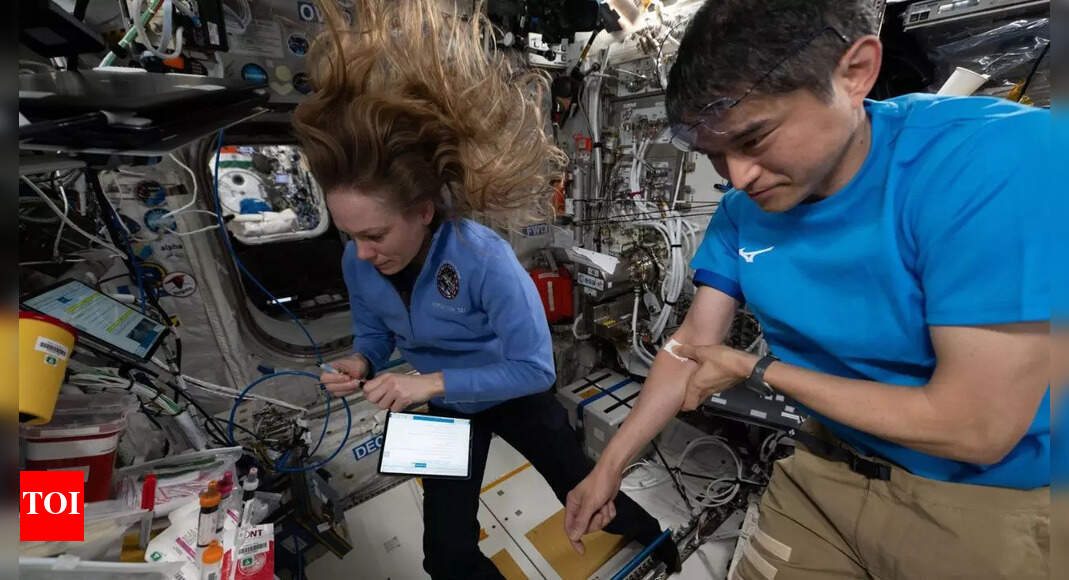
NASA astronauts, including Nichole Ayers and Anne McClain, are actively engaged in human research initiatives on the ISS. Ayers, along with JAXA Commander Takuya Onishi, recently collected blood samples for the Immunity Assay, a study focused on how the stressors of spaceflight influence cellular immune function. In parallel, McClain performed ultrasound heart scans and monitored her blood pressure to assess cardiovascular health, looking for early indicators of artery stiffness and blood flow changes associated with a microgravity environment.
Furthermore, astronauts are utilizing advanced wearable technology, such as the Canadian Space Agency’s Bio-Monitor headband and vest, which enable continuous monitoring of vital signs during everyday activities, including exercise and sleep. Data from these devices is transmitted to medical teams on the ground for analysis and follow-up care, ensuring astronauts receive real-time health support while in orbit.
In addition to health monitoring, astronauts are also responsible for maintaining the critical systems aboard the ISS. Jonny Kim and Onishi conducted inspections of life support systems, including catalytic reactors and hatch seals, to guarantee a safe habitable environment for the crew. Ongoing botanical studies in the Kibo module investigate how plants grow and develop in microgravity, contributing to both food production and scientific knowledge about biological processes in unique environments.
Members of the Roscosmos crew contributed to the health research through respiratory diagnostics and fitness evaluations on treadmills. These assessments are part of NASA’s comprehensive strategy to prepare for long-duration missions, where crew autonomy and system reliability are paramount. From heart scans to equipment inspections, every effort is geared towards ensuring the safety and well-being of astronauts during extended explorations in space.
This multifaceted research underscores NASA’s commitment to advancing the future of crewed space exploration while simultaneously benefiting public health initiatives on Earth. As space travel continues to evolve, the lessons learned from these comprehensive studies will play a crucial role in shaping the health and efficiency of astronauts during their groundbreaking missions.
By prioritizing the health of its crew, NASA not only lays the groundwork for successful long-term space missions but also enriches our understanding of human health in a variety of contexts, proving that the pursuit of knowledge transcends the boundaries of our planet.
Original Source: https://timesofindia.indiatimes.com/science/blood-samples-to-heart-scans-how-nasa-monitors-astronaut-health-aboard-the-iss-through-human-research/articleshow/122737517.cms
Category :
Tags:
Publish Date: 2025-07-18 11:50:00