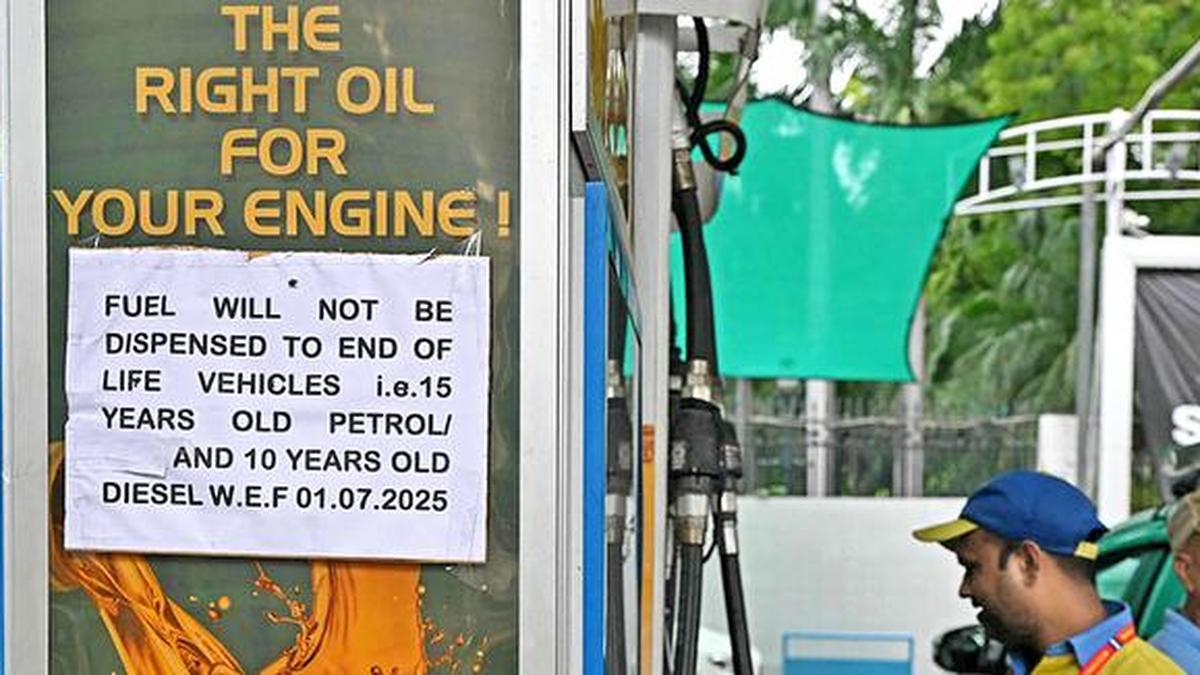

On July 1, 2025, New Delhi implemented a controversial fuel ban targeting older vehicles. This policy prohibits petrol vehicles over 15 years old and diesel vehicles exceeding 10 years from refueling at city petrol stations. Over 500 petrol stations have been equipped with Automatic Number Plate Recognition (ANPR) cameras to identify non-compliant vehicles in real time. However, challenges have emerged in enforcement, with many systems struggling to read high-security license plates accurately. Fuel station staff reported inadequate training, and the absence of an integrated blacklist hindered consistent monitoring. As a result, drivers have found ways to bypass the restrictions by refueling in adjacent towns outside Delhi.
The policy relies on vehicle age as a proxy for emissions; while this strategy simplifies implementation, it falls short of capturing the actual pollution levels generated by vehicles. The lack of regular fitness checks, odometer readings, and emissions testing means that age alone does not accurately reflect real-world emissions. Media estimates suggest that as many as six million vehicles might be affected by the ban; however, no official data details how many of these vehicles remain operational, what types of fuel they consume, or their mileage.
To evaluate the policy’s effectiveness, an analysis was conducted using vehicle registration records from the VAHAN portal, spanning from 2002 to 2025, across all of Delhi’s Regional Transport Offices. This data was cross-referenced with listings on resale platforms to gauge the number of older vehicles still on the road. Daily travel distances were modeled based on age, while particulate matter (PM2.5) emission factors derived from the Automotive Research Association of India were used for pollution estimates.
Findings show that only about 8% of Delhi’s vehicle fleet-approximately 750,000 vehicles-are subject to these fuel restrictions. This breakdown includes roughly 170,000 two-wheelers, 350,000 petrol cars, 180,000 diesel cars, and around 34,000 diesel commercial vehicles. The total PM2.5 emissions from Delhi’s transport sector in 2025 is projected to reach 3,200 tonnes. If the policy is enforced effectively, it could lead to an estimated reduction of 8% in total emissions from vehicles, both within and beyond the city limits.
While this projected impact is significant, its success hinges on consistent enforcement. Learnings from other global cities can inform Delhi’s approach. For instance, Beijing combined diesel truck restrictions with vehicle scrappage incentives and retrofitting options. Tokyo adopted strict diesel standards, alongside subsidies for upgrades. Meanwhile, Paris established low-emission zones while enhancing public transport and providing financial support for low-income residents.
Delving deeper, Delhi could implement localized solutions, such as vehicle exchange initiatives and scrappage incentives, enabling owners to phase out older vehicles with minimal economic strain. Transitioning from a one-time lifetime road tax to annual renewals contingent on emissions could align financial motivations with clean air objectives.
Public engagement is also vital for the policy’s acceptability. A gradual, 12 to 18-month rollout accompanied by awareness campaigns can alleviate confusion and foster trust among citizens. Additionally, a grievance portal would serve as a platform for compliance checks, error disputes, and exemption requests.
Finally, clean air is a regional issue extending beyond city limits. Hence, establishing a joint enforcement task force alongside an emissions tracking system can standardize efforts across Delhi and neighboring areas like Noida, Faridabad, Gurugram, and Ghaziabad.
Ajay S. Nagpure, an urban systems scientist at Princeton University’s Urban Nexus Lab, emphasizes that collaboration is key to achieving cleaner air across the region.
Published – July 11, 2025 07:00 am IST
Original Source: https://www.thehindu.com/data/delhis-refuelling-ban-simple-policy-but-imprecise/article69795833.ece
Category : Data
Tags:
Publish Date: 2025-07-11 07:00:00