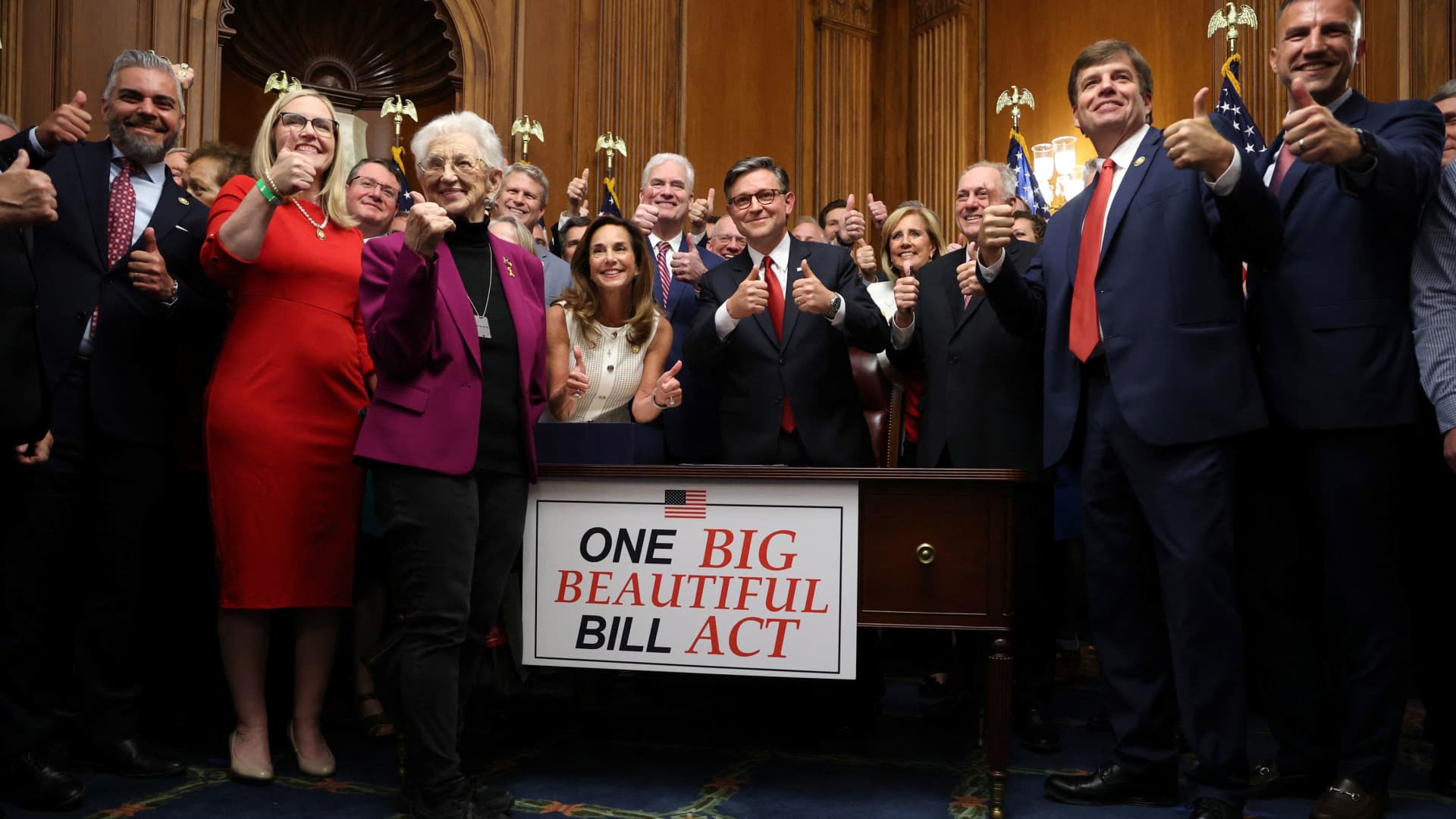

U.S. House Speaker Mike Johnson and Republican members celebrated the signing of President Trump’s expansive spending and tax legislation on Capitol Hill on July 3, 2025. This legislation not only makes the 2017 tax cuts permanent but also enhances several key tax breaks, introducing changes that could significantly impact American households.
The standard deduction for taxpayers will rise, increasing from $15,000 to $15,750 for individuals and from $30,000 to $31,500 for married couples filing jointly in 2025. Additionally, the estate and gift tax exemptions are set to increase to $15 million and $30 million for individuals and couples, respectively, in 2026, with each figure indexed for inflation. The child tax credit will also see an increase, rising to $2,200 per qualifying child, with a refundable portion of up to $1,700 starting in 2025, again indexed for inflation.
A critical change is the temporary lifting of the state and local tax (SALT) deduction cap. In 2025, the cap will rise from $10,000 to $40,000, benefiting many taxpayers in high-tax states like New York, California, and New Jersey. However, this limit is set to revert to $10,000 by 2030, showing a mixed outlook for future SALT deductions.
Amid these tax cuts, the legislation also marks a significant $1 trillion reduction in Medicaid funding, projected by the Congressional Budget Office. Starting December 31, 2026, new work requirements will apply, mandating Medicaid recipients aged 19 to 64 to work at least 80 hours a month. The legislation is expected to impact approximately 7.8 million individuals, leading to potential increases in uninsured rates.
Food assistance is also facing cuts, affecting over 40 million Americans, according to the Center on Budget and Policy Priorities. The changes to the Supplemental Nutrition Assistance Program (SNAP) could see about 5.3 million families losing at least $25 per month, with average losses amounting to $146 as stricter work requirements are implemented.
On a more positive note, the bill introduces “Trump accounts,” a savings initiative for children born between 2025 and 2028, featuring a one-time $1,000 federal deposit and potential annual contributions of up to $5,000. Parents can further invest the funds in diversified indices, facilitating long-term wealth growth.
However, the legislation does take a more stringent approach toward federal student loans, capping borrowing limits significantly and limiting benefits for educational funding. Unsubsidized student loans for graduate students will be capped at $20,500 annually. Additionally, the legislation introduces just two repayment plans starting in mid-2026, eliminating previous deferment options.
On the automotive front, a temporary tax deduction for car loan interest will allow eligible taxpayers to deduct up to $10,000 on new auto loans from 2025 to 2028. This aims to ease burdens for car buyers, but experts caution that the tangible benefits may be limited.
Overall, the new legislation reflects a blend of tax relief for families while imposing restrictions on social safety nets. The implications for various demographics, especially low-income households, are significant, prompting ongoing discussions about both the benefits and drawbacks of these legislative changes as the political landscape continues to evolve.
Tags: Trump legislation, tax cuts, Speaker Mike Johnson, Medicaid, SNAP, student loans, child tax credit.
Original Source: https://www.cnbc.com/guide/what-trumps-one-big-beautiful-bill-means-for-your-money/
Category :
Tags:
Publish Date: 2025-07-05 04:35:00