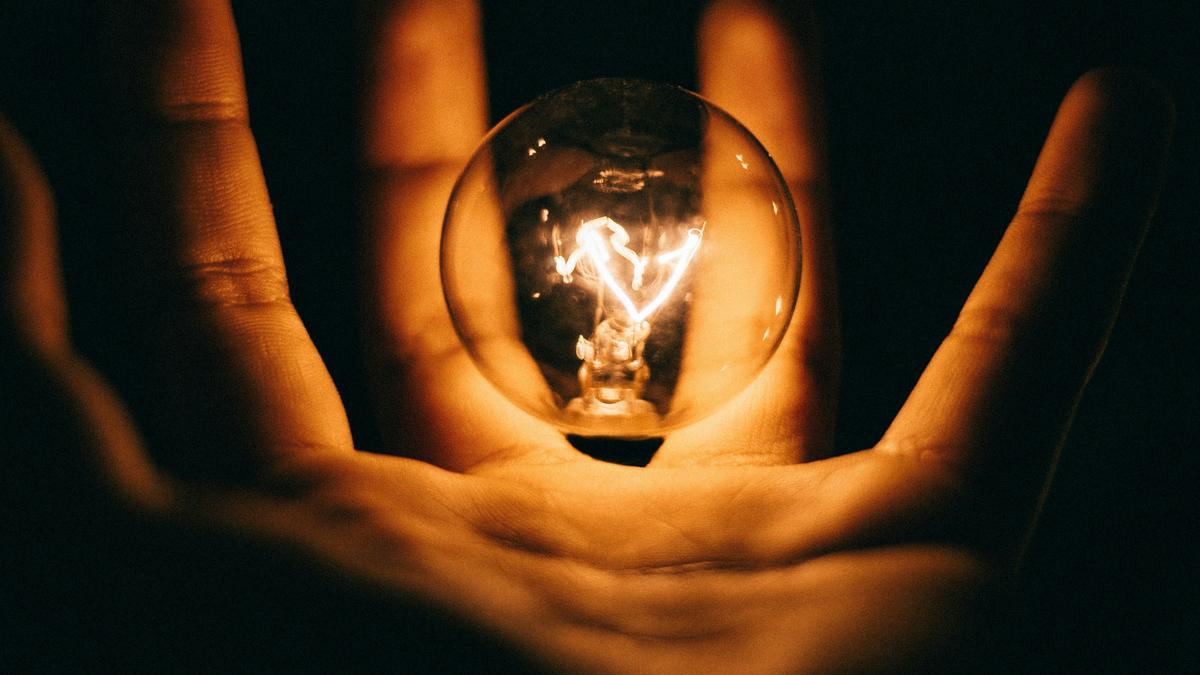

Light travels at an incredible speed of 300,000 kilometers per second in a vacuum, but it has always been considered impossible to capture or solidify due to the nature of photons, which have no rest mass and do not interact strongly with one another. Traditionally, light manifests as either a particle or a wave. However, researchers from the University of Pavia and CNR Nanotec in Italy have recently made a groundbreaking discovery: they successfully ‘froze’ light by manipulating photons in a precisely controlled ultra-cold environment. Their findings reveal that light can be transformed into a supersolid, a state in which it flows with nearly zero viscosity. This research is detailed in a publication in the journal Nature.
A supersolid is a unique state of matter where particles are arranged in a crystalline structure, yet behave like a non-viscous fluid. This means it merges the frictionless flow of a superfluid with the organized structure characteristic of a solid. Unlike typical solids, which remain stationary, supersolids can change direction and density based on particle interactions while maintaining a coherent internal arrangement. The concept of a supersolid was predicted by physicists in the 1960s and was first successfully created in a lab in 2017. In 1999, Danish physicist Lene Hau and her team slowed a beam of light to 17 meters per second using a Bose-Einstein condensate, which is another exotic state of matter. By 2001, they managed to completely halt a light pulse by transferring its information to the atoms in the condensate, a technique which effectively ‘froze’ the light for later retrieval.
Although prior studies demonstrated that light could be temporarily stored as an ‘excitation’ in matter, they did not transition light into a solid state. In 2010, a different group in Germany succeeded in creating a Bose-Einstein condensate entirely from photons by trapping light within a dye-filled optical microcavity, resulting in a coherent quantum state-essentially liquid light-yet still falling short of a solid structure.
The new study represents the first successful effort to couple light with matter to form a supersolid, which opens new avenues in condensed matter physics, an essential field that has led to advancements in optical fibers, lasers, semiconductors, and quantum computing. Matter commonly exists in two forms: solids and liquids. Solids can melt into liquids under heat, and liquids can solidify when cooled. Various quantum states also exhibit unique transformations among themselves.
This new research relied on the properties of polaritons, hybrid particles that can act as either light or matter. Polaritons are generated by coupling photons with energy packets within materials, such as phonons (vibrational energy) or excitons (electron-hole pairs). The researchers employed an aluminum gallium arsenide semiconductor as a waveguide, enhanced with an exciton source and laser. The waveguide’s microscopic structure included a periodic grating that influenced the motions of the polaritons, effectively trapping them within a regular pattern. A pulsed laser helped maintain a dense polariton condensate at approximately -269 degrees Celsius.
When laser light penetrated the semiconductor, polaritons were formed and subsequently confined by the grating. They arranged themselves into a periodic lattice of hybrid light-matter waves, resulting in a structure reminiscent of crystals. The low-loss conditions allowed these polaritons to organize themselves in specific configurations and exhibit behaviors indicative of a supersolid.
This emerged as a state of light, specifically a polariton condensate with a crystalline structure and superfluid coherence. The researchers confirmed the supersolid state quantitatively, noting that the system could lower its energy by spontaneously generating a density wave and effectively ‘freezing’ into an ordered pattern while preserving a unified quantum state.
The researchers likened this phenomenon to a “quantum theatre.” Picture a crowded auditorium with only three seats remaining in the front row, where everyone wishes to capture the central seat for the best view, although only one can occupy it. In a “quantum theatre,” all bosonic particles can simultaneously occupy the central seat, resulting in a Bose-Einstein condensate. This special behavior allows bosons in an isolated quantum system to share the same energy, whereas matter-building particles known as fermions cannot due to Pauli’s exclusion principle, which underpins the structure of the periodic table.
However, interactions among particles impose limits on how many can occupy this prime seat. Once a certain threshold is exceeded, pairs of particles are pushed toward adjacent seats, leading to the development of two “satellite condensates” flanking the main one. This configuration facilitates the emergence of the supersolid state from the condensate.
The experiment highlights that light can adopt certain states of matter under the right, albeit lab-engineered, conditions. The potential to convert light into a quantum structure can make photonic supersolids more viable for research and could pave the way for applications in lossless optical energy transmission and optical computing components.
Original Source: https://www.thehindu.com/sci-tech/science/scientists-freeze-light-into-a-supersolid-using-quantum-theatre/article69748118.ece
Category:
Tags:
Publish Date: 2025-06-29 06:30:00