Unveiling the Senate’s Game-Changing Vision: What’s Inside Trump’s Bold Spending Bill You Need to Know!

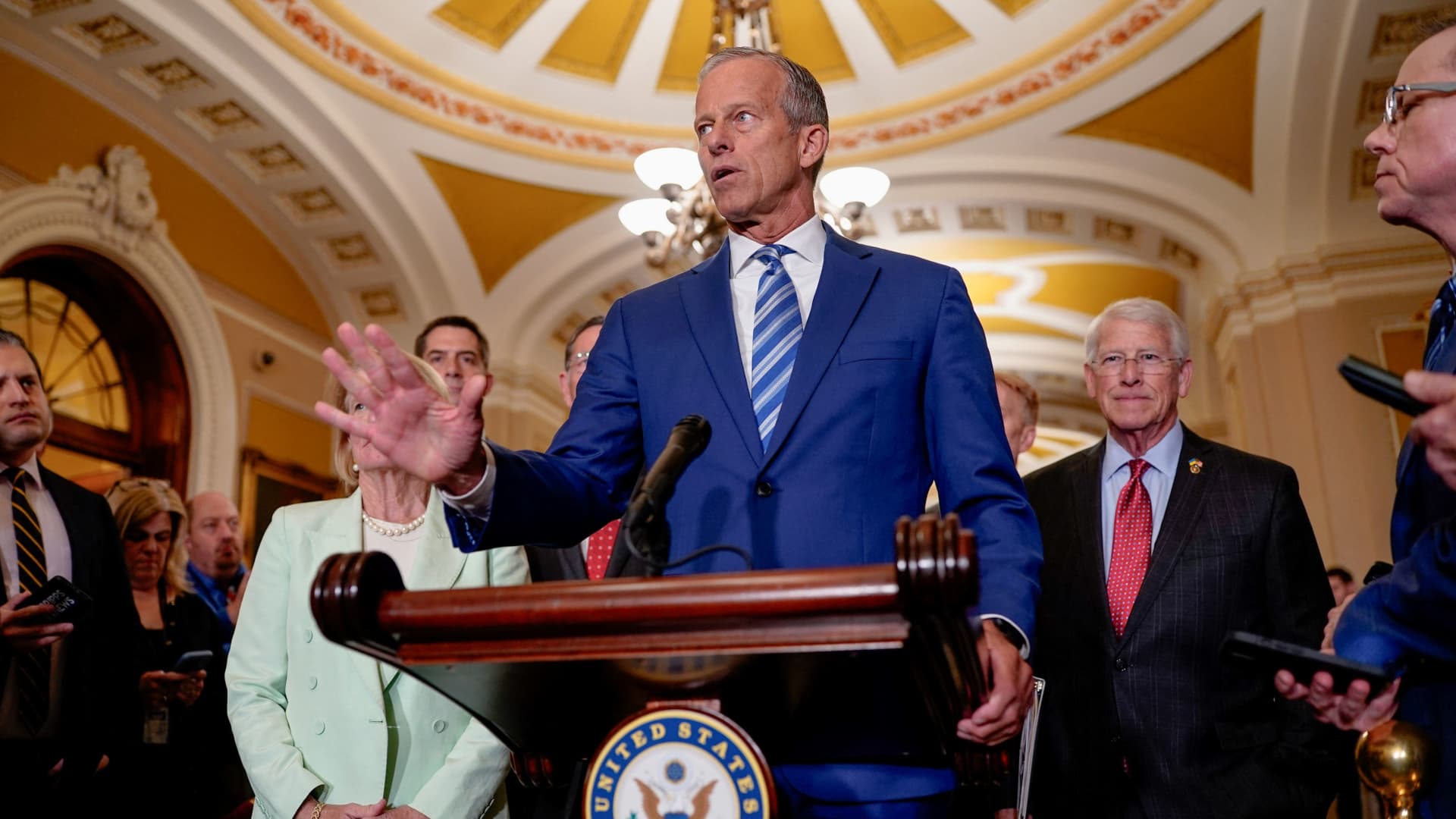
U.S. Senate Majority Leader John Thune (R-SD) addressed reporters on June 10, 2025, following a weekly policy luncheon held by Senate Republicans in Washington, D.C. After weeks of intense negotiations over the extensive “one big, beautiful bill,” lawmakers are pushing to bring it to the floor, aiming for a vote before the July 4 holiday. However, uncertainty looms regarding whether the House will approve the Senate’s recently finalized version of the 940-page legislation, which saw last-minute amendments that brought mixed outcomes for lawmakers, businesses, and interest groups.
A significant hurdle for conservative members is the proposed $5 trillion increase in the debt ceiling, a figure that has drawn criticism from some Senate Republicans. This dissent raises questions about Thune’s ability to unify his fellow senators. He expressed intentions of scheduling a key procedural vote as soon as Saturday afternoon but acknowledged potential difficulties in securing sufficient votes. This predicament highlights the precarious nature of the Republican majority in the Senate.
The Senate bill incorporates several of former President Donald Trump’s campaign promises, extending provisions from the 2017 tax cuts, including lower income-tax brackets and enhanced child tax credits. Notable new proposals include tax breaks aimed at tip income, overtime pay, and auto loans, as well as a temporary boost in tax deductions for older Americans. However, many of these tax breaks are set to only last from 2025 to 2028, leading to concerns about their immediate impact on taxpayers during the 2026 filing season.
Additionally, Republicans announced a compromise regarding the so-called “revenge tax,” aimed at retaliating against countries imposing discriminatory taxes against U.S. interests. This provision, formally known as Section 899, has been scrapped, relieving concerns among investors about its potential to deter foreign investment in the U.S. Treasury Secretary Scott Bessent emphasized the need for a unified G7 approach to safeguard American economic interests.
Another significant component of the bill is a tentative agreement to adjust the federal deduction limit for state and local taxes (SALT), a contentious issue since its inception in Trump’s tax cuts. The plan proposes raising the current cap from $10,000 to $40,000 starting in 2025, with adjustments linked to inflation. However, industry advocates celebrated the retention of a SALT cap workaround for pass-through businesses, which the House’s version aimed to eliminate, raising concerns about equity in tax policy.
The legislation also features deep cuts to Medicaid, which could threaten coverage for over 70 million Americans. While the Senate parliamentarian rejected some proposed cuts, work requirements could impose challenges to health insurance access for low-income individuals.
Some lawmakers successfully negotiated last-minute amendments that address specific regional interests. For example, a provision will increase the tax deduction for whale-hunting expenses from $10,000 to $50,000, benefiting Alaskan senators. Conversely, advocates for renewable energy suffered a setback as the Senate bill eliminates the $7,500 electric vehicle tax credit, moving up its expiration date.
As the Senate positions itself for the final legislative sprint, the outcome of this bill remains uncertain, with competing interests creating both opportunities and obstacles for lawmakers and their constituents alike. The push to align party members and finalize negotiations before the impending deadline signals the high stakes involved in this major policy endeavor.
Original Source: https://www.cnbc.com/2025/06/28/senate-trump-budget-bill-republicans-.html
Category :
Tags:
Publish Date: 2025-06-29 03:21:00