Empowering Progress: China Urges Beijing-Backed Development Bank to Amplify Belt and Road Initiative Efforts

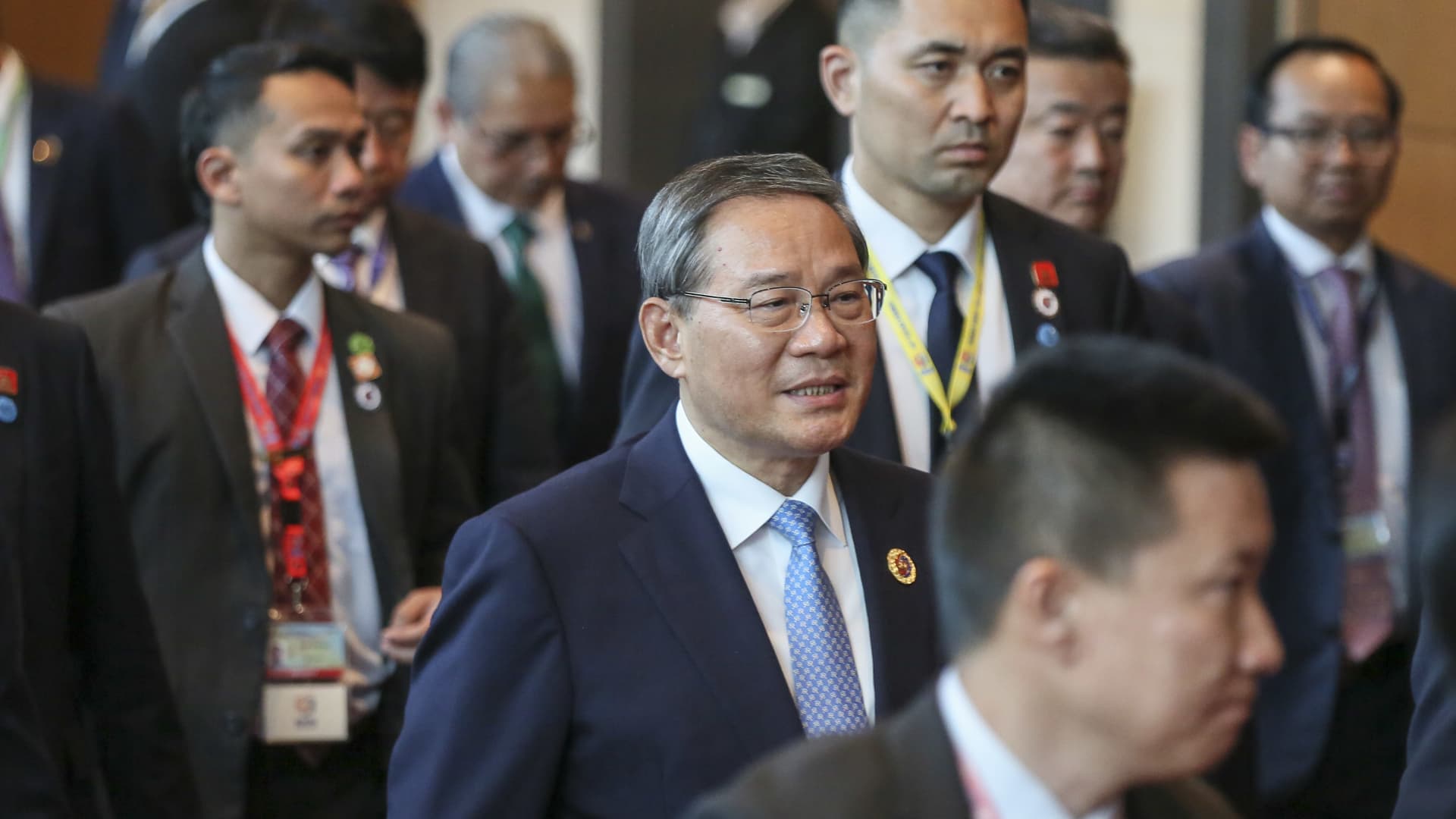
Chinese Premier Li Qiang recently addressed the ASEAN-China-GCC Economic Forum in Kuala Lumpur, urging the Asian Infrastructure Investment Bank (AIIB) to enhance its support for the Belt and Road Initiative (BRI). Speaking at the bank’s 10th annual meeting, Li emphasized the importance of fostering connectivity and cooperation among Asian countries and nations around the globe. “I hope that the AIIB will stay committed to open regionalism and persevere in promoting connection and communication,” he said through an official English translation.
Li’s call comes at a critical moment as the U.S. has stepped back from its support of traditional Western-led institutions like the World Bank and the International Monetary Fund, which some argue disproportionately benefit other countries. Stephen Olson, a senior fellow at the Institute of Southeast Asian Studies, remarked, “Li’s comments signal China’s ongoing attempts to capitalize on the chaos caused by Trump’s trade and economic policies.” This move appears to be part of China’s broader strategy to mitigate U.S. efforts to shift countries away from Beijing’s influence.
Under President Xi Jinping, who is now in his third term, China initiated the BRI in 2013. This ambitious program seeks to expand Beijing’s global footprint through infrastructure development, creating new rail and sea routes linking Asia with Europe and Africa. Critics, however, caution that this massive initiative could lead developing nations into significant debt while predominantly benefiting Chinese state-owned enterprises. In 2021, Xi announced the Global Development Initiative, aimed at aligning China’s objectives with the United Nations’ 2030 Sustainable Development Goals, focusing on areas like poverty alleviation and food security.
The AIIB recently announced the appointment of Zou Jiayi, a former vice finance minister, as its next president starting in January. Zou, who has also served as an alternate governor at the World Bank, is a member of the ruling Chinese Communist Party’s Central Committee, underscoring the strategic alignment of governance and finance in China. Current president Jin Liqun has served two terms since the bank’s inception and is also a former vice finance minister.
At the event, Indonesia’s finance minister, Sri Mulyani Indrawati, highlighted the nation’s collaboration with the AIIB on 14 projects, totaling over $5.1 billion. “Indonesia is not only generating operating revenue for AIIB but also providing enormous experience as well as strong participation,” she stated, reinforcing the idea that AIIB has transcended its status as an emerging bank, evolving into a formidable global development entity.
Though the U.S. is not a member of the AIIB, major economies such as the U.K., France, and Germany are part of the 110-member institution, alongside nations like Russia, Israel, Singapore, and Vietnam. With a significant 26.5% voting share, China retains substantial influence over the AIIB, which has approved $8.4 billion in financing last year alone, bringing its total to over $60 billion since its establishment in 2016.
On a related note, Premier Li recently engaged with global business leaders during the World Economic Forum’s annual China conference in Tianjin, where he encouraged a collaborative approach to trade. Emphasizing the need to avoid politicizing trade, he stated that participating in the international economy is essential for “reshaping the rules and order.” The dialogue is part of China’s ongoing strategy to maintain its economic prominence amid changing global dynamics.
This latest emphasis on the AIIB and BRI showcases China’s commitment to establishing a leadership role in global economic development, even as it navigates complex geopolitical landscapes.
Original Source: https://www.cnbc.com/2025/06/26/china-urges-beijing-backed-development-bank-to-focus-more-on-belt-and-road-initiative.html
Category :
Tags:
Publish Date: 2025-06-26 08:38:00