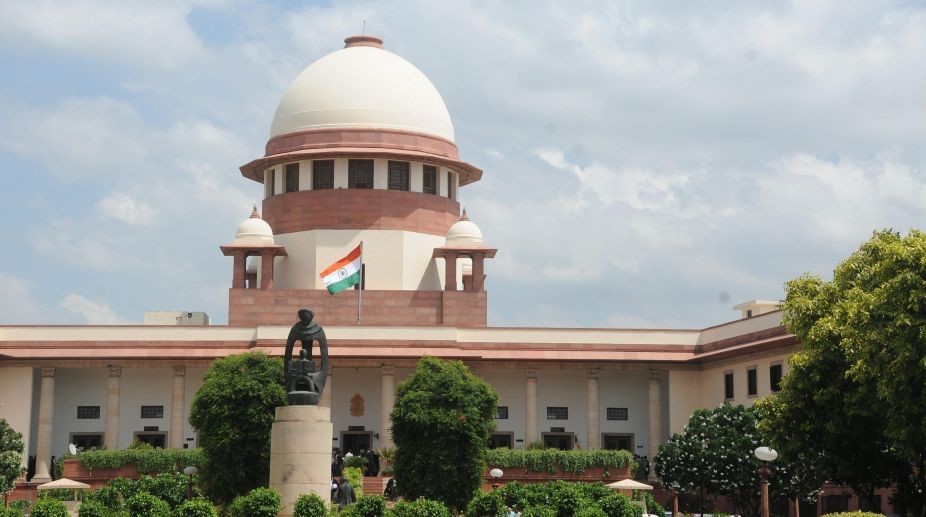

The Supreme Court has mandated that Nagaland State authorities re-issue a public notice regarding the process to recognize Kakiho Village. The State must complete this process within six months and make a determination on the village’s recognition. In its ruling, a bench of Justices JB Pardiwala and R Mahadevan emphasized that all objections, including those from the Old Jalukie Village Council (OJVC), must be thoroughly considered.
Failure to adhere to this timeline will be treated seriously, with the matter marked as “part heard” and scheduled for review by the same bench after six months as per directions from the Chief Justice of India. The bench also overturned a ruling from the Gauhati High Court’s Kohima Bench, which had previously ordered the State Government to recognize Kakiho Village within three months, a deadline that was later extended by four more months.
The OJVC appealed to the Supreme Court in March 2016 via a Special Leave Petition (SLP), arguing that it was not included as a necessary party in the High Court’s proceedings. The Supreme Court noted that the High Court seemed unaware of the OJVC’s objection, thereby failing to consider its input in the case.
Upon reviewing the case on May 23, the Supreme Court determined that the procedures outlined in two Office Memorandums (OMs) from 1996 and 2005 had not been followed. The 1996 OM states that a new village formed within the ancestral land of a parent village requires a “No Objection Certificate” from the respective Village Council Chairman. The 2005 OM further mandates a public notice, allowing the public a 30-day period to submit objections related to the proposed village recognition.
The Court highlighted the connection between village recognition in Nagaland and Article 371A of the Indian Constitution, which safeguards Naga customary laws and land ownership. Additionally, it pointed out that the Nagaland Village and Area Councils Act, 1978 defines the statutory framework for recognizing villages based on customary practices and land ownership.
The Supreme Court also identified that Nagaland’s government had not asserted any claim regarding the land on which Kakiho Village is located, nor did it counter the OJVC’s allegations. This raised questions about how the conditions outlined in the two OMs were claimed to have been met.
Recent developments include a new requirement introduced on February 4, 2025, stating a minimum land area of 1,000 acres is necessary for recognition. The bench clarified that an inter-district boundary dispute does not affect the recognition issue for Kakiho Village.
On January 7, 2025, the bench observed that the Nagaland Government appeared reluctant to mediate the conflict between both villages, an observation that was reiterated later in May. While the State was noted for not taking a completely adversarial stance, the bench stressed the importance of the State’s duty to ensure effective governance without avoiding conflict.
The bench acknowledged that while the State had made attempts to facilitate dialogue between the parties, these efforts had not succeeded. The court concluded that the only remaining option for the State is to consider both parties’ claims objectively and make a decision without delay.
Original Source: https://www.morungexpress.com/sc-orders-nagaland-govt-to-re-issue-public-notice-for-recognition-of-kakiho-village
Category: Nagaland
Tags:
Publish Date: 2025-05-27 23:53:00