
In Bengaluru, Jayanthi Kallam, Executive Director of the Avian and Reptile Rehabilitation Centre (ARRC), recently addressed rising concerns over crow attacks in urban neighborhoods. One caller expressed frustration, only to reveal that they had been driving crows away and preventing them from nesting. Kallam noted the intelligence of crows, explaining that these birds can recognize faces and share this information with others. “A greater understanding of these animals can lead to peaceful coexistence,” she emphasized during a discussion titled “Interaction with Urban Wildlife,” organized by Early Bird, a non-profit initiative promoting bird appreciation among children.
The session featured Shankar Shivappa, a California-based engineer and wildlife enthusiast, who highlighted how urban environments can disconnect people from nature. “Cities are vibrant ecosystems, yet many inhabitants lack regular interaction with wildlife,” he said, reinforcing the need for enhanced relationships between humans and urban fauna. As children often grow up with limited exposure to nature, he warned that this disconnect can lead to misunderstandings and negative interactions.
The discussion explored various themes, including wildlife rescues, ethical considerations of feeding urban animals, and the challenges of wildlife smuggling in India. Amid the difficulties, Kallam expressed optimism, stating that a significant portion of calls to ARRC-80-90%—come from individuals eager to assist distressed animals. “These wildlife rehabilitation centers exist because people care,” she noted.
Kallam addressed the nuanced issue of feeding urban wildlife. “In India, it is not illegal to feed animals unless it endangers them,” she explained. Therefore, as long as the diet provided is appropriate, feeding is permissible. However, she cautioned that unchecked feeding can skew ecosystems, particularly with adaptable species like rock pigeons and monkeys. By feeding these animals, their populations can swell, potentially leading to nuisance behavior and ecological imbalance.
As an alternative, Shivappa suggested cultivating plants as food sources for urban wildlife. He reminisced about how his mother’s home garden attracted sparrows, illustrating that sustainable practices can foster wildlife support without disrupting natural ecosystems.
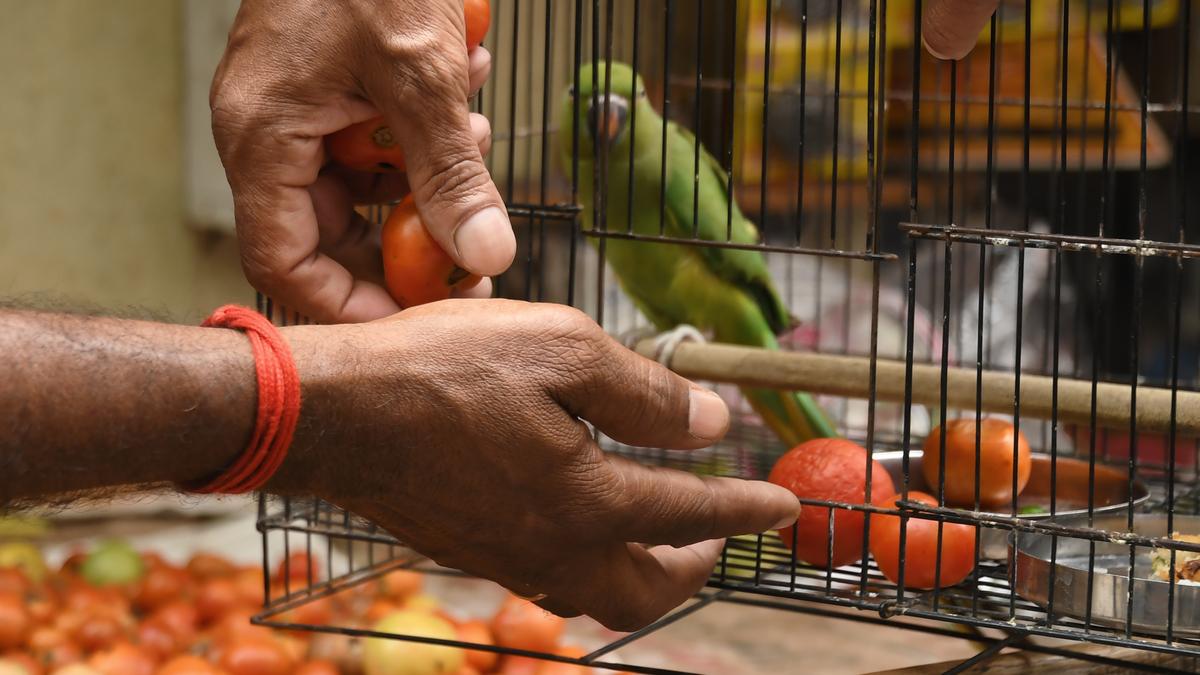
Another pressing issue discussed was the ethics of keeping wild animals as pets. Kallam reminded attendees of the Wildlife (Protection) Act of 1972, which forbids the keeping of wild animals as pets. Many well-meaning individuals unknowingly violate this law by caring for lost birds, despite the long-term implications for the animals. “Imprinting on humans can prevent these birds from surviving in the wild,” Kallam cautioned, emphasizing the importance of proper care and awareness regarding wildlife laws.
The conversation underscored a collective responsibility to foster positive interactions with nature. Kallam reiterated that both adults and children have roles to play in ensuring harmonious relationships with urban wildlife. Activities like birdwatching initiatives organized by Early Bird can enhance children’s understanding and connection to local fauna, helping to cultivate an appreciation for nature.
As discussions surrounding urban wildlife continue, it is crucial to balance compassion with responsibility, ensuring that both humans and wildlife can thrive in shared spaces. The insights shared by Kallam, Shivappa, and others highlight the need for community engagement and greater awareness of the intricate relationships we share with the urban wildlife around us.
Original Source: https://www.thehindu.com/news/cities/bangalore/for-a-peaceful-co-existence-with-wildlife-in-urban-settings/article69596127.ece
Category : Bengaluru
Tags:
Publish Date: 2025-05-21 09:00:00