
On a chilly January day in Billerica, Massachusetts, Siyu Huang, CEO of Factorial Energy, received a significant text message: “Spinning wheels.” The accompanying video depicted a car on rollers in a cutting-edge testing center, signaling a pivotal moment in Huang’s decade-long pursuit of solid-state battery technology. While the video might have seemed unremarkable to many, it marked a substantial step in Factorial’s journey towards revolutionizing electric vehicle (EV) batteries.
Solid-state batteries promise to transform the automotive landscape by offering faster charging, longer ranges, and improved safety over traditional lithium-ion batteries. For Huang and her team, this innovation holds the potential to change consumer perceptions of electric vehicles, positioning the U.S. and Europe as leaders in the technology, and contributing positively to global climate efforts. Factorial is among a growing number of companies vying to create batteries that not only meet the rising demand for electric cars but also combat urban air pollution – a pressing issue given that transportation is the largest contributor to human-made greenhouse gas emissions.
The video that excited Huang came from Uwe Keller, the head of battery development at Mercedes-Benz, which had been backing Factorial’s research with both funding and expertise. The footage represented a major transition from laboratory testing to real-world application, yet significant hurdles remained. No American or European car manufacturer had successfully integrated solid-state batteries into their production models, and the industry remained cautious about the technology’s commercial viability.
Huang, a standout leader in an industry often dominated by men, approaches her work with a focus on balance and clarity, underscoring the importance of a sound mind over sheer hours logged. Her office, marked by its simplicity, reflects her pragmatic nature and dedication. Born in Nanjing, China, her interest in environmental science emerged early through school programs that highlighted the effects of pollution. After studying chemistry in Sweden, she earned her Ph.D. from Cornell University, eventually co-founding Factorial with her husband, Alex Yu.
Originally aiming to enhance energy storage materials, Factorial pivoted towards solid-state technology in response to encouragement from Mercedes, which sought a significant technological advancement. The technology’s strength lies in its solid or gelatin-like electrolyte, replacing the flammable liquid commonly used in batteries, making it safer and potentially faster-charging.
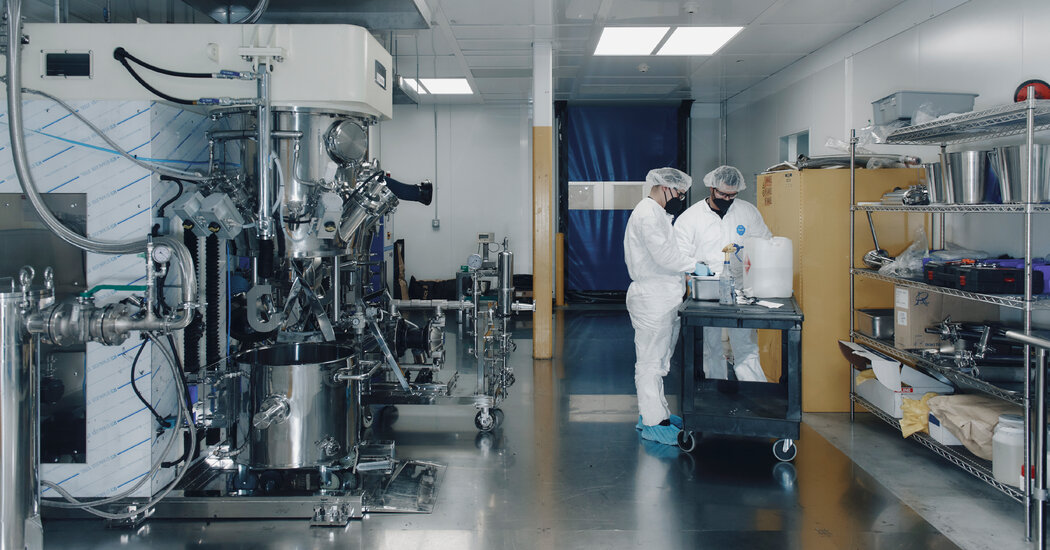
In late 2022, Factorial faced what Huang called “production hell” while establishing a pilot factory in South Korea, aiming to produce high-quality solid-state cells. Initially, the yield rate was a dismal 10%. Continuous challenges meant early mornings spent resolving production issues, yet by June 2024, Factorial had achieved sufficient quality to supply cells for Mercedes vehicles, reaching a yield of 85%.
As the first road tests commenced, Huang felt a mix of nervousness and excitement. When the Mercedes equipped with a Factorial battery finally took to the track, it easily handled speeds approaching 100 miles per hour. This marked a major milestone, as witnesses celebrated the advancement while recognizing the road ahead—the need for further testing, refinement, and eventual commercialization by 2028 or beyond.
When Huang finally visited Stuttgart to see the car herself, it felt like reuniting with an old friend. The thrill of innovation surged within her as she experienced firsthand what years of hard work and dedication could achieve. Now, with the goal of equipping a fleet of vehicles for consumer use, Huang is left with anticipation for the electric vehicle future she helped shape. This endeavor not only encapsulates her commitment to sustainable technology but also highlights the potential of solid-state batteries in the quest for cleaner transportation.
Original Source: https://www.nytimes.com/2025/05/09/business/mercedes-factorial-solid-state-battery.html
Category : Batteries,Electric and Hybrid Vehicles,Start-ups,Factories and Manufacturing,Research,Engineering and Engineers,Content Type: Personal Profile,Factorial Inc,Huang, Siyu,Yu, Alex (Technology Executive),Mercedes-Benz,Keller, Uwe (Automotive Executive),Kallenius, Ola,Stuttgart (Germany)
Tags:
Publish Date: 2025-05-13 13:24:00