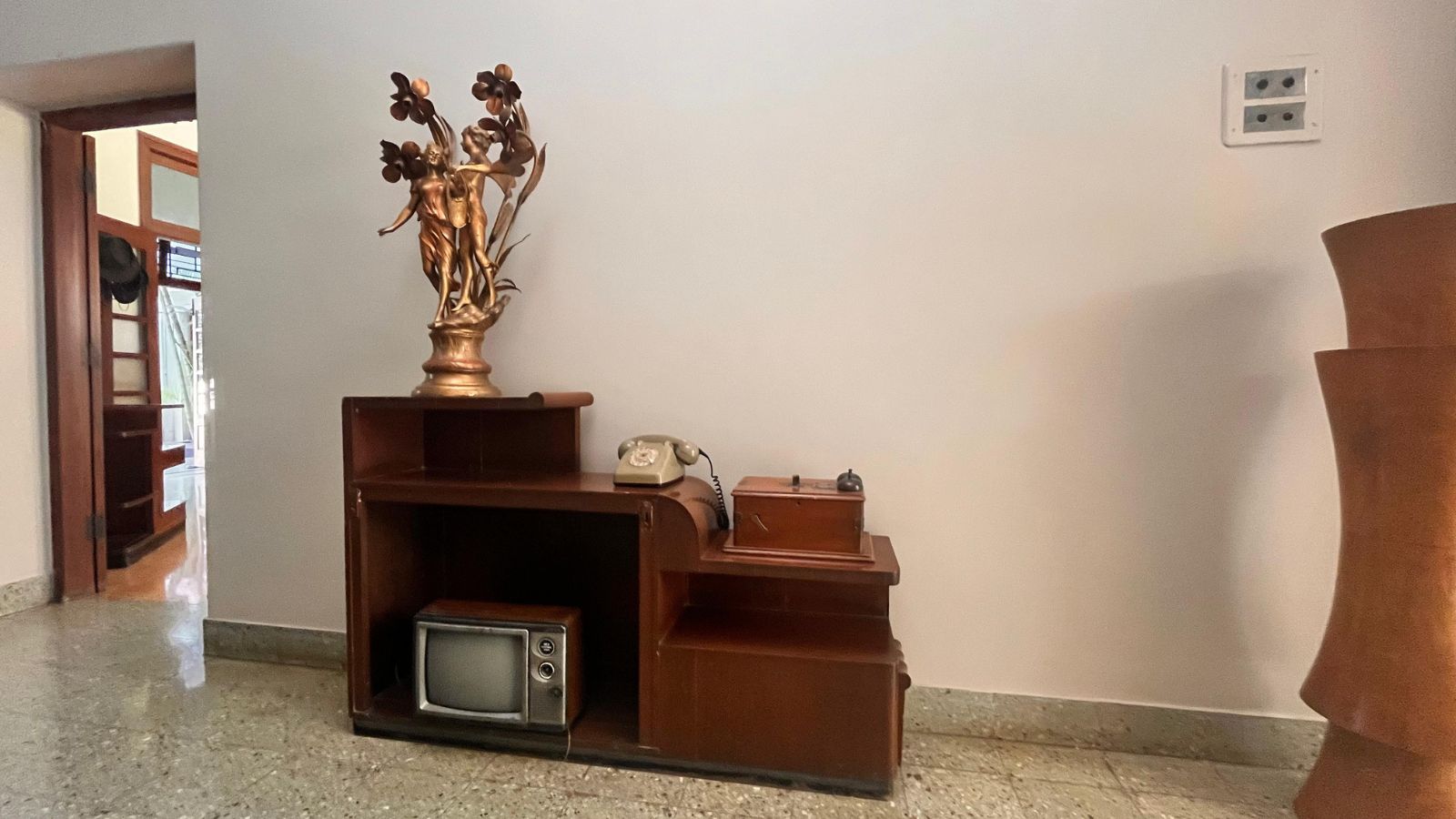

Hotel Sunderban in Koregaon Park has long shared a close relationship with its neighbor, the Osho International Meditation Resort. In contrast to the vibrant atmosphere of the spiritual landmark, Hotel Sunderban embodies a serene, old-world charm. Suresh Talera, who oversees the hotel on behalf of the Talera family, explains, “During British rule, when Gujarat and Maharashtra were a single state, the Gaekwad royal family of Baroda owned around seven to eight bungalows here. The most beautiful of these is now Hotel Sunderban. Preserving this building is significant for us. Caring for it feels like looking after an 80-90-year-old person. It demands time, effort, and patience. Frankly, it can be a headache, but it is a headache I cherish.”
Constructed between 1924 and 1926 in the Art Deco style, the bungalow features elegant lines and curvatures that were popular in colonial-era Mumbai. The Talera family converted it into a boutique hotel in 1979, retaining its grandeur with expansive windows, textured walls, and rich woodwork. The hotel’s architecture harmonizes beautifully with the lush garden surrounding it.
The need for lodging near the Osho ashram prompted the establishment of the hotel. The teachings of Bhagwan Shree Rajneesh attracted international visitors, particularly Western youth, leading to a surge in demand for accommodations. “There was a high influx of foreigners, but property owners were reluctant to rent out their spaces, fearing the newcomers wouldn’t vacate,” Talera notes. Though the local collector held a meeting with ashram members and property owners, no viable solutions emerged.
“We were already in the hotel industry, so we suggested converting the bungalow into a hotel if we could obtain a license. The proposal was swiftly approved, and the license was issued shortly thereafter,” Talera recalls. At the time, Koregaon Park was perceived as remote from Pune city, attracting only a niche clientele mainly from the Osho community.
Since Osho’s passing, the hotel’s capacity has dwindled from 50 rooms to 22, according to Talera. Having lived in Koregaon Park since the 1970s, he views the area as integral to his life. When modern developments threatened to transform the neighborhood, he successfully petitioned the Bombay High Court to protect the historic bungalows from being replaced by high-rises. “Hotel Sunderban exists because of that effort,” he states.
While he loves the craftsmanship of old houses, Talera expresses concern over the demolition of many historic properties in Koregaon Park. He often engages with architects and owners, advocating for the preservation of the area’s heritage, but they argue that such architecture does not suit contemporary lifestyles. The repurposing of the space from the removed rooms reflects a trend of declining visitor numbers. Nevertheless, Hotel Sunderban remains a haven of refined tranquility, offering a peaceful retreat in the heart of the city.
Original Source: https://indianexpress.com/article/cities/pune/how-hotel-sunderban-preserve-royal-legacy-koregaon-park-9996031/
Category: Cities,Pune
Tags:
Publish Date: 2025-05-11 14:33:00