Sikkim Ministerial Delegation Explores Finland’s Innovative Education Model for Transformative Learning

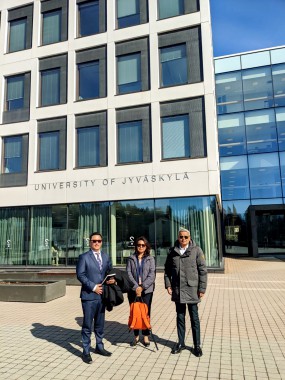
GANGTOK: In a significant initiative aimed at revamping the education sector in Sikkim, a high-level delegation from the state government visited the University of Jyväskylä in Finland from April 22 to May 1. This visit sought to learn from one of the world’s most successful and inclusive education systems. Led by Education Minister Raju Basnett, the delegation was part of a broader vision by the Government of Sikkim to integrate global best practices into the state’s educational framework.
Joining Basnett were the School Education Secretary Tashi Chopel and Director Tseringkee Chingapa. The University of Jyväskylä has been Finland’s premier institution for teacher education since 1863, and it currently ranks as the number one in Europe for teacher satisfaction, according to the OECD’s 2023 report.
A press release highlighted that Chief Minister Prem Singh Tamang (Golay) envisioned this visit to focus on key aspects of Finland’s inclusive, research-based, and child-centered education method. Upon their arrival in Helsinki, the delegation held a dinner meeting with H.H. Kotalwar, the Indian Ambassador to Finland, and embassy officials, setting the stage for their academic exploration.
Beginning April 23, the delegation engaged in a detailed academic program coordinated by researchers from the University of Jyväskylä. Their schedule included visits to various Finnish kindergartens, primary, and secondary schools, alongside in-depth discussions with seasoned educators and researchers about Finland’s educational philosophy.
The key sessions featured interactions with the university’s vice-chancellor, Prof. Marja-Leena Laakso, and a lecture on Finnish teacher education led by Dr. Heidi Layne. The group examined Finnish models for formative assessment, inclusive education, vocational training, and interdisciplinary learning rooted in STEAM principles.
The delegation identified several important elements of Finland’s education system that could inspire transformative reforms in Sikkim. These include a unified schooling structure that eliminates academic dead ends, inclusive and child-centric teaching with a strong focus on equity and well-being, and a system of teacher autonomy paired with trust-based governance. Educators in Finland enjoy high professional respect and the freedom to select their teaching methods and materials, with minimal reliance on standardized testing.
Additionally, Finland’s research-driven teacher education, which typically requires a Master’s degree for most teaching roles, encourages ongoing professional development. Vocational education in Finland is designed to align with real-world competencies developed in collaboration with industry partners and tailored to individual student needs. Publicly funded education guarantees free schooling—covering meals and transportation—while ensuring accessibility to higher education, all underpinned by a commitment to quality assurance through continual development and self-evaluation.
Reflecting on the visit, Minister Raju Basnett remarked that their discussions with Indian diplomatic officials and subsequent interactions with Finnish educators have equipped them with invaluable insights for transforming Sikkim’s education system, as envisioned by Chief Minister Tamang. He noted that Finland’s achievement of being ranked the top country in Europe for teacher satisfaction is a compelling source of inspiration as they seek to enhance their own educational framework.
The delegation plans to compile comprehensive policy recommendations that focus on reforming early education, developing teacher training models, and promoting trust-based, learner-centric pedagogy, as indicated in the release.
Original Source: https://www.sikkimexpress.com/news-details/minister-led-sikkim-delegation-studies-finlands-education-model
Category:
Tags:
Publish Date: