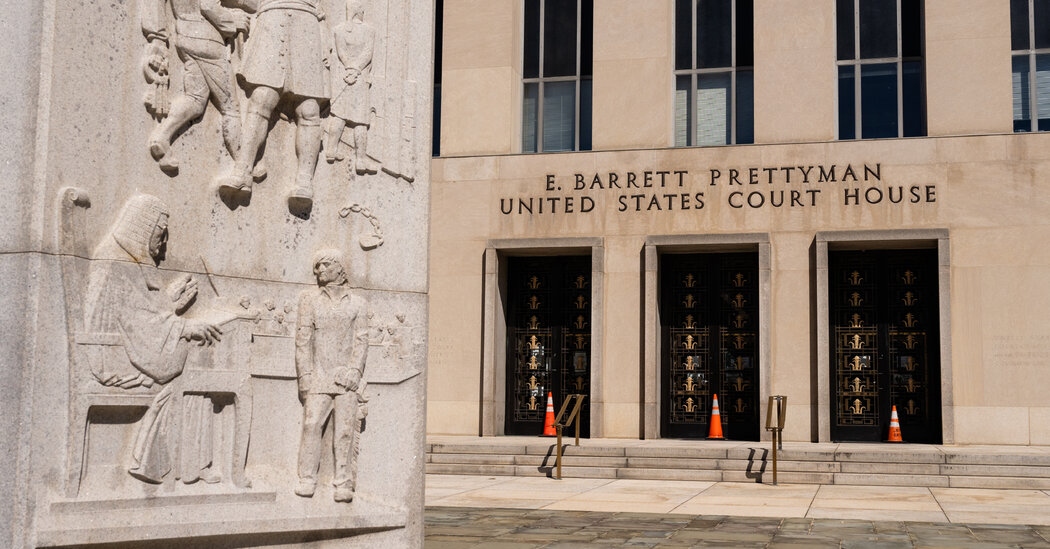

For the past three weeks, the Justice Department and Google have been scrutinizing testimonies from over two dozen witnesses in a pivotal federal court case related to Google’s alleged monopoly in internet search. The proceedings, held in the U.S. District Court for the District of Columbia, are expected to conclude on Friday. As the government proposes stringent measures—including the divestment of Google’s widely used Chrome web browser—to curb the company’s dominance, Google is advocating for minor adjustments to its business practices as a more sensible solution.
Both parties are set to present their closing arguments later this month, with Judge Amit P. Mehta expected to deliver a ruling by August. This decision could significantly impact not just Google, but its competitors and the overall landscape of online information retrieval.
The case arose after Judge Mehta determined in August that Google violated antitrust laws by paying prominent companies such as Apple, Samsung, and Mozilla billions to be the default search engine on various platforms. He noted that Google’s monopoly allowed it to artificially inflate prices for certain search ads, consolidating its competitive edge. The current hearing aims to establish remedies to rectify this search monopoly, with testimonies from Google executives, rival companies, and industry experts shedding light on Google’s pervasive influence over the internet.
Government attorneys assert that decisive action is necessary to dismantle Google’s control. They have proposed measures requiring Google to spin off Chrome and share access to search results and advertising data with competitors, thus enabling them to enhance their own search capabilities. Furthermore, they fear that without judicial intervention, Google’s dominance could extend into the rapidly evolving artificial intelligence sector. “This court’s remedy should be forward-looking and not ignore what’s on the horizon,” remarked David Dahlquist, the lead litigator for the government.
In contrast, Google’s legal team warns that the government’s plans could jeopardize beloved consumer products and compromise user privacy and security. CEO Sundar Pichai emphasized the potential for “unintended consequences,” highlighting a historical instance from 2006 when AOL inadvertently disclosed user search data, leading to privacy breaches.
Moreover, Google points to ample competition in the AI domain, citing the success of platforms like OpenAI’s ChatGPT. The company argues for greater flexibility in contracts with web browsers and smartphone manufacturers to allow collaboration with competing search and AI services. Pichai mentioned that steps have already been taken to modify these contracts in alignment with this proposal.
During the testimony, representatives from other companies, including OpenAI and the chatbot firm Perplexity, expressed interest in acquiring Chrome if it becomes available, while government witnesses emphasized that access to Google’s search data would bolster their competitive standing.
Judge Mehta’s inquiries throughout the hearings have provided insight into his thought process. He often probed witnesses on whether any competitor could truly challenge Google without the court’s intervention. His focus frequently shifted toward the significance of AI, acknowledging its rapid advancements and potential disruptive effects on search technology.
In one noteworthy exchange with Pichai, Judge Mehta remarked on the dramatic shifts in AI since the lawsuit’s inception in late 2023. “The integration of AI and search or the impact of AI on search was years away,” he reflected, indicating his recognition of the technology’s swift evolution, which has become a critical backdrop for the hearing.
As the court prepares to reach a verdict, the implications of this landmark case will likely reverberate throughout the tech industry, shaping the dynamics of competition and innovation in the digital landscape.
Original Source: https://www.nytimes.com/2025/05/09/technology/google-chrome-monopoly-remedies.html
Category : Search Engines,Artificial Intelligence,Computers and the Internet,Decisions and Verdicts,Web Browsers,Mergers, Acquisitions and Divestitures,Regulation and Deregulation of Industry,Antitrust Laws and Competition Issues,Google Inc,Justice Department,Mehta, Amit P,Content Type: Service
Tags:
Publish Date: 2025-05-09 14:32:00