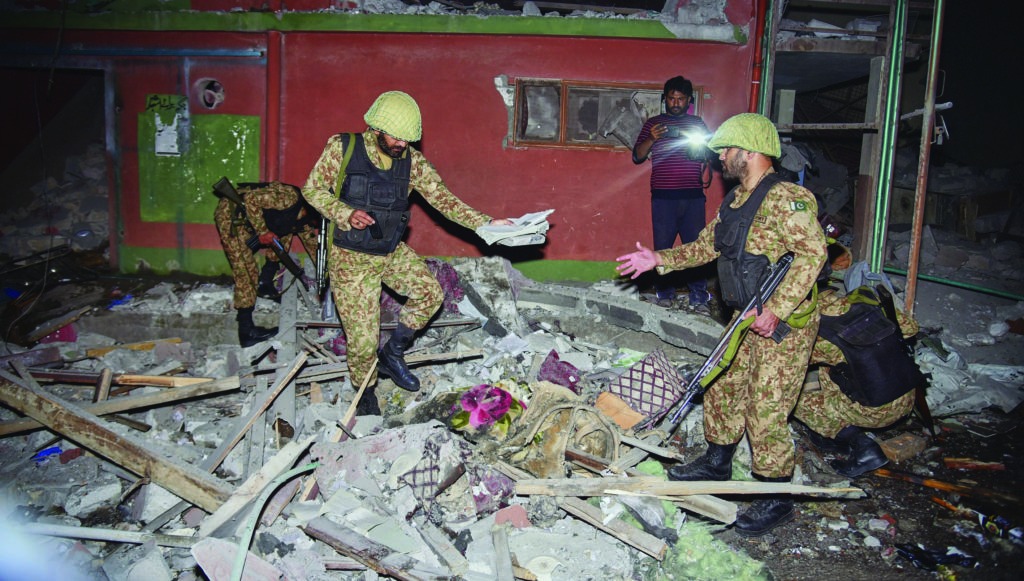

In a decisive military operation dubbed Operation Sindoor, India has executed a targeted strike against Pakistan-based terrorist camps, successfully hitting nine facilities and reportedly neutralizing around 70 terrorists. The operation unfolded in the early hours of May 7, with a swift 25-minute assault conducted by the Indian Army, Air Force, and Navy. From 1:05 AM to 1:30 AM, Indian forces fired 24 missiles with pinpoint accuracy aimed at facilities linked to paramilitary organizations, primarily in Muridke and Bahawalpur.
Sources within the government indicated that utmost caution was observed to prevent collateral damage, ensuring that only verifiable terror camps were engaged. Among the significant targets were known hubs for extremist training, including the Lashkar-e-Taiba headquarters—historically linked to high-profile attacks—and locations that offered cover under the guise of health centers.
Operation Sindoor stands as one of India’s most significant military actions since the 2019 Balakot air strikes, signaling an ongoing strategic commitment to preemptive defense in the face of state-sponsored terrorism. This marks India’s first deep aerial attack into Punjab since the 1971 Indo-Pak war, demonstrating an evolution in military strategy amidst rising tensions.
The operation targeted nine sites—four in Pakistan and five in Pakistan-occupied Kashmir (PoJK)—following a deadly terror attack on April 22 that killed 26 tourists in Pahalgam. Intelligence reports identified these terror camps, some disguised as civilian infrastructure to evade detection. Key targets included facilities operated by Jaish-e-Mohammed, Lashkar-e-Taiba, and Hizbul Mujahideen.
Significantly, the Indian Air Force used advanced weaponry, including SCALP deep-strike cruise missiles and the Hammer smart weapon system, to execute the strikes, showcasing enhanced operational capabilities. Experts highlighted the operation’s technological sophistication and multi-domain approach, differing from past engagements like Uri (2016) and Balakot (2019). The unique integration of aerial and artillery forces allowed for a coordinated and effective strike.
The offensive also extended its reach to Bahawalpur, home to a crucial military-terror base, reinforcing India’s readiness to target dual-use infrastructures where military and terror assets coexist. Furthermore, the timing of the operation caught Pakistan’s military off-guard, with reports indicating a delayed response to the strikes.
Prime Minister Narendra Modi is said to have chosen the evocative name “Operation Sindoor,” inspired by the tragic loss of civilian lives in Pahalgam. The emotional weight behind the moniker reflects the Indian government’s commitment to avenge the death of innocents.
In a chilling aftermath, Jaish-e-Mohammad chief Azhar Masood confirmed that ten members of his family were among the casualties from the missile strikes, accusing India of targeting innocents. While he expressed grief, Masood vowed retaliation, asserting that such actions would not quell the resolve of his organization.
In response to the strikes, tensions escalated along the Line of Control (LoC), with Pakistan launching intense artillery fire on villages in Jammu and Kashmir. This resulted in at least 13 deaths, including children and a soldier, forcing many residents to seek refuge. The heightened exchanges of fire mark a significant rise in hostilities, breaking a relative ceasefire since early 2021.
This unfolding situation further complicates regional security dynamics, underscoring the persistent volatility in Indo-Pak relations as both nations brace for the implications of the recent military actions.
Original Source: https://theshillongtimes.com/2025/05/08/operation-sindoor-avenges-pahalgam-killings/
Category : NATIONAL
Tags:
Publish Date: 2025-05-08 02:29:00