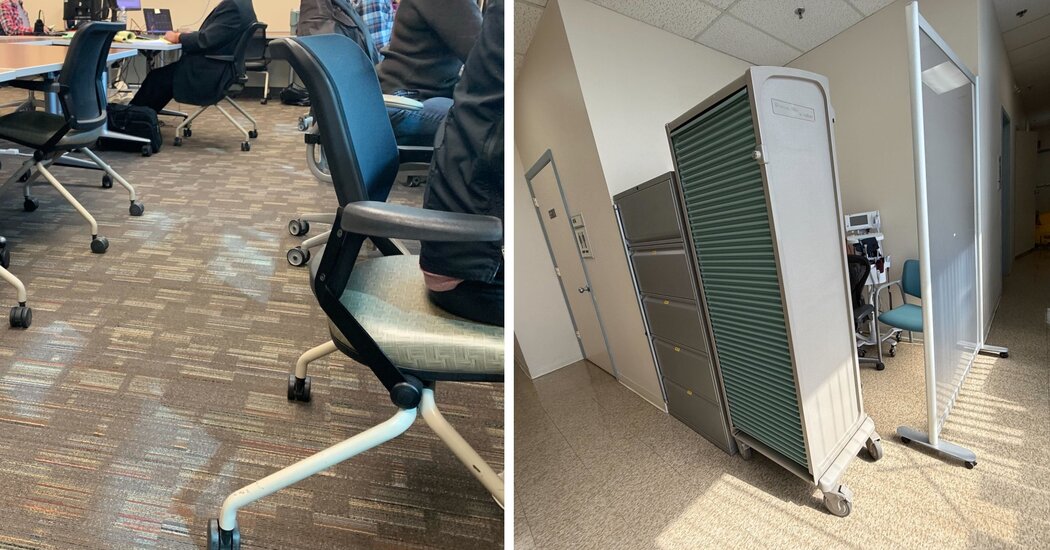

In a challenging turn of events, U.S. Veterans Affairs (V.A.) employees are grappling with privacy and workspace issues as remote work policies are rescinded. In Boston, social workers crowd a small room to conduct telehealth visits, while in Kansas City, patient care planning takes place across narrow tables. In South Florida, psychiatric nurses treat veterans in makeshift spaces near bathrooms, raising concerns about confidentiality. Bill Frogameni, an acute care psychiatric nurse in Miami, highlighted how privacy limitations in such environments compromise patient treatment.
These constraints stem from former President Trump’s decision to revoke long-standing remote work policies for federal employees, aiming to centralize operations for improved veteran care. While nearly 60,000 employees are transitioning back to office spaces, about 45,000 have exemptions or extensions. The shift has sparked concerns among clinicians and veterans, as many find their new workspaces unsuitable for handling sensitive mental health discussions. Despite reassurances from V.A. officials like spokesman Peter Kasperowicz, who maintained that patient confidentiality is not compromised, internal sources and photographs suggest otherwise.
The pressure of adapting to this new system is pushing many clinicians to consider leaving the V.A. Some, like Dr. Nicole Stromberg, have already retired, unable to reconcile the changes with their commitment to patient care. Dr. Stromberg’s emotional farewells to her patients underscore the impact—her decision, driven by these changes, forced her to terminate treatment abruptly.
Despite reassurances that privacy and workspace concerns are being addressed, reports from multiple V.A. employees across the nation highlight difficulties. From makeshift conference room setups to hallway workspaces, the transition to in-office work poses challenges to maintaining confidentiality. Kevin Galpin, a senior V.A. teletherapy official, expressed concern over inappropriate setups, emphasizing the need for secure office spaces.
This overhaul arrives amidst a backdrop of prior successes in telehealth. V.A.’s expansion of telehealth during Trump’s first term proved beneficial, reducing costs and wait times and significantly impacting veterans’ mental health. However, with the looming return-to-office mandate, many fear a regression in care quality. Dr. Harold Kudler, a former V.A. mental health consultant, warned of the long-term harm such abrupt changes could cause to the system.
The return-to-office requirement is also prompting significant pushback from professional organizations concerned about the legal and ethical ramifications related to sensitive discussions in open spaces. Some clinicians have already left their positions, citing these privacy concerns and a lack of suitable work environments. The National Association of Social Workers, along with other organizations, has urged V.A. leadership to consider exceptions for mental health providers to prevent further staff losses.
While the Trump administration aims to enhance service delivery, these operational changes threaten to exacerbate staffing shortages at the V.A., especially amidst reports that suggest upcoming layoffs targeting non-clinical staff. As the situation evolves, stakeholders continue to advocate for a more balanced approach that prioritizes the well-being of veterans and the clinicians committed to their care.
Original Source: https://www.nytimes.com/2025/05/04/us/politics/veterans-affairs-mental-health-privacy.html
Category : United States Politics and Government,Mental Health and Disorders,Veterans,Psychiatry and Psychiatrists,Privacy,Telemedicine,Suicides and Suicide Attempts,Executive Orders and Memorandums,Coronavirus Return to Office,Workplace Hazards and Violations,Government Efficiency Department (US),Veterans Affairs Department,Trump, Donald J,California,Florida,Michigan
Tags:
Publish Date: 2025-05-04 18:05:00